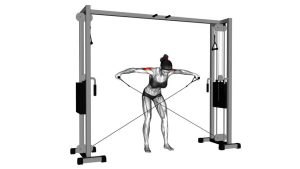
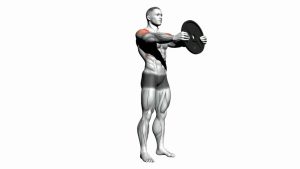
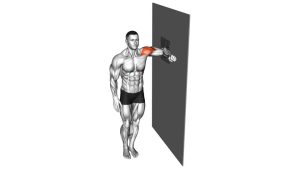
Cable Front Raise : Proper Form, Sets, Tips & FAQ
Learn how to perform the Cable Front Raise with proper form to target the front delts with constant tension. Includes setup, execution steps, sets and reps by goal, common mistakes, FAQ, and recommended equipment.
Cable Front Raise
This variation works best with strict form, a stable torso, and a controlled tempo. You should feel the front of the shoulders doing most of the work while the core and upper body stay braced and quiet. Because the cable keeps tension throughout the rep, lighter loads often work better than expected.
Quick Overview
| Body Part | Front Shoulders |
|---|---|
| Primary Muscle | Anterior deltoid (front delts) |
| Secondary Muscle | Upper chest (clavicular fibers), serratus anterior, upper traps and core stabilizers |
| Equipment | Cable machine with low pulley and single or dual handle attachment |
| Difficulty | Beginner to Intermediate |
Sets & Reps (By Goal)
- Muscle building: 3–4 sets × 10–15 reps with controlled tempo and 45–75 sec rest
- Shoulder definition / general training: 2–4 sets × 12–15 reps with moderate load
- Technique practice: 2–3 sets × 8–12 reps using light weight and perfect control
- Finisher / pump work: 2–3 sets × 15–20 reps with strict form and short rest
Progression rule: Add reps before adding load. Only increase weight when you can reach shoulder height consistently without leaning back, shrugging, or losing cable control.
Setup / Starting Position
- Set the pulley low: Position the cable at the lowest setting.
- Choose your handle setup: Use a single handle, rope, or dual handles depending on the machine and your preferred variation.
- Stand tall: Feet about hip- to shoulder-width apart with knees slightly soft.
- Brace the torso: Keep ribs down, chest up, and core engaged so the spine stays neutral.
- Start with the hands in front of the thighs: Arms extended down with a slight bend in the elbows.
- Shoulders set: Keep the shoulders down and back lightly—do not shrug before the rep begins.
Tip: Step just far enough from the machine to keep tension on the cable at the bottom without pulling you off balance.
Execution (Step-by-Step)
- Lock in posture: Stand tall with the core braced and eyes forward.
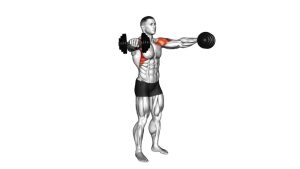
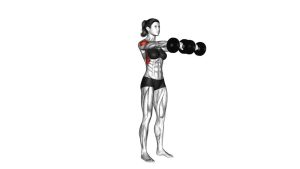
- Initiate from the front delts: Raise the handle(s) forward in a smooth arc.
- Keep the elbows softly bent: Maintain the same arm angle throughout the rep instead of curling the weight up.
- Lift to shoulder height: Bring the hands to about parallel with the floor.
- Pause briefly: Hold the top for a split second without shrugging.
- Lower under control: Return slowly to the start position while keeping tension on the cable.
- Repeat without momentum: Every rep should look the same—smooth, quiet, and controlled.
Pro Tips & Common Mistakes
- Raise only to shoulder height: Going much higher usually shifts tension away from the target and can irritate the shoulder.
- Lead with the arms, not the torso: Avoid leaning back to create momentum.
- Keep the rep smooth: A slower lowering phase improves control and increases training stimulus.
- Use a manageable load: Front raises respond well to moderate and light weights with strict form.
- Do not shrug: Keep the upper traps from taking over the movement.
- Stay consistent with elbow position: Excessive elbow bend turns the movement into something closer to a front curl.
- Train front delts intelligently: If your program already includes a lot of pressing, use front raises as a moderate-volume accessory rather than overdoing them.
FAQ
What muscles does the Cable Front Raise work?
The exercise mainly targets the anterior deltoids, with assistance from the upper chest and stabilizing muscles of the core and shoulder girdle.
Is the cable version better than dumbbell front raises?
The cable version provides more consistent tension throughout the rep, especially at the bottom, which many lifters find helpful for shoulder isolation and control.
How high should I raise the handle?
In most cases, raising to about shoulder height is ideal. That keeps tension on the front delts while reducing unnecessary compensation.
Can beginners do Cable Front Raises?
Yes. Beginners can use light weight and focus on posture, range of motion, and controlled tempo. Good technique matters more than heavy loading on this exercise.
Why do I feel this in my traps instead of my shoulders?
That usually happens when you shrug, swing the body, or use too much weight. Lower the load, keep the shoulders down, and move more slowly.
Recommended Equipment
- D-Handle Cable Attachments — ideal for single-arm or dual-handle cable front raise variations
- Cable Machine / Functional Trainer — the main station needed for cable front raises and other shoulder isolation work
- Resistance Bands Set — a practical alternative for front raises when a cable machine is not available
- Wrist Wraps — useful for lifters who want extra wrist support during upper-body accessory work
- Exercise Machine Attachments — useful for expanding handle options, comfort, and training variety on cable stations
Tip: Choose attachments that let you move smoothly and maintain a comfortable wrist position. For this exercise, clean mechanics matter more than heavy loading.