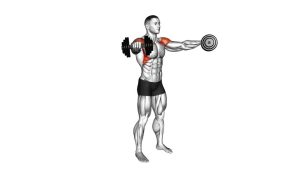
Dumbbell Standing Lateral Raise : Proper Form, Sets, Tips & FAQ
Learn how to perform the Dumbbell Standing Lateral Raise with proper form to build side delts and wider shoulders. Includes setup, execution, sets by goal, common mistakes, FAQs, and recommended equipment.
Dumbbell Standing Lateral Raise
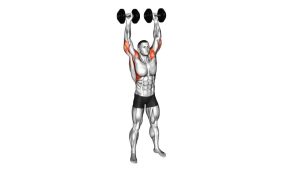
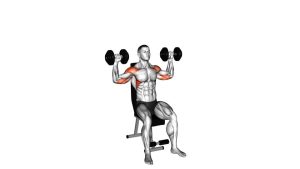
This exercise is highly effective for targeting the side shoulders without requiring complex equipment. It works well in hypertrophy-focused upper-body workouts, shoulder days, or push sessions. Because the lateral delts respond better to clean reps than excessive load, most lifters get better results by using a manageable weight and maintaining constant tension rather than swinging the dumbbells.
Quick Overview
| Body Part | Shoulders |
|---|---|
| Primary Muscle | Lateral deltoids (side shoulders) |
| Secondary Muscle | Anterior deltoids, supraspinatus, upper traps (minimal stabilization) |
| Equipment | Pair of dumbbells |
| Difficulty | Beginner to Intermediate |
Sets & Reps (By Goal)
- Muscle growth: 3–4 sets × 10–15 reps with 45–75 sec rest
- Shoulder definition / toning: 2–4 sets × 12–20 reps with controlled tempo
- Strength foundation: 3–4 sets × 8–12 reps using strict form and moderate load
- Warm-up / activation: 1–2 sets × 12–15 light reps before pressing or upper-body training
Progression rule: Increase reps before increasing weight. Once you can complete all sets cleanly without swinging, shrugging, or losing control, move up slightly in load.
Setup / Starting Position
- Stand tall: Place your feet about hip-width apart with your chest up and core lightly braced.
- Hold the dumbbells at your sides: Let the weights hang naturally with your palms facing inward.
- Keep a soft bend in the elbows: Maintain this angle throughout the rep instead of turning it into a press or shrug.
- Set the shoulders: Pull them slightly down and back so the traps do not take over.
- Start from a stable torso: Avoid leaning back or using the lower body to initiate the lift.
Tip: Think of your hands as traveling outward rather than straight upward. This usually helps keep the movement in the side delts.
Execution (Step-by-Step)
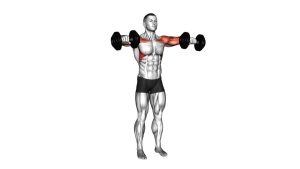
- Begin the raise: Lift both dumbbells out to the sides in a smooth arc while keeping the elbows slightly bent.
- Lead with the elbows: Think about raising the upper arms, not flicking the weights with the hands.
- Stop around shoulder height: Bring the arms up until they are roughly parallel to the floor.
- Pause briefly: Hold the top position for a moment while maintaining tension in the side delts.
- Lower under control: Bring the dumbbells back down slowly along the same path without dropping them.
- Repeat with consistent form: Keep the torso still and the reps smooth from start to finish.
Pro Tips & Common Mistakes
- Use lighter weight than you think: Lateral raises are usually more effective with strict control than heavy loading.
- Keep tension on the side delts: Avoid resting or bouncing at the bottom between reps.
- Do not swing the torso: Momentum shifts stress away from the target muscle.
- Do not shrug the shoulders: Letting the traps dominate reduces side-delt emphasis.
- Avoid lifting too high: Going well above shoulder level often adds unnecessary trap involvement.
- Maintain a soft elbow bend: Too much elbow movement changes the exercise pattern.
- Control the lowering phase: The eccentric portion is valuable for muscle-building stimulus.
FAQ
What muscle does the dumbbell standing lateral raise target most?
The main target is the lateral deltoid, also called the side delt. This muscle helps widen the shoulders and gives the upper body a more rounded appearance.
Should I lift the dumbbells above shoulder height?
In most cases, no. Stopping around shoulder height keeps the exercise focused on the side delts and reduces unnecessary trap involvement for most lifters.
Why do I feel this more in my traps than my shoulders?
That usually happens when the weight is too heavy, the shoulders shrug upward, or the arms travel in a poor path. Lower the weight, keep the shoulders down, and focus on a controlled side raise.
Is this exercise good for beginners?
Yes. It is beginner-friendly because the movement is simple and easy to learn, but good technique matters. Start with light dumbbells and focus on smooth, repeatable reps.
Can I use higher reps for lateral raises?
Absolutely. Many people respond very well to 10–20 rep ranges for lateral raises because the movement is an isolation exercise and does not usually require heavy loads to be effective.
Recommended Equipment (Optional)
- Adjustable Dumbbells — ideal for progressive overload while saving space in a home gym
- Neoprene Dumbbell Set — useful for beginners, higher-rep shoulder work, and lighter controlled raises
- Resistance Bands Set — great for shoulder warm-ups, activation drills, and adding variety to delt training
- Workout Gloves — can improve grip comfort during higher-volume dumbbell training
- Fitness Exercise Mat — useful for warm-up mobility work, cooldowns, and full upper-body training sessions
Tip: For lateral raises, equipment quality matters less than choosing a weight you can control well. Smooth reps and clean shoulder mechanics beat heavy cheating reps every time.