Cable Cross-Over Reverse Fly : Form, Muscles Worked, Sets & Tips
Learn how to do the Cable Cross-Over Reverse Fly with proper form. Discover muscles worked, setup, step-by-step execution, sets and reps by goal, mistakes to avoid, FAQs, and recommended equipment.
Cable Cross-Over Reverse Fly
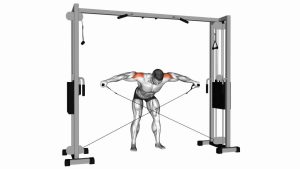
This exercise works best with moderate load, clean arm path, and minimal momentum. The goal is to open the arms out and back in a wide arc while keeping the chest lifted, the spine neutral, and the elbows softly bent. You should feel the movement mainly in the rear shoulders, not in the lower back or upper traps.
Quick Overview
| Body Part | Rear Shoulders |
|---|---|
| Primary Muscle | Posterior deltoids (rear delts) |
| Secondary Muscle | Rhomboids, middle trapezius, rotator cuff stabilizers |
| Equipment | Dual adjustable cable machine with single handles |
| Difficulty | Beginner to Intermediate |
Sets & Reps (By Goal)
- Muscle growth: 3–4 sets × 10–15 reps with controlled tempo and 45–75 sec rest
- Shoulder definition / accessory work: 2–4 sets × 12–20 reps with light-to-moderate load
- Technique practice: 2–3 sets × 8–12 reps focusing on strict form and smooth range
- Posture-focused training: 2–3 sets × 12–15 reps with slow eccentric control
Progression rule: Increase reps before increasing weight. Only add load when you can keep the shoulders down, avoid swinging, and feel the rear delts doing the work.
Setup / Starting Position
- Adjust the pulleys: Set both cable pulleys around upper-chest to shoulder height.
- Grab opposite handles: Take the left handle with the right hand and the right handle with the left hand so the cables cross in front of you.
- Stand centered: Position yourself between the towers with feet about shoulder-width apart for balance.
- Set your torso: Keep a slight bend in the knees, brace the core, and maintain a neutral spine with a small forward lean if needed.
- Start with tension: Arms are crossed in front of the body, elbows softly bent, shoulders relaxed, and chest open.
Tip: Step back just enough to keep tension on the cables at the start, but not so far that the weight pulls you forward.
Execution (Step-by-Step)
- Brace and stay tall: Lock in your stance, keep your neck neutral, and avoid shrugging the shoulders.
- Open the arms outward: Pull both handles out to the sides in a wide arc, leading with the elbows rather than the hands.
- Reach shoulder line: Continue until your arms are roughly in line with the shoulders and your upper back is fully engaged.
- Squeeze briefly: Pause for a moment at peak contraction while keeping tension in the rear delts and upper back.
- Return slowly: Bring the handles back under control to the crossed starting position without letting the cables snap forward.
Pro Tips & Common Mistakes
- Lead with the elbows: This helps keep the focus on the rear delts instead of the hands and forearms.
- Keep a soft elbow bend: The arm angle should stay nearly fixed throughout the rep.
- Do not shrug: Keep the shoulders down to stop the upper traps from taking over.
- Avoid turning it into a row: Excessive elbow bend shifts tension away from the rear delts.
- Control the eccentric: The lowering phase is valuable for muscle growth and shoulder stability.
- Use moderate weight: Rear delts respond better to strict reps than to heavy cheating.
- Keep the chest proud: Avoid rounding forward as the arms move back.
FAQ
What muscles does the Cable Cross-Over Reverse Fly work?
It mainly targets the rear deltoids. The rhomboids, middle traps, and small shoulder stabilizers also assist during the movement.
Is this better than dumbbell reverse flys?
Cables often provide more consistent tension through the entire rep, which can make it easier to keep the rear delts loaded. Dumbbells are also effective, but cables usually feel smoother and more stable for this pattern.
How high should the cable pulleys be?
A good starting point is around upper-chest to shoulder height. Small adjustments are fine as long as you can pull in a wide arc and feel the rear delts working without shoulder discomfort.
Should I go heavy on this exercise?
Usually no. This movement is best performed with light to moderate weight and strict control. Going too heavy often causes swinging, shrugging, or excessive elbow bend.
Can beginners do the Cable Cross-Over Reverse Fly?
Yes. Beginners can use very light weight and focus on technique first. It is a great exercise for improving rear-delt awareness and balancing out pressing-heavy shoulder programs.
Recommended Equipment
- Cable Machine Handles — useful for replacing worn grips or improving comfort and control on cable fly variations
- Cable Attachments — helpful if you train on a home cable setup and want more handle options
- Resistance Band Set — a practical alternative for rear-delt fly work and shoulder warm-ups when cables are not available
- Weightlifting Gloves — can improve grip comfort during higher-rep cable sessions
- Exercise Mat — useful for warm-up, mobility work, and floor-based shoulder prep between sets
Choose equipment that improves control and comfort without changing the movement pattern. For this exercise, smooth execution matters more than heavy loading.