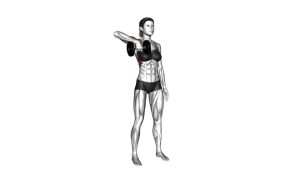
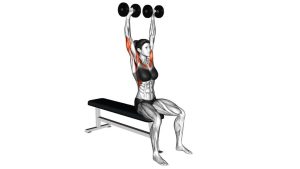
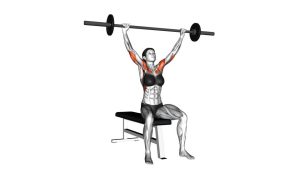
Barbell Seated Front Raise: Proper Form, Sets, Muscles Worked & FAQ
Learn how to do the Barbell Seated Front Raise with proper form to target the front delts. Includes setup, execution steps, sets and reps by goal, common mistakes, FAQ, and recommended equipment.
Barbell Seated Front Raise
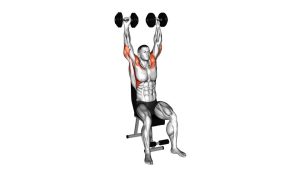
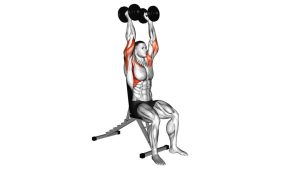
This variation is useful when you want a more controlled front raise than the standing version. Sitting down limits lower-body assistance and helps you focus on smooth shoulder flexion, consistent tempo, and better mind-muscle connection. The goal is not to use the heaviest possible load, but to move the bar cleanly while keeping tension on the front delts and minimizing trap dominance.
Quick Overview
| Body Part | Shoulders |
|---|---|
| Primary Muscle | Anterior deltoids (front delts) |
| Secondary Muscle | Upper chest, lateral delts, upper traps, serratus anterior, core stabilizers |
| Equipment | Barbell, weight plates, flat bench or upright bench seat |
| Difficulty | Beginner to Intermediate |
Sets & Reps (By Goal)
- Muscle building: 3–4 sets × 8–15 reps, 60–90 sec rest
- Technique and control: 2–4 sets × 10–12 reps, slow tempo, 45–75 sec rest
- Shoulder accessory work: 2–3 sets × 12–20 reps, moderate load, 30–60 sec rest
- Strength-endurance finisher: 2–3 sets × 15–20 reps, lighter weight, controlled burn
Progression rule: Add reps before adding load. When you can hit the top of your rep range without swinging, shrugging, or leaning back, increase weight slightly.
Setup / Starting Position
- Sit tall on a bench: Keep your chest up, spine neutral, and feet planted firmly on the floor.
- Grip the barbell evenly: Use a pronated grip about shoulder-width apart or slightly narrower.
- Start with the bar near the thighs: Arms extended with a soft elbow bend, wrists neutral.
- Brace lightly: Tighten your core just enough to prevent torso rocking during the raise.
- Set the shoulders: Keep them down and away from the ears before you start the rep.
Tip: A lighter bar or fixed-weight barbell often works better than going too heavy. This exercise rewards precision more than load.
Execution (Step-by-Step)
- Begin from the bottom: Hold the bar just in front of your thighs with a stable torso and relaxed neck.
- Raise the bar forward: Lift it in a smooth arc directly in front of your body.
- Keep a slight bend in the elbows: Do not turn it into a press or a straight-arm swing.
- Stop around shoulder height: The bar should reach roughly parallel to the floor in most reps.
- Pause briefly: Hold the top position for a moment without shrugging.
- Lower under control: Bring the bar back down slowly to the start position.
- Reset and repeat: Maintain posture and tension for every rep rather than bouncing out of the bottom.
Pro Tips & Common Mistakes
- Raise only to shoulder height: Going much higher often shifts tension away from the front delts and can irritate the shoulders.
- Stay seated and strict: The seated position should reduce cheating, not become a chance to lean back hard.
- Use controlled tempo: Try a 1–2 second lift and a 2–3 second lowering phase.
- Do not shrug: Keep the traps from taking over by keeping the shoulders down.
- Keep wrists neutral: Avoid excessive wrist extension or letting the bar roll awkwardly in your hands.
- Choose a realistic load: Front raises get sloppy quickly when the bar is too heavy.
- Do not bounce at the bottom: Start each rep from a calm, controlled position.
- Pair it smartly: This works well after overhead presses, lateral raises, or chest-supported rear delt work.
FAQ
What muscles does the Barbell Seated Front Raise work most?
The main target is the anterior deltoid. Secondary assistance can come from the upper chest, traps, and stabilizing muscles, but the front delts should do most of the work.
Is seated better than standing for front raises?
Seated front raises are usually stricter because they limit momentum from the legs and hips. That makes them a strong option for isolation and hypertrophy work.
How high should I raise the bar?
In most cases, raise the bar to about shoulder height. Going far above that can increase compensation and may reduce the quality of the rep.
Should I use a heavy barbell for this exercise?
Usually no. This is a controlled isolation movement, so moderate or even lighter loads often produce better front-delt tension and cleaner reps than going heavy.
Can beginners do the Barbell Seated Front Raise?
Yes, as long as the load is kept manageable and the motion stays controlled. Beginners often do best with a lighter fixed barbell or an unloaded technique-first approach.
Recommended Equipment
- Adjustable Weight Bench — useful for seated setup, posture support, and a wide range of upper-body training
- Olympic Barbell — the main training tool for this movement and other compound shoulder exercises
- Weight Plates — lets you micro-progress load and keep front raises strict and scalable
- Fractional Weight Plates — ideal for small load jumps on isolation lifts where standard jumps may be too large
- Resistance Bands Set — helpful for warm-ups, shoulder prep, and pairing with accessory delt work
Tip: For most lifters, a solid bench, a quality barbell, and manageable plate increments are the most useful upgrades for this exercise.