Dumbbell Alternate Shoulder Press: Proper Form, Sets, Tips & FAQ
Learn how to do the Dumbbell Alternate Shoulder Press with proper form to build stronger shoulders, improve overhead stability, and increase unilateral pressing control. Includes setup, execution, sets by goal, mistakes, FAQs, and recommended equipment.
Dumbbell Alternate Shoulder Press
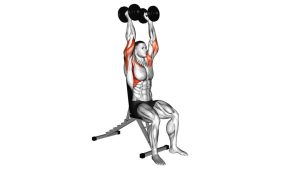
Compared with a standard two-arm shoulder press, this variation forces each side to work independently. That makes it excellent for developing unilateral shoulder strength, refining overhead form, and exposing imbalances that can stay hidden during bilateral pressing. Keep the torso tall, ribs down, and press in a smooth vertical path without leaning back or twisting through the spine.
Quick Overview
| Body Part | Shoulders |
|---|---|
| Primary Muscle | Anterior deltoid and lateral deltoid |
| Secondary Muscle | Triceps, upper chest, serratus anterior, and core stabilizers |
| Equipment | Pair of dumbbells |
| Difficulty | Intermediate |
Sets & Reps (By Goal)
- Strength: 4–5 sets × 4–6 reps per arm with 90–150 seconds rest
- Muscle growth: 3–4 sets × 8–12 reps per arm with 60–90 seconds rest
- Shoulder stability and control: 2–4 sets × 8–10 reps per arm using a slower tempo
- General fitness: 2–3 sets × 10–14 reps per arm with moderate load
Progression rule: Increase the weight only when you can press both sides smoothly without leaning, rushing the transition, or losing the fixed shoulder-level position on the non-working arm.
Setup / Starting Position
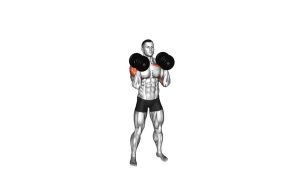
- Stand tall: Place your feet about shoulder-width apart and keep your weight evenly distributed.
- Bring the dumbbells to shoulder level: Start with both elbows bent and stacked under the weights.
- Set your torso: Brace your core, keep the ribs down, and avoid flaring the chest upward.
- Align the wrists: Keep each wrist neutral and directly over the elbow for a strong pressing position.
- Lock in posture: Shoulders stay down and back, neck relaxed, eyes forward.
Tip: Before the first rep, squeeze the glutes lightly and brace the abs to stop the lower back from taking over the movement.
Execution (Step-by-Step)
- Press one dumbbell overhead: Drive one arm upward until the elbow is nearly straight and the weight is stacked over the shoulder.
- Keep the opposite side loaded: The non-working dumbbell stays near shoulder height instead of dropping fully out of position.
- Lower with control: Bring the pressed dumbbell back down slowly to the starting position.
- Switch arms: As soon as one side returns to shoulder level, press the opposite dumbbell overhead.
- Repeat in rhythm: Continue alternating sides while keeping your torso stable and your press path vertical.
Pro Tips & Common Mistakes
- Press straight up: Keep the dumbbells traveling in a controlled overhead path, not out in front of you.
- Do not rush the switch: Finish one rep fully before the opposite arm begins pressing.
- Keep the non-working arm honest: Do not let it collapse or drift too low between reps.
- Avoid lower-back arch: Overextending the spine turns the movement into a compensation pattern.
- Stay balanced: Resist twisting or shifting your hips as one arm presses.
- Use full but safe range: Lower to shoulder level under control and press overhead without slamming into lockout.
FAQ
What is the main benefit of the dumbbell alternate shoulder press?
It improves unilateral shoulder strength, overhead stability, and core control while helping expose side-to-side imbalances. Because one arm works while the other stays loaded, the exercise increases time under tension and coordination demands.
Should I do this exercise standing or seated?
Standing is usually better if you want more total-body stability and core involvement. A seated version can reduce body sway, but the standing variation offers a stronger anti-lean and anti-rotation challenge.
How heavy should I go on alternating shoulder presses?
Choose a weight you can control without leaning back, twisting, or shortening the range of motion. Strict form matters more than load, especially because the exercise keeps tension on both sides through the set.
Is this better than pressing both dumbbells at the same time?
Not necessarily better in every case, but different. Alternating reps are excellent for control, balance, and longer muscle tension, while simultaneous presses may let you use more total weight.
What muscles should I feel working the most?
You should mainly feel the front and side delts, with assistance from the triceps and upper chest. Your core should also work to keep the torso steady throughout the set.
Recommended Equipment
- Adjustable Dumbbell Set — the most practical option for progressive overload in home shoulder training
- Resistance Band Set — useful for shoulder warm-ups, activation drills, and extra delt volume
- Thick Exercise Mat — provides better comfort and traction for warm-ups, mobility work, and floor-based shoulder prep
- High-Density Foam Roller — helpful for upper-back mobility and recovery work that can support cleaner overhead pressing
- Weightlifting Grips or Training Gloves — optional support if grip fatigue limits your control during longer pressing sessions
Tip: For this exercise, the most useful purchases are usually adjustable dumbbells and simple accessory tools that improve shoulder prep, stability, and recovery.