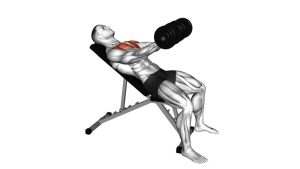
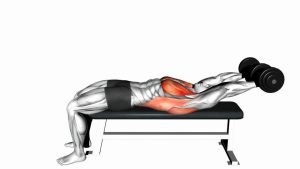
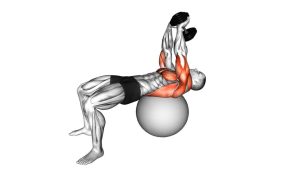
Dumbbell Pullover (Chest Focus): Proper Form, Sets, Benefits & Tips
Learn how to perform the chest-focused dumbbell pullover with step-by-step form cues, muscle activation, sets & reps by goal, common mistakes, FAQs, and recommended equipment.
Dumbbell Pullover (Chest Focus)
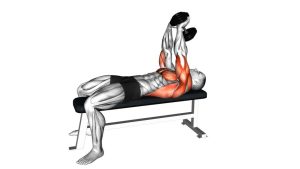
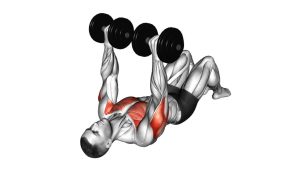
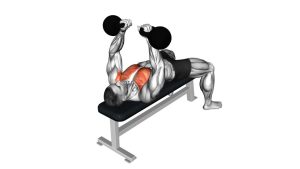
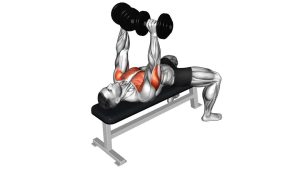
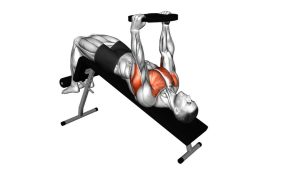
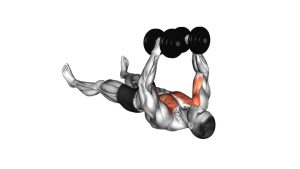
Chest-focused pullovers reward control more than heavy weight. Your goal is a smooth arc: lower until you feel a strong chest stretch while the shoulders stay stable, then return to the top with the same path. If you feel sharp shoulder discomfort or the movement turns into a triceps extension, shorten the range and reduce the load.
Quick Overview
| Body Part | Chest |
|---|---|
| Primary Muscle | Pectoralis major (chest) |
| Secondary Muscle | Latissimus dorsi, teres major, anterior deltoid, triceps (stabilization) |
| Equipment | Dumbbell + flat bench (optional: lifting straps for grip) |
| Difficulty | Intermediate (requires shoulder control and good range awareness) |
Sets & Reps (By Goal)
- Muscle growth (hypertrophy): 3–4 sets × 8–12 reps (60–90 sec rest)
- Chest stretch + pump finisher: 2–3 sets × 12–15 reps (45–75 sec rest)
- Strength accessory: 3–5 sets × 6–8 reps (90–120 sec rest)
- Shoulder-friendly control work: 2–3 sets × 10–12 reps (slow tempo, light-moderate load)
Progression rule: Add reps first, then add small weight increases. If your range gets shorter or you start swinging, reduce load and rebuild clean reps.
Setup / Starting Position
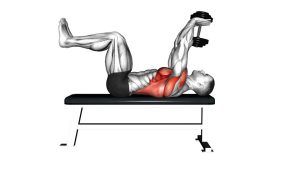
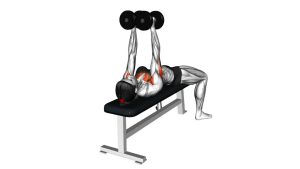
- Lie on a flat bench: Head supported, upper back stable, feet planted firmly.
- Grip the dumbbell securely: Hold one dumbbell with both hands (palms supporting the inside of the top plate). Keep wrists neutral.
- Start over the chest: Dumbbell above mid-chest, arms almost straight with a soft elbow bend (10–20°).
- Brace your torso: Ribs down, core lightly tight, avoid excessive arching.
- Set the shoulders: Slight retraction/depression (chest up), but keep the neck relaxed.
Tip: If you want more chest emphasis, focus on a controlled stretch and keep the elbows slightly closer (not flared wide). If you go too deep or flare, it often shifts stress to the shoulders.
Execution (Step-by-Step)
- Inhale and lower slowly: Move the dumbbell in a smooth arc behind your head. Keep the elbow angle nearly fixed.
- Find your safe stretch: Stop when you feel a strong chest stretch while the shoulders remain stable—no pinching.
- Pause briefly: Hold 0.5–1 second in control (no bouncing).
- Exhale and pull back: Bring the dumbbell back over the chest using the pecs, following the same arc.
- Finish stacked: Return to the start position over mid-chest, keeping the elbows soft and the ribcage controlled.
Pro Tips & Common Mistakes
- Keep elbows fixed: A small bend is fine—just don’t turn it into an arm exercise.
- Don’t chase extreme depth: Lower only as far as your shoulders feel smooth and stable.
- Control your ribs: Excess rib flare often means you’re compensating for range.
- Use a slow tempo: 2–4 seconds down, slight pause, 1–2 seconds up.
- Choose the right load: Moderate weight usually beats heavy weight for chest-focused pullovers.
- End your chest day with it: Pullovers work great after presses and fly variations for a loaded stretch.
FAQ
Should I feel this more in my chest or my lats?
Both can work, but for a chest-focused pullover, you should feel a strong stretch across the pecs (especially in the bottom portion) and a solid contraction returning to the top. If it’s mostly lats, reduce depth, keep the elbows slightly closer, and focus on pulling “over the chest” instead of “toward the hips.”
Is the dumbbell pullover safe for shoulders?
It can be, as long as you use a controlled range. Avoid forcing the dumbbell too far behind your head, keep the ribs down, and stop if you feel pinching in the front of the shoulder. When in doubt, lighten the weight and shorten the arc.
How much should my elbows bend?
Keep a soft bend (about 10–20°) and maintain that angle throughout the rep. If the elbows bend more during the descent, you’re likely turning it into a triceps extension and losing chest tension.
Where does this fit in a chest workout?
Most lifters do best with pullovers after presses (bench or incline) and sometimes after flys. Use it as a loaded stretch accessory: controlled reps, strong mind-muscle connection, and no swinging.
What’s a good alternative if I don’t have a bench?
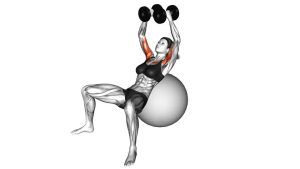
You can do floor pullovers (shorter range) or use a stability ball. Cable pullovers are also excellent and allow a more consistent tension curve.
Recommended Equipment
- Adjustable Weight Bench — stable support for safe range and better control
- Adjustable Dumbbells — quick load changes for progressive overload
- Lifting Straps — optional help if grip limits your set before the chest does
- Thick Exercise Mat — useful for floor pullovers or added comfort near the bench
- Foam Roller — helpful for thoracic mobility to improve pullover comfort
Tip: Comfort matters, but control matters more. Use tools that improve your setup—never tools that force range or cause symptoms.