Dumbbell Straight-Arm Pullover (Chest Focus): Form, Sets, Tips & FAQ
Learn how to perform the Dumbbell Straight-Arm Pullover with a chest focus to build pecs through a deep stretch. Includes step-by-step form, sets and reps by goal, common mistakes, FAQs, and recommended equipment.
Dumbbell Straight-Arm Pullover (Chest Focus)
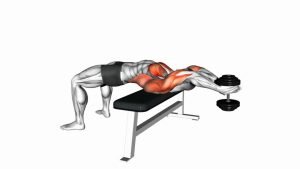
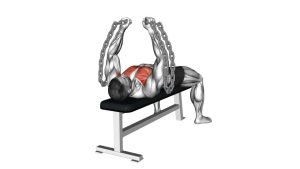
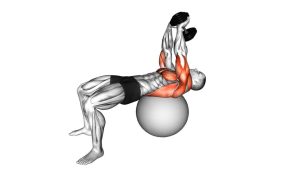
This pullover is most effective when you keep your elbows slightly bent and fixed and move only at the shoulders. You should feel a deep stretch across the lower-to-mid chest and a strong contraction as the dumbbell returns over your chest. If you feel it mostly in the lats, reduce range and focus on keeping the ribcage “up” without over-arching the low back.
Quick Overview
| Body Part | Chest |
|---|---|
| Primary Muscle | Pectoralis major (mid/lower fibers emphasis via stretch) |
| Secondary Muscle | Latissimus dorsi (assist), anterior deltoids, triceps (long head), serratus anterior (stability) |
| Equipment | 1 dumbbell + flat bench (optional: lifting straps, small towel for head support) |
| Difficulty | Beginner–Intermediate (depends on shoulder mobility and load control) |
Sets & Reps (By Goal)
- Chest hypertrophy: 3–4 sets × 8–12 reps (60–90 sec rest, slow eccentric)
- Strength accessory: 3–5 sets × 6–10 reps (90–120 sec rest, strict control)
- Stretch & pump finisher: 2–3 sets × 12–15 reps (45–75 sec rest, lighter load)
- Mobility-focused (light): 2–3 sets × 10–12 reps (3–5 sec lowering, very controlled)
Progression rule: Add reps first while keeping the same smooth range and tempo. Then increase load in small steps. If shoulder comfort decreases, reduce depth and slow the lowering phase.
Setup / Starting Position
- Bench position: Lie flat on a bench with head, upper back, and hips supported. Plant feet firmly for stability.
- Grip: Hold one dumbbell with both hands (palms under the inner plate / handle area). Keep wrists neutral.
- Arm angle: Start with the dumbbell above mid-chest. Elbows slightly bent—lock this angle in place.
- Ribcage & core: Light brace (no extreme arch). Think “ribs stacked” while keeping the chest proud.
- Shoulders: Keep shoulders down and stable; avoid shrugging as the dumbbell moves back.
Tip: If you feel front-shoulder pinching, narrow your range and keep the dumbbell path slightly more “over the face” than far behind the head.
Execution (Step-by-Step)
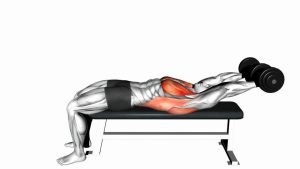
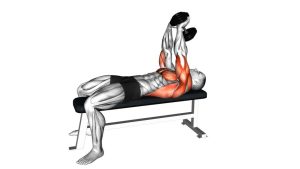
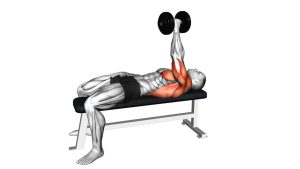
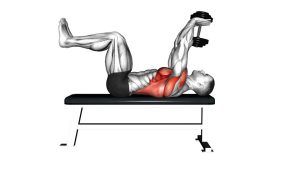
- Start stacked: Dumbbell above chest, elbows soft, shoulder blades stable against the bench.
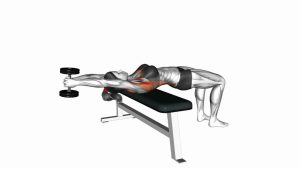
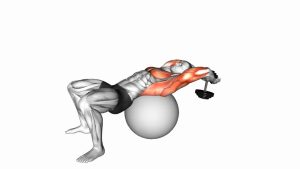
- Lower in an arc: Slowly bring the dumbbell back behind your head by moving at the shoulders (not bending elbows).
- Control the stretch: Stop when you feel a strong chest stretch while keeping ribs/core controlled (no lumbar over-arch).
- Pause briefly: 0.5–1 second in the stretched position—no bouncing.
- Pull back over the chest: Drive the dumbbell back up in the same arc, thinking “bring the arms back over the chest.”
- Finish strong: End above the chest without locking elbows hard or losing shoulder position.
Pro Tips & Common Mistakes
- Go slow on the way down: A 2–4 second eccentric is the “money” for chest stretch.
- Keep elbows soft and fixed: Don’t convert it into a press/extension by bending elbows.
- Don’t chase depth: More range isn’t better if it causes shoulder pinching or low-back arching.
- Control your ribs: Avoid flaring the ribcage to “fake” range of motion.
- Stay smooth: No bouncing out of the bottom—pause, then pull back with control.
- Great pairing: Use after presses or flyes as a deep-stretch accessory (not your heaviest lift).
FAQ
Should I feel this more in my chest or my lats?
Both can contribute, but this variation is chest-focused. You should feel a deep chest stretch and a strong pull back over the chest. If it’s mostly lats, reduce the depth and keep the path controlled with ribs/core stable.
How far should the dumbbell go behind my head?
Only as far as you can go while staying controlled and pain-free. Stop when you feel a strong stretch without shoulder pinching or low-back compensation. A slightly shorter range with better tension is often more effective.
Is it okay to bend the elbows?
A small, fixed bend is ideal. If you bend the elbows more as you lower, you reduce the long-lever stretch and turn the movement into a different exercise.
Where does this fit in a chest workout?
It works best as an accessory after your main press (bench/incline/DB press). Use moderate weight, slow lowering, and keep tension. It can also be a finisher for a stretch + pump effect.
Who should be cautious with pullovers?
Anyone with shoulder impingement symptoms, limited overhead mobility, or sharp front-shoulder pain should be cautious. Reduce range, use lighter load, and prioritize control. If pain persists, consult a qualified professional.
Recommended Equipment (Optional)
- Adjustable Weight Bench — stable bench support improves control and comfort
- Adjustable Dumbbells — easy load changes for progressive overload
- Weightlifting Straps — helpful if grip limits your set before your chest does
- Thick Exercise Mat — useful under the bench area for stability and comfort
- Foam Roller — great for thoracic mobility work to improve shoulder comfort
Tip: Choose equipment that improves stability and control. For chest-focused pullovers, smoother reps beat heavier weight.