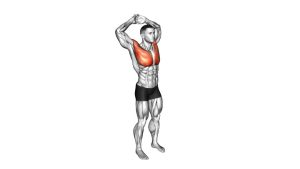
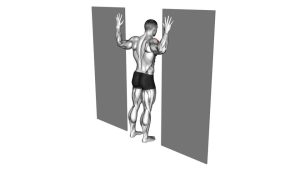
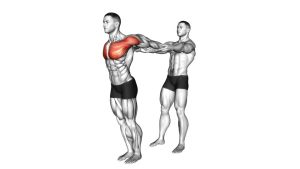
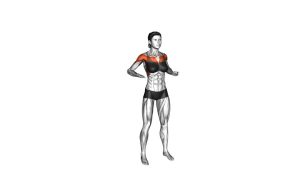
Elbows-Back Chest Stretch: How to Do It, Benefits, Sets, Tips & FAQ
Learn the Elbows-Back Chest Stretch (Standing Chest Opener) to improve posture and open tight pecs and shoulders. Includes step-by-step form, sets by goal, common mistakes, FAQs, and optional equipment.
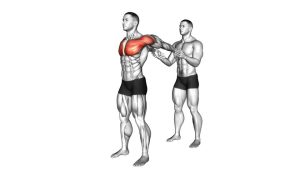
Elbows-Back Chest Stretch (Standing Chest Opener)
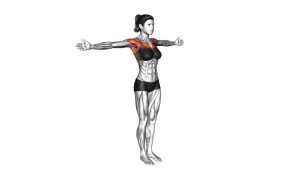
This stretch is best done with controlled tension, not force. You should feel a comfortable stretch across the pecs (chest) and the front of the shoulders—without pinching, numbness, or sharp pain. Keep the movement smooth and breathe normally.
Quick Overview
| Body Part | Chest |
|---|---|
| Primary Muscle | Pectorals (Pectoralis major; pec minor often feels the stretch) |
| Secondary Muscle | Anterior deltoids (front shoulder); upper-back stabilizers (rhomboids/mid-traps) assist |
| Equipment | None (optional: resistance band or doorway/wall for progression) |
| Difficulty | Beginner (excellent for warm-ups, cooldowns, posture breaks) |
Sets & Reps (By Goal)
- Warm-up mobility: 1–2 sets × 8–12 reps (1–2 sec squeeze/hold, easy effort)
- Posture / desk reset: 2–4 rounds × 6–10 reps (through the day, no strain)
- Cooldown chest stretch: 2–3 sets × 20–40 sec holds (gentle stretch, steady breathing)
- Shoulder-opening routine: 2–3 sets × 10–15 reps (slow tempo, focus on form)
Progression rule: Increase time under tension first (slightly longer holds), then increase reps. Avoid “cranking” the elbows back—quality beats range.
Setup / Starting Position
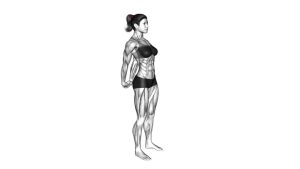
- Stand tall: Feet hip-width, knees soft, spine neutral, chin slightly tucked (neck long).
- Arms at 90°: Bend elbows around 90 degrees, upper arms near your sides.
- Shoulders down: Relax traps; keep shoulders away from the ears.
- Ribs stacked: Lightly brace so you don’t flare ribs or over-arch the low back.
- Hands relaxed: Don’t clench fists—keep tension where it belongs (chest/shoulders).
Tip: If you tend to arch your back, do this in front of a mirror and keep your pelvis neutral and ribs down.
Execution (Step-by-Step)
- Set posture: Tall stance, ribs down, shoulders relaxed, eyes forward.
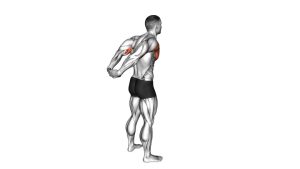
- Pull elbows back: Drive elbows gently back and slightly wide to open the chest.
- Squeeze lightly: Feel the chest stretch while the shoulder blades retract softly.
- Hold & breathe: Pause 1–3 seconds (or longer for a static stretch), breathe slowly.
- Return with control: Bring elbows forward a bit to reduce tension, then repeat smoothly.
Pro Tips & Common Mistakes
- Keep ribs down: Don’t lean back to fake mobility—open the chest without dumping into the low back.
- Elbows go back and wide: Not straight down; keep the motion comfortable and controlled.
- Shoulders stay “heavy”: No shrugging—relax traps and keep neck long.
- Don’t force end-range: A mild-to-moderate stretch beats aggressive pulling.
- Use breath: Inhale to expand the chest, exhale to soften and settle into the stretch.
- Great pairing: Combine with rows, face pulls, band pull-aparts for posture-friendly balance.
FAQ
Where should I feel the Elbows-Back Chest Stretch?
Most people feel it across the pecs and the front of the shoulders. You may also feel a gentle “opening” sensation around the collarbone area. If you feel a sharp pinch in the shoulder joint, reduce range and keep ribs down.
Is this good for rounded shoulders and desk posture?
Yes—it can help temporarily open the chest and reinforce better positioning. For longer-term posture improvement, pair it with upper-back strengthening (rows, face pulls, rear-delt work) and regular movement breaks.
Should I do it as reps or a long hold?
Both work. Use reps (8–12) as a warm-up or desk reset, and use holds (20–40 seconds) after training or when you want a deeper stretch. Keep it comfortable—no forcing.
What if I feel a front-shoulder pinch?
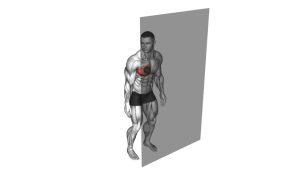
Reduce the squeeze, keep elbows a bit lower, and avoid flaring ribs. If it still pinches, switch to a gentler option like a doorway pec stretch with a lower arm angle, or consult a qualified professional if symptoms persist.
Recommended Equipment (Optional)
- Resistance Bands Set — helps add gentle resistance for posture drills (pull-aparts, rows) to pair with this stretch
- Doorway Pull-Up Bar — useful anchor point for band work and posture training; can complement chest-opening routines
- Foam Roller — supports thoracic extension mobility to help the chest open more naturally
- Massage Ball / Lacrosse Ball — can help release pec tightness (use gently) before stretching
- Posture Corrector Brace (Light Reminder) — optional awareness tool; best used short-term alongside strengthening
Tip: Equipment is optional—this stretch works great on its own. If any tool increases shoulder symptoms, stop and choose a gentler variation.