Standing Shoulder Full Flexion: Form, Benefits, Sets, Tips & FAQ
Learn how to perform the Standing Shoulder Full Flexion with proper form to improve overhead mobility, shoulder control, and posture. Includes setup, step-by-step execution, sets and reps by goal, common mistakes, FAQs, and recommended equipment.
Standing Shoulder Full Flexion
This movement is best used as a warm-up, mobility drill, or light activation exercise before overhead training. The goal is not heavy loading. Instead, focus on a smooth raise, controlled overhead reach, and a stable torso from start to finish. Done correctly, it can help improve overhead mechanics, shoulder comfort, and movement quality.
Quick Overview
| Body Part | Shoulders |
|---|---|
| Primary Muscle | Anterior deltoids |
| Secondary Muscle | Upper chest, serratus anterior, upper traps, rotator cuff stabilizers |
| Equipment | None |
| Difficulty | Beginner |
Sets & Reps (By Goal)
- Warm-up before upper-body training: 2–3 sets × 8–12 reps
- Shoulder mobility practice: 2–4 sets × 10–15 reps with slow control
- Posture / movement quality work: 2–3 sets × 8–10 reps with a 1–2 second pause overhead
- Recovery day activation: 1–2 easy sets × 10–12 reps
Progression rule: First improve control, smoothness, and overhead range. Only then add light tools such as a stick, strap, or band if needed.
Setup / Starting Position
- Stand tall: Place your feet about hip-width to shoulder-width apart.
- Brace lightly: Tighten your abs gently and keep the ribs stacked over the pelvis.
- Start with the arms in front: Bring the hands together or keep them close in front of the chest.
- Relax the neck and shoulders: Avoid shrugging before the movement even begins.
- Set a neutral spine: Keep your chest lifted naturally without flaring the ribs.
Tip: Think of “growing tall” before each rep so the shoulders can move overhead without the lower back compensating.
Execution (Step-by-Step)
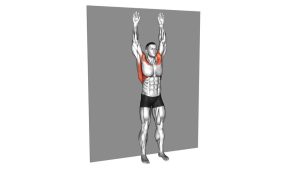
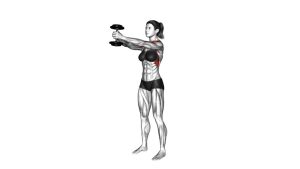
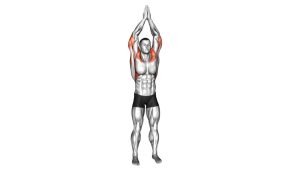
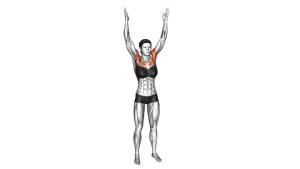
- Begin the raise: Lift your arms upward in a smooth arc from the front of the body.
- Move through shoulder flexion: Let the shoulders do the work instead of swinging the torso.
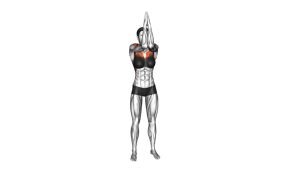
- Reach overhead: Continue until the arms are fully overhead or as high as you can go without pain or rib flare.
- Pause briefly: Hold the top position for 1–2 seconds while keeping the core engaged.
- Lower with control: Bring the arms back down along the same path to the starting position.
Pro Tips & Common Mistakes
- Keep ribs down: Do not turn the exercise into a standing backbend.
- Use a full but honest range: Only raise as high as your shoulders allow with good form.
- Move slowly: Control matters more than speed in this drill.
- Do not swing: Momentum reduces shoulder activation and hides mobility limits.
- Avoid excessive shrugging: Let the shoulder blades rotate naturally, but do not jam the traps upward.
- Exhale gently at the top: This can help keep the rib cage from flaring.
- Use it before pressing days: It pairs well with overhead presses, landmine presses, and shoulder rehab work.
FAQ
What does the Standing Shoulder Full Flexion work?
It mainly trains the anterior deltoids while also improving overhead mobility, scapular upward rotation, and shoulder control.
Is this a strength exercise or a mobility exercise?
It is primarily a mobility and activation drill. It can support strength training, but its main value is improving movement quality and overhead mechanics.
Should my arms touch my ears at the top?
Not necessarily. Reach overhead as far as you can while keeping good posture. Full range is great, but not at the cost of pain, shrugging, or leaning backward.
Can beginners use this as a warm-up?
Yes. It is very beginner-friendly and works well before shoulder workouts, upper-body training, posture sessions, or mobility routines.
What if I feel pinching in the shoulder?
Reduce range of motion, slow the rep down, and make sure you are not forcing the arms overhead. If the pinching continues, stop and reassess your form or get professional guidance.
Recommended Equipment
- Adjustable Yoga / Mobility Stick — useful for shoulder mobility drills, posture practice, and assisted overhead range work
- REP Fitness Cotton Stretching Strap — helpful for assisted shoulder flexion, mobility work, and controlled stretching
- Resistance Bands with Handles / Stretching Strap — adds light resistance or assistance for shoulder warm-ups and rehab-style training
- Foam Roller — useful for upper-back and lat tissue work that may improve overhead shoulder motion
- Fit Geno Posture Corrector — optional posture-awareness tool that can complement mobility work, not replace it
Tip: Tools should support better movement quality, not force extra range. Use light assistance and keep the shoulders comfortable throughout.