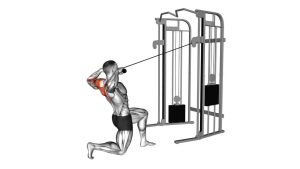
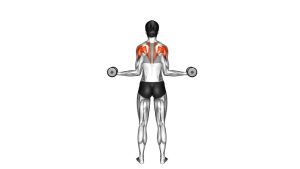
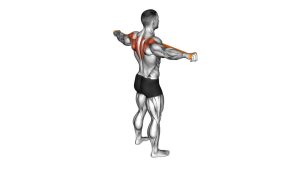
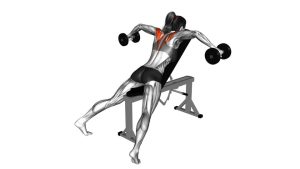
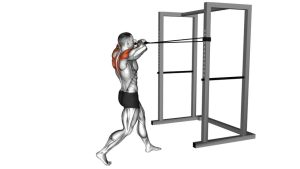
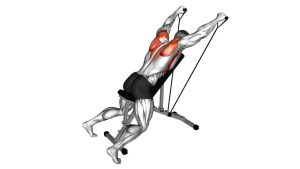
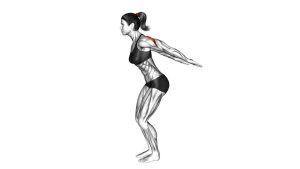
Resistance Band Chest-Supported Reverse Fly: Form, Sets, Tips & FAQ
Learn the Resistance Band Chest-Supported Reverse Fly for stronger rear delts and upper back. Step-by-step form, sets by goal, setup tips, common mistakes, FAQs, and recommended equipment.
Resistance Band Chest-Supported Reverse Fly
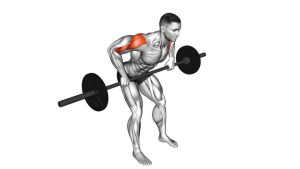
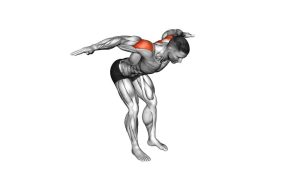
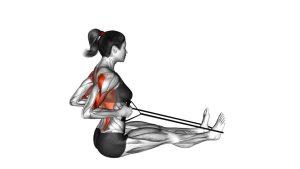
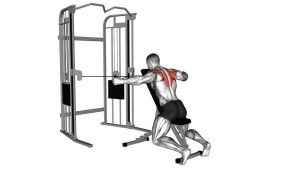
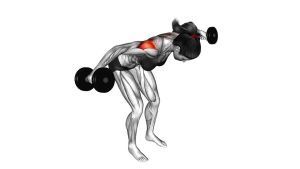
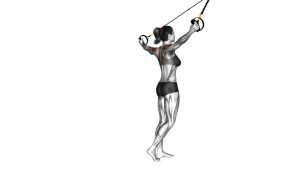
This exercise is best performed with a moderate range of motion, a slight bend in the elbows, and a steady tempo. The goal is not to row the bands backward, but to create a wide flying motion that emphasizes the rear shoulders. When performed correctly, you should feel the work mainly in the back of the shoulders and across the upper back, not in the neck or lower back.
Quick Overview
| Body Part | Rear Shoulders |
|---|---|
| Primary Muscle | Rear deltoids (posterior deltoids) |
| Secondary Muscle | Rhomboids, middle trapezius, rotator cuff stabilizers |
| Equipment | Resistance bands and an incline bench or chest-supported setup |
| Difficulty | Beginner to Intermediate |
Sets & Reps (By Goal)
- Muscle building: 3–4 sets × 10–15 reps with controlled tempo and 45–75 sec rest
- Shoulder stability / posture: 2–4 sets × 12–20 reps with lighter tension and strict form
- Warm-up / activation: 2–3 sets × 12–15 reps with easy-to-moderate tension before upper-body training
- End-of-workout burnout: 2–3 sets × 15–20 reps with light bands and constant control
Progression rule: Increase reps first, then slightly increase band tension only when you can keep the movement wide, smooth, and free from shrugging or momentum.
Setup / Starting Position
- Set the bench: Adjust an incline bench to a low-to-moderate angle so your chest can rest comfortably against the pad.
- Anchor the bands: Secure the resistance bands low enough that the pull line allows your arms to travel outward in a reverse fly pattern.
- Lie chest-down: Place your chest firmly on the bench with your head neutral and feet planted on the floor for balance.
- Grab the handles or band ends: Start with arms hanging down or slightly forward, palms facing inward, and elbows softly bent.
- Brace lightly: Keep the core engaged, shoulders down, and neck relaxed before beginning the first rep.
Tip: Set the band tension light enough that you can feel the rear delts working without turning the exercise into a row.
Execution (Step-by-Step)
- Start under control: Begin with your arms extended downward or slightly in front of you, keeping a soft bend in the elbows.
- Open the arms wide: Pull the bands outward and backward in a broad arc, leading with the elbows and upper arms rather than the hands.
- Squeeze the rear delts and upper back: At the top, bring the arms roughly in line with the shoulders while squeezing the shoulder blades gently together.
- Pause briefly: Hold the top for a moment without shrugging or arching the lower back.
- Lower slowly: Return to the start with control, resisting the pull of the bands all the way down.
Pro Tips & Common Mistakes
- Keep a slight elbow bend: Locking the arms straight can stress the joints, while too much bend shifts the exercise toward a row.
- Move in a wide arc: Think “spread the bands apart” rather than “pull back.”
- Do not shrug: Keep the traps from taking over by keeping the shoulders down and away from the ears.
- Use chest support properly: Let the bench eliminate momentum so the rear delts do the work.
- Control the eccentric: The lowering phase is where a lot of the training benefit happens.
- Choose the right band tension: Too much resistance usually reduces range of motion and encourages cheating.
FAQ
What muscles does the Resistance Band Chest-Supported Reverse Fly work?
It primarily targets the rear deltoids and secondarily trains the rhomboids, middle trapezius, and other upper-back stabilizers.
Is this better than a standing reverse fly?
The chest-supported version often makes it easier to isolate the rear delts because the bench reduces body movement and removes a lot of momentum from the exercise.
Should I pull the bands as far back as possible?
No. Pull only as far as you can while keeping tension on the rear delts and maintaining a wide fly motion. Going too far back often turns it into a row.
How heavy should the band be?
Use a band that allows you to complete all reps with smooth control, a visible squeeze at the top, and no shrugging. Light to moderate tension is usually best for this movement.
Can beginners do this exercise?
Yes. It is beginner-friendly when done with light resistance, controlled tempo, and proper setup. Start with less tension and prioritize form before adding more load.
Recommended Equipment
- Fit Simplify Resistance Loop Exercise Bands — useful for light activation work, shoulder warm-ups, and progressive band resistance
- Resistance Bands Set — a versatile choice for rear-delt flies, rows, pull-aparts, and general shoulder training
- Adjustable Weight Bench — allows the chest-supported incline setup used for cleaner reverse fly reps
- Foam Roller — helpful for upper-back mobility and recovery work between shoulder sessions
- Door Anchor for Resistance Bands — useful if you want a stable low anchor point for home band fly variations
Tip: For this exercise, the best equipment investment is usually a quality band set and a stable adjustable bench. Recovery tools are optional but useful for shoulder comfort and upper-back mobility.