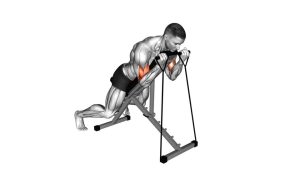
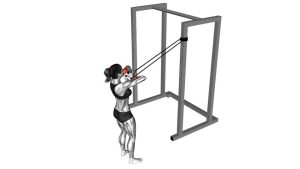
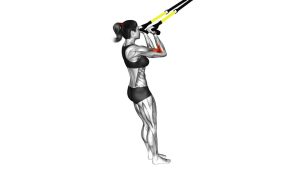
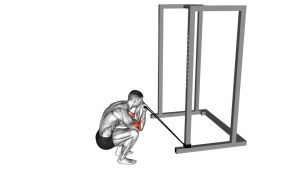
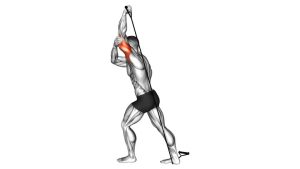
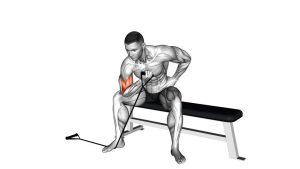
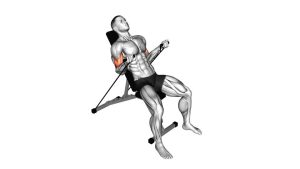
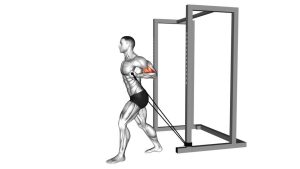
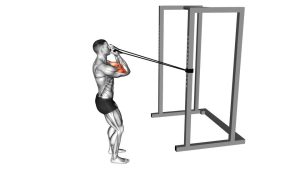
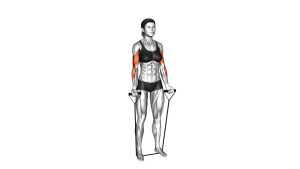
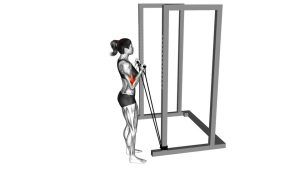
Band Biceps Curl: Proper Form, Sets, Muscles Worked & FAQ
Learn how to do the Band Biceps Curl with proper form to build stronger upper arms. Includes muscles worked, setup, step-by-step execution, sets and reps by goal, common mistakes, FAQs, and recommended equipment.
Band Biceps Curl
The Band Biceps Curl is ideal for home workouts, warm-ups, hypertrophy sessions, and joint-friendly arm training. Because band tension increases as you lift, this exercise rewards smooth reps, strong peak contraction, and strict technique. You should feel the work mainly in the front of the upper arms, not in the shoulders, lower back, or wrists.
Quick Overview
| Body Part | Biceps |
|---|---|
| Primary Muscle | Biceps brachii |
| Secondary Muscle | Brachialis, brachioradialis, forearm stabilizers |
| Equipment | Resistance band |
| Difficulty | Beginner |
Sets & Reps (By Goal)
- Muscle growth: 3–4 sets × 10–15 reps with controlled tempo and 45–75 seconds rest
- Strength endurance: 2–4 sets × 12–20 reps with smooth full-range reps and 30–60 seconds rest
- Beginner arm training: 2–3 sets × 8–12 reps using a light-to-moderate band
- Warm-up / activation: 1–2 sets × 15–20 reps with light resistance and strict form
Progression rule: First add reps or slow down the lowering phase. Then increase band tension only when you can keep the elbows still and the reps clean.
Setup / Starting Position
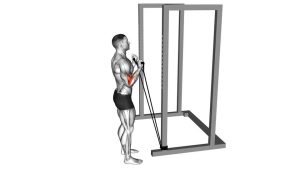
- Step onto the band: Place both feet about hip-width to shoulder-width apart on the center of the resistance band.
- Grab the ends securely: Hold one end in each hand with your palms facing forward.
- Stand tall: Keep your chest up, core braced, and shoulders relaxed.
- Set the elbows: Let your arms hang down naturally with your elbows close to your sides.
- Start under tension: There should be slight tension in the band at the bottom without forcing your shoulders upward.
Tip: If the band feels too loose, widen your stance slightly or choose a stronger band to maintain good resistance throughout the rep.
Execution (Step-by-Step)
- Brace your body: Keep your torso still, spine neutral, and eyes forward.
- Initiate the curl: Bend your elbows and pull the band upward while keeping your upper arms close to your torso.
- Lift in an arc: Bring your hands toward shoulder or upper-chest level without swinging your body.
- Squeeze at the top: Pause briefly and contract your biceps hard at peak flexion.
- Lower with control: Slowly return to the starting position, resisting the band on the way down.
- Repeat smoothly: Maintain constant tension and repeat for the prescribed number of reps.
Pro Tips & Common Mistakes
- Keep the elbows pinned: Too much elbow travel turns the curl into a front-delt assisted movement.
- Use a full range: Lower until the arms are nearly straight, then curl all the way up under control.
- Don’t swing: Momentum reduces biceps tension and shifts work into the shoulders and lower back.
- Control the eccentric: The lowering phase is valuable for muscle-building—don’t let the band snap you down.
- Keep wrists neutral: Avoid excessive wrist bending that can reduce comfort and stability.
- Match band tension to your goal: Use moderate tension for hypertrophy and lighter tension for higher-rep pump or warm-up work.
FAQ
What muscles does the Band Biceps Curl work?
The main target is the biceps brachii. The exercise also involves the brachialis, brachioradialis, and smaller forearm stabilizers that help control the band.
Is a resistance band curl effective for building biceps?
Yes. Resistance bands can be very effective for biceps training when you use enough tension, full range of motion, and strict form. The band provides increasing resistance as you lift, which can create a strong peak contraction.
How is the Band Biceps Curl different from a dumbbell curl?
A band curl becomes harder as the band stretches, so the top of the rep often feels more challenging. Dumbbells usually provide a different resistance profile and can feel heavier through the middle portion of the lift.
Can beginners do Band Biceps Curls?
Absolutely. This is a beginner-friendly exercise because resistance bands are easy to scale. Start with a lighter band and prioritize clean reps over heavy tension.
What are the most common mistakes?
The biggest mistakes are using body swing, letting the elbows drift forward, rushing the lowering phase, and choosing a band that is too strong to control properly.
Recommended Equipment
- Resistance Bands Set — useful for scaling tension as you get stronger and for adding variety to arm training
- Tube Resistance Bands with Handles — offers a comfortable grip for standing curls and other upper-body exercises
- Exercise Mat — creates a stable training surface and adds comfort for home workouts
- Door Anchor for Resistance Bands — expands your band exercise options beyond curls for a more complete training setup
- Workout Gloves — can improve grip comfort during higher-rep band sessions
Tip: Choose quality bands with multiple resistance levels so you can use lighter tension for warm-ups and heavier tension for working sets.