Band Incline T Raise: Proper Form, Rear Delt Benefits, Sets & FAQ
Learn how to perform the Band Incline T Raise with proper form to target the rear delts, upper back, and shoulder stabilizers. Includes setup, execution, sets by goal, common mistakes, FAQs, and recommended equipment.
Band Incline T Raise
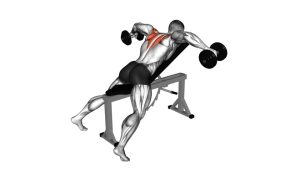
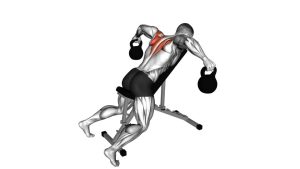
This exercise works best with light-to-moderate resistance, a controlled tempo, and a strong mind-muscle connection. Because the bench removes most body English, the rear delts and upper back have to do the work directly. You should feel tension in the back of the shoulders and between the shoulder blades, not in the neck or lower back.
Quick Overview
| Body Part | Rear Shoulders |
|---|---|
| Primary Muscle | Rear deltoids (posterior delts) |
| Secondary Muscle | Middle traps, rhomboids, rotator cuff, lower traps |
| Equipment | Resistance band and incline bench |
| Difficulty | Beginner to Intermediate |
Sets & Reps (By Goal)
- Muscle building: 3–4 sets × 10–15 reps with controlled tempo and 45–75 sec rest
- Shoulder endurance / posture work: 2–4 sets × 12–20 reps with lighter resistance and 30–60 sec rest
- Warm-up / activation: 2–3 sets × 10–12 reps using very light resistance before upper-body training
- Technique focus: 2–3 sets × 8–10 slow reps with a 1–2 second squeeze at the top
Progression rule: Increase reps first, then band tension. Only make it harder if you can keep the same arm path, avoid shrugging, and maintain steady upper-back control.
Setup / Starting Position
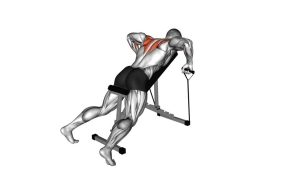
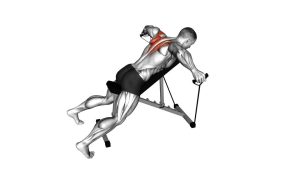
- Set the bench: Adjust an incline bench to a moderate angle that allows your chest to stay fully supported.
- Position your body: Lie face down with your chest on the pad, head neutral, and feet planted securely.
- Grab the bands: Hold the resistance band handles or ends with a neutral grip and let the arms hang down naturally.
- Create tension: Make sure the band is anchored or positioned so there is light tension at the bottom.
- Set the shoulders: Keep the shoulders down and away from the ears before starting the first rep.
Tip: Use a lighter band than you think you need. Rear-delt isolation usually works best with strict form, not heavy resistance.
Execution (Step-by-Step)
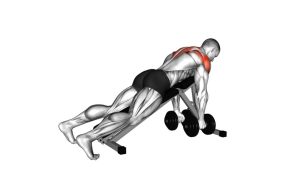
- Start from the bottom: Let the arms hang below the shoulders with a slight bend in the elbows.
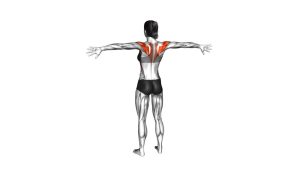
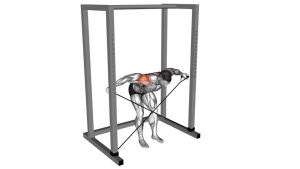
- Raise into a T: Lift the arms out to the sides until they form a wide T shape with your torso.
- Lead with the elbows: Think about moving the elbows outward rather than yanking with the hands.
- Squeeze at the top: Pause briefly when the rear delts and upper back are fully engaged.
- Lower with control: Return slowly to the start position without letting the band snap you down.
Pro Tips & Common Mistakes
- Keep the chest glued to the bench: Lifting the torso reduces isolation and adds momentum.
- Use a slight elbow bend: Locked elbows can make the movement feel stiff and stressful on the joint.
- Don’t shrug at the top: Keep upper traps from taking over by keeping the shoulders down.
- Raise wide, not backward: Pulling too far behind the body shifts the movement away from the intended line.
- Control the lowering phase: The eccentric portion helps build stability and muscle control.
- Stay light and precise: This is not a max-resistance exercise. Clean reps beat heavy reps here.
FAQ
What muscles does the Band Incline T Raise work most?
The main target is the rear deltoid. It also trains the middle traps, rhomboids, and small shoulder stabilizers that help improve posture and shoulder control.
Is the Band Incline T Raise better than standing rear delt raises?
It can be better for strict isolation because the incline bench supports the torso and reduces cheating. That makes it easier to focus on clean rear-delt activation.
How high should I raise my arms?
Raise until your arms are roughly in line with your shoulders, forming a T. You do not need to go excessively high. Focus on tension, not range for its own sake.
Why do I feel this in my traps more than my rear delts?
That usually happens when you shrug, use too much resistance, or rush the reps. Lower the band tension and think about moving the arms wide while keeping the shoulders away from the ears.
Can beginners use this exercise?
Yes. It is a very good beginner-friendly rear-delt exercise as long as the resistance stays light enough to maintain proper form and control.
Recommended Equipment (Optional)
- Resistance Bands with Handles — ideal for smooth tension and comfortable grip during rear-delt raises
- Adjustable Incline Weight Bench — gives stable chest support and improves exercise isolation
- Loop Resistance Bands Set — useful for lighter shoulder activation and higher-rep accessory work
- Exercise Mat — helpful for setup comfort, band anchoring, and home gym support
- Foam Roller — useful for upper-back mobility work before shoulder training sessions
Tip: For this exercise, the best equipment is usually the one that lets you keep tension manageable and technique clean. Avoid using bands that force you to shrug or shorten the range.