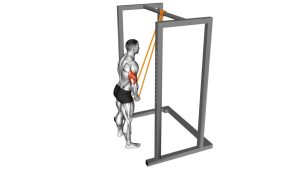
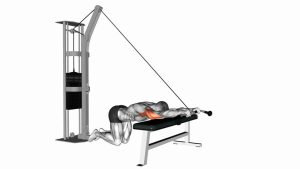
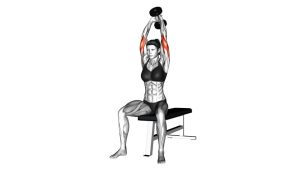
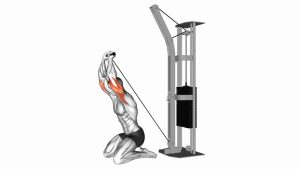
Band Overhead Single-Arm Triceps Extension: Form, Sets, Tips & FAQ
Learn the Band Overhead Single-Arm Triceps Extension with proper setup, step-by-step form, sets by goal, common mistakes, FAQs, and recommended Amazon equipment for stronger triceps.
Band Overhead Single-Arm Triceps Extension
This exercise is ideal for lifters who want a joint-friendly triceps movement they can do at home or in the gym with minimal equipment. The key is to keep the upper arm stable, the elbow pointing upward, and the core braced so the triceps do the work instead of the shoulder or lower back. Smooth reps and full control matter more than forcing extra band tension.
Quick Overview
| Body Part | Triceps |
|---|---|
| Primary Muscle | Triceps brachii (long head emphasis) |
| Secondary Muscle | Triceps lateral head, triceps medial head, shoulder stabilizers, core |
| Equipment | Resistance band with handle or grip point |
| Difficulty | Beginner to Intermediate |
Sets & Reps (By Goal)
- Muscle growth: 3–4 sets × 10–15 reps per arm with 45–75 seconds rest
- Strength endurance: 2–4 sets × 15–20 reps per arm with 30–60 seconds rest
- Technique and control: 2–3 sets × 8–12 slow reps per arm with a 1–2 second squeeze at lockout
- Finisher work: 2–3 sets × 12–20 reps per arm at a controlled pace after presses or dips
Progression rule: First increase control and range, then add reps, and only after that move to a thicker band or more tension.
Setup / Starting Position
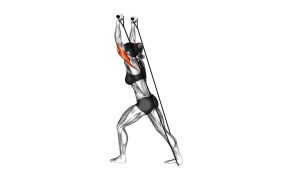
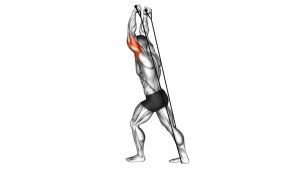
- Anchor the band: Secure the resistance band low behind your body, or stand on it if the setup allows a clean overhead line of pull.
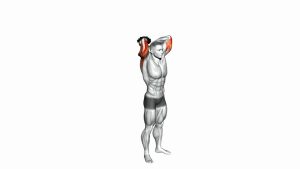
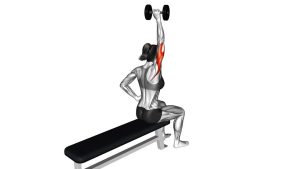
- Grip with one hand: Hold the band in one hand and bring that arm overhead so the elbow is bent and pointing up.
- Set your stance: Stand tall with feet about shoulder-width apart and keep your ribs down.
- Brace the core: Tighten your abs and glutes lightly to prevent leaning or arching.
- Fix the upper arm: Keep the elbow close to your head and avoid letting it drift too far forward or flare outward.
Tip: Use the non-working hand briefly to help position the elbow if needed, but once the set starts, keep the movement driven by the working arm only.
Execution (Step-by-Step)
- Start from the stretched position: Begin with your elbow bent behind the head and the band already under light tension.
- Extend the elbow upward: Press the hand toward the ceiling by straightening the arm without moving the upper arm much.
- Squeeze at the top: Reach full or near-full elbow extension and contract the triceps hard for a brief moment.
- Lower with control: Slowly bend the elbow and return to the starting position without letting the band yank your arm down.
- Repeat smoothly: Keep every rep controlled, with the elbow stable and the torso upright from start to finish.
Pro Tips & Common Mistakes
- Keep the elbow in: Letting it flare out reduces triceps isolation and can stress the shoulder.
- Do not arch the lower back: Overhead triceps work often tempts lifters to lean back. Brace your core and keep the ribs stacked.
- Use full control: Bands get harder near lockout, so resist the urge to rush the top half.
- Do not shorten the range too much: Start from a bent-elbow position that gives the triceps a stretch without discomfort.
- Match both sides: Since this is unilateral, make the same rep quality, tempo, and range happen on each arm.
- Choose sensible band tension: If you cannot lock out cleanly or the elbow keeps drifting, use less resistance.
FAQ
What part of the triceps does this exercise emphasize most?
The overhead position places extra emphasis on the long head of the triceps, which is one reason this variation is so useful for complete triceps development.
Is this better with one arm or two arms?
The single-arm version is excellent for improving side-to-side balance, focus, and control. It can also help you notice strength differences between arms more clearly.
Can beginners use this exercise?
Yes. Beginners can do it very effectively by using a lighter band, slower reps, and strict elbow positioning. Clean form is more important than high tension.
How should I fit it into my workout?
It works well after compound pressing movements, or as a dedicated triceps accessory on upper-body, push, or arm days.
What should I do if I feel my shoulder more than my triceps?
Reduce the band tension, keep the elbow closer to the head, brace the core harder, and slow down the lowering phase. Too much torso movement usually shifts stress away from the triceps.
Recommended Equipment
- Resistance Band Set — gives you multiple tension options so you can progress the exercise over time
- Resistance Bands with Handles — useful for a more comfortable grip during single-arm overhead extensions
- Door Anchor for Resistance Bands — helps create a secure and repeatable setup for home workouts
- Replacement Band Handles — a good upgrade if you want a more secure grip or need replacement attachments
- Tricep Rope Attachment — helpful if you want a cable-machine alternative for comparing triceps isolation patterns
Tip: For most people, a moderate band and strict form will produce better triceps work than using the heaviest band available.