Cable Close-Grip Curl: Proper Form, Muscles Worked, Sets, Tips & FAQ
Learn how to perform the Cable Close-Grip Curl with proper form to target the biceps under constant tension. Includes muscles worked, setup, execution, sets and reps by goal, common mistakes, FAQ, and recommended equipment.
Cable Close-Grip Curl
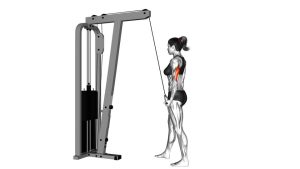
This variation is excellent for lifters who want cleaner biceps isolation than many free-weight curls allow. Because the pulley keeps tension on the arms even near the bottom of the rep, the movement is especially useful for hypertrophy-focused arm training. The best reps are controlled, smooth, and performed with the elbows staying close to the torso.
Quick Overview
| Body Part | Biceps |
|---|---|
| Primary Muscle | Biceps brachii |
| Secondary Muscle | Brachialis, brachioradialis, forearm flexors |
| Equipment | Low pulley cable machine with straight bar or close-grip bar attachment |
| Difficulty | Beginner to Intermediate |
Sets & Reps (By Goal)
- Muscle growth: 3–4 sets × 8–15 reps with controlled tempo and 45–75 sec rest
- Strength-focused arm work: 3–5 sets × 6–8 reps with heavier load and 75–120 sec rest
- Technique and mind-muscle connection: 2–3 sets × 12–15 reps with lighter load and slow negatives
- Finisher / pump work: 2–3 sets × 15–20 reps with short rest and strict form
Progression rule: First improve rep quality and full control, then add reps, and only increase load when you can keep the elbows tucked and avoid torso swing.
Setup / Starting Position
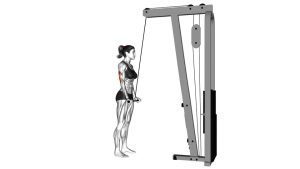
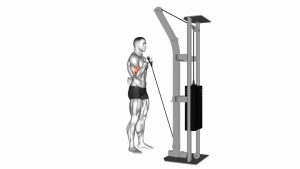
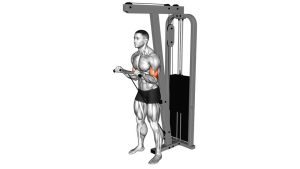
- Attach the bar: Connect a straight bar or close-grip attachment to a low pulley cable machine.
- Take a narrow grip: Hold the bar with an underhand grip and keep the hands closer than shoulder width.
- Stand tall: Position yourself upright with feet about hip-width apart and chest lifted.
- Set the arms: Let the arms extend down fully while keeping the elbows close to the sides of the torso.
- Brace lightly: Tighten the core and keep the shoulders relaxed so the biceps can do the work.
Tip: Step back just enough to keep cable tension at the bottom without letting the stack rest.
Execution (Step-by-Step)
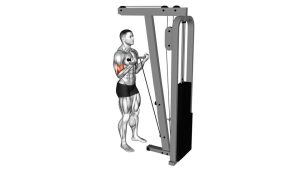
- Start from full extension: Begin with the arms long, wrists neutral, and elbows tucked near the ribcage.
- Curl the bar upward: Flex the elbows and bring the bar up in a smooth arc toward the lower chest or upper waist.
- Keep the upper arms quiet: Avoid letting the shoulders take over or the elbows drift too far forward.
- Squeeze at the top: Pause briefly in peak contraction and focus on tightening the biceps.
- Lower under control: Return the bar slowly to the starting position without dropping the weight or bouncing at the bottom.
Pro Tips & Common Mistakes
- Keep the grip narrow but comfortable: Too wide changes the feel and may reduce the close-grip emphasis.
- Lead with elbow flexion: Think about bending the elbows instead of lifting with the front delts.
- Use full cable tension: Don’t let the stack unload at the bottom if you want smoother hypertrophy work.
- Control the negative: The lowering phase is where many lifters lose tension and form.
- Don’t curl the wrists: Excess wrist flexion can shift tension away from the biceps and irritate the forearms.
- Avoid torso swing: Momentum can turn a great isolation movement into a sloppy full-body cheat curl.
- Keep shoulders down: Shrugging shortens range and makes the movement less efficient.
FAQ
What muscles does the Cable Close-Grip Curl work?
It primarily targets the biceps brachii, with help from the brachialis, brachioradialis, and forearm flexors. The cable also challenges you to maintain tension and control throughout the full rep.
Is the Cable Close-Grip Curl good for building bigger biceps?
Yes. It combines a strict curling path with constant tension, which makes it very effective for hypertrophy when paired with proper load selection and controlled tempo.
Should I use a straight bar or EZ-style cable attachment?
A straight bar works very well if your wrists feel comfortable. If you have wrist discomfort, an EZ-style attachment may feel more natural while still training the biceps effectively.
How close should my hands be?
Your grip should be narrower than shoulder width but still comfortable enough to keep the wrists neutral. Close-grip means controlled and compact, not cramped.
Can beginners do this exercise?
Absolutely. It is beginner-friendly as long as you use light-to-moderate weight, keep the elbows tucked, and avoid using body momentum.
Recommended Equipment
- Straight Bar Cable Attachment — ideal for cable curls, pressdowns, and other upper-body cable work
- Curl Bar Cable Attachment — a useful alternative if you want a more wrist-friendly curling angle
- Lifting Straps — helpful when grip fatigue limits performance during longer arm sessions
- Wrist Wraps — useful for added wrist support if straight-bar curls feel unstable
- Arm Blaster — helps keep the elbows in place and encourages stricter curling form
Tip: The best accessory is the one that improves your form without forcing an unnatural arm path.