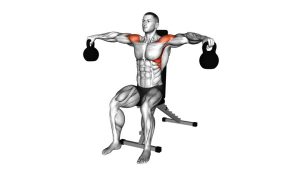
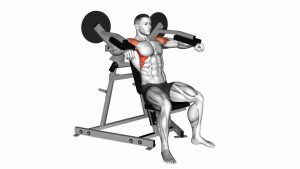
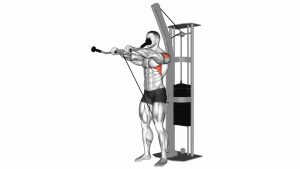
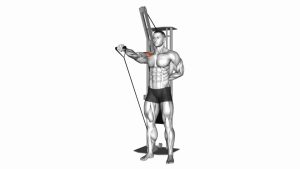
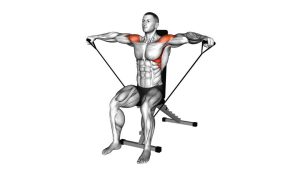
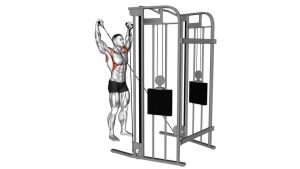
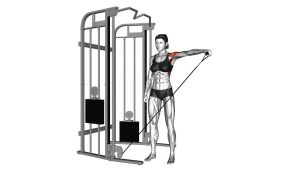
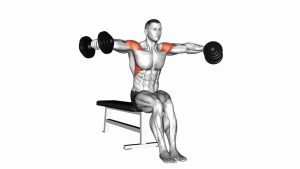
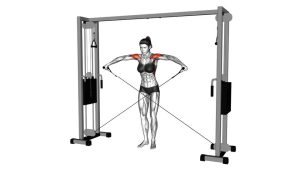
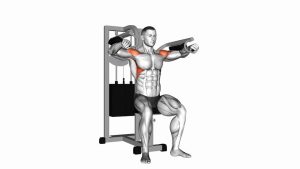
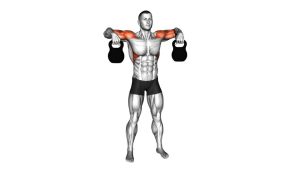
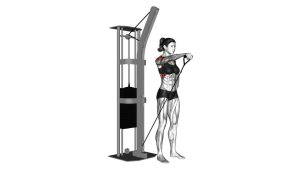
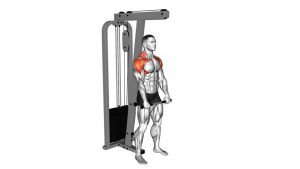
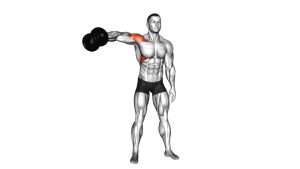
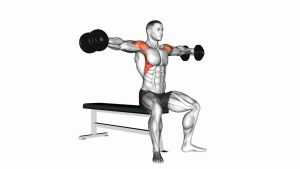
Cable Lying Cross Lateral Raise: Form, Muscles Worked, Sets, Tips & FAQ
Learn how to perform the Cable Lying Cross Lateral Raise for side delt growth and better shoulder isolation. Includes proper form, muscles worked, sets and reps by goal, mistakes, FAQs, and recommended equipment.
Cable Lying Cross Lateral Raise
This variation is excellent for lifters who want more precision than standard dumbbell lateral raises. Because the cable pulls from a low angle and the arm starts across the body, the side delt is challenged from the very beginning of the lift. The lying setup also makes it easier to stay strict, reduce cheating, and feel a clean contraction in the shoulder instead of the traps.
Quick Overview
| Body Part | Side Shoulders |
|---|---|
| Primary Muscle | Lateral deltoid |
| Secondary Muscle | Anterior deltoid, supraspinatus, rotator cuff stabilizers |
| Equipment | Single cable handle, low pulley cable machine, flat bench |
| Difficulty | Beginner to Intermediate |
Sets & Reps (By Goal)
- Muscle growth: 3–4 sets × 10–15 reps per arm, 45–75 sec rest
- Shoulder isolation / mind-muscle focus: 2–4 sets × 12–20 reps per arm, controlled tempo, 30–60 sec rest
- Accessory work after pressing: 2–3 sets × 12–15 reps per arm, light-to-moderate load
- Technique practice: 2–3 sets × 8–12 reps per arm with very strict form and a brief top pause
Progression rule: Add reps first, then increase weight in small steps. Keep every rep smooth and shoulder-driven before progressing.
Setup / Starting Position
- Set the pulley low: Attach a single handle to the low cable pulley.
- Lie sideways on a flat bench: Position the bench next to the cable so the working arm is on top and free to move.
- Grab the handle across your body: Reach the top arm down and across to take the handle with a neutral or slightly pronated grip.
- Keep a soft elbow bend: Lock the arm shape in place and avoid turning the rep into a curl or press.
- Brace your torso: Keep the chest, hips, and trunk stable on the bench so the shoulder does the work.
- Start in the stretched position: Let the cable pull the working arm slightly across the body without losing shoulder control.
Tip: Set the bench height and distance so the cable line feels smooth and doesn’t force you into awkward shoulder rotation.
Execution (Step-by-Step)
- Begin from the cross-body stretch: Start with the handle slightly in front of your torso and tension already on the shoulder.
- Raise the arm out and up: Sweep the arm in a controlled arc until the elbow reaches about shoulder height.
- Lead with the elbow: Think about lifting through the upper arm rather than pulling with the hand.
- Pause briefly at the top: Squeeze the side delt for a moment without shrugging the shoulder upward.
- Lower slowly: Return along the same path, letting the arm travel back across the body under control.
- Repeat with strict form: Keep tension continuous and avoid bouncing at the bottom.
Pro Tips & Common Mistakes
- Use light-to-moderate weight: This movement works best when you can control the full arc.
- Keep the elbow slightly bent: Maintain the same bend throughout the rep instead of extending and flexing.
- Don’t shrug: Keep the upper trap quiet so the side delt stays the main driver.
- Avoid torso rotation: Stay locked into the bench and don’t roll backward to help the lift.
- Don’t raise too high: Going far above shoulder height often shifts tension away from the target muscle.
- Control the eccentric: The lowering phase is one of the biggest benefits of this cable variation.
- Think “out,” not “up”: This cue helps keep the movement aligned with the lateral delt instead of turning it into a front raise.
FAQ
What muscle does the Cable Lying Cross Lateral Raise target most?
The main target is the lateral deltoid, which helps build shoulder width. The front delt and small stabilizers assist, but the side delt should do most of the work.
Why do this exercise lying down instead of standing?
Lying on a bench reduces momentum and makes it easier to keep the movement strict. That usually improves isolation and helps you feel the side delt more clearly.
Should I use heavy weight on this exercise?
Usually no. This is an isolation movement, so moderate or lighter loads with strong control are more effective than swinging heavy weight.
How high should I raise my arm?
In most cases, raise until the elbow reaches about shoulder height. Going much higher can bring in more traps and reduce the quality of the contraction.
Is this better than dumbbell lateral raises?
It can be better for some lifters because the cable provides constant tension, especially in the stretched bottom range where dumbbells often lose resistance.
Recommended Equipment
- Single D Handle Cable Attachment — ideal for single-arm cable raises and other isolation work
- Adjustable Weight Bench — provides the stable side-lying setup needed for strict execution
- Home Cable Machine — useful for constant-tension shoulder work and many other exercises
- Resistance Bands Set — a good backup option for shoulder warm-ups and lateral raise variations
- Lifting Straps — optional if grip fatigue limits cable shoulder isolation work
Tip: Prioritize smooth cable movement, a comfortable handle, and a stable bench setup over chasing heavier loads.