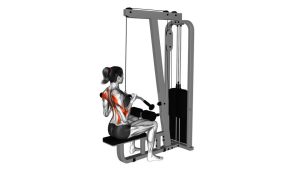
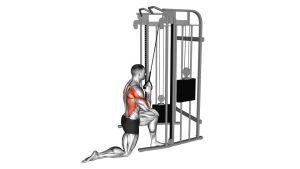
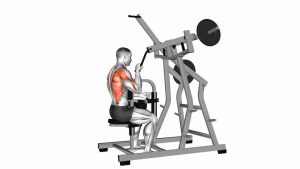
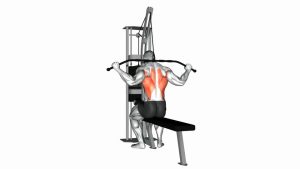
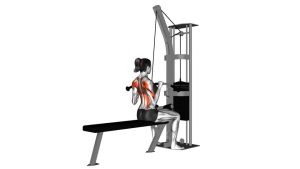
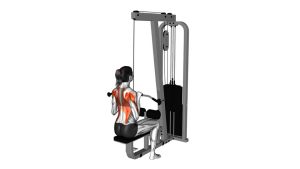
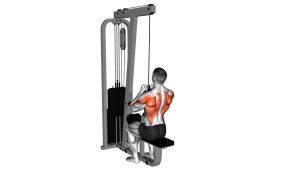
Cable One-Arm Lat Pulldown: Proper Form, Muscles Worked, Sets, Tips & FAQ
Learn how to do the Cable One-Arm Lat Pulldown with proper form to build stronger lats and improve back symmetry. Includes setup, execution, sets by goal, common mistakes, FAQs, and recommended equipment.
Cable One-Arm Lat Pulldown
This variation is especially useful for lifters who struggle to feel their lats during standard pulldowns or who want to clean up left-right imbalances. Because you work one side at a time, it becomes easier to control the elbow path, maintain a strong contraction, and avoid letting the stronger side dominate the movement.
Quick Overview
| Body Part | Back |
|---|---|
| Primary Muscle | Latissimus dorsi |
| Secondary Muscle | Teres major, rhomboids, lower traps, rear delts, biceps |
| Equipment | Cable machine with a single D-handle attachment |
| Difficulty | Beginner to Intermediate |
Sets & Reps (By Goal)
- Muscle growth: 3–4 sets × 8–12 reps per side, 60–90 sec rest
- Back control / technique: 2–4 sets × 10–15 reps per side, controlled tempo, 45–75 sec rest
- Strength focus: 3–5 sets × 6–8 reps per side, 90–120 sec rest
- Symmetry / correction work: 2–3 sets × 12–15 reps per side, start with the weaker side first
Progression rule: Add reps before adding weight. When all reps are clean with a full stretch, a strong squeeze, and no torso cheating, increase the load slightly.
Setup / Starting Position
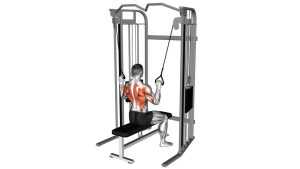
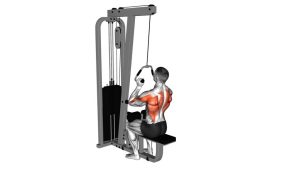
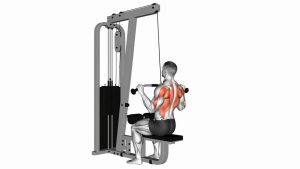
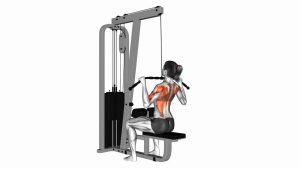
- Attach a single handle to a high pulley on a cable machine.
- Take your grip with one hand using a neutral grip and sit or brace yourself in a stable position.
- Lift the chest and keep your torso upright or with a slight natural lean back.
- Extend the working arm overhead so the lat is fully stretched without losing posture.
- Brace the core and keep the non-working hand on the thigh, bench, or machine for balance if needed.
Tip: Before the first rep, think about pulling the elbow down instead of pulling the handle with your hand.
Execution (Step-by-Step)
- Start from a full stretch: Let the working arm reach overhead while keeping the shoulder controlled rather than shrugged aggressively.
- Set the shoulder first: Begin by depressing the shoulder slightly to engage the upper back and lat.
- Drive the elbow down: Pull the elbow toward your side, aiming toward the lower ribs or upper waist.
- Keep the chest proud: Maintain a stable torso and avoid twisting hard to force the handle lower.
- Squeeze at the bottom: Pause briefly when the elbow is close to the body and the lat is fully contracted.
- Return with control: Slowly guide the handle back upward, allowing the lat to lengthen under tension.
- Repeat evenly: Complete all reps on one side, then switch arms and match the same tempo and quality.
Pro Tips & Common Mistakes
- Lead with the elbow: This helps keep tension on the lat instead of shifting the work to the biceps.
- Use the stretched position: A controlled reach at the top can improve lat recruitment and range of motion.
- Do not rush the eccentric: The lowering phase is one of the best parts of the exercise for muscle growth.
- Avoid excessive torso rotation: A slight natural lean is fine, but large twisting turns it into a cheat rep.
- Keep the shoulder out of your ear: Too much shrugging reduces clean lat isolation.
- Train both sides honestly: Match technique side to side and do not let the stronger arm set a sloppy standard.
FAQ
What muscles does the Cable One-Arm Lat Pulldown work?
The main target is the latissimus dorsi. Secondary muscles include the teres major, rhomboids, lower traps, rear delts, and biceps.
Is one-arm lat pulldown better than regular lat pulldown?
Not always better, but it can be more effective for symmetry, control, and lat activation. It is a great supplement to bilateral pulldown work.
Where should I feel this exercise?
You should mostly feel it in the side of the back under the armpit and along the lats. Some biceps involvement is normal, but the back should clearly drive the rep.
Should I go heavy on single-arm pulldowns?
You can load it progressively, but this exercise usually works best with controlled reps and clean positioning. Going too heavy often turns it into a twisting, arm-dominant movement.
Can beginners use this exercise?
Yes. It is beginner-friendly because training one side at a time often makes it easier to learn proper elbow path, shoulder control, and lat engagement.
Recommended Equipment
- Single D-Handle Cable Attachment — ideal for unilateral pulldowns, rows, and single-arm cable work
- Lat Pulldown Attachment Set — useful if you want multiple grip options for back training
- Lifting Straps — helpful when grip fatigue limits your back work before your lats do
- Adjustable Weight Bench — can provide better bracing and positioning depending on your cable setup
- Resistance Bands Set — useful for warm-ups, scapular activation, and extra back volume
Tip: Choose accessories that improve control and consistency, not just heavier loading. Better setup usually means better lat engagement.