Cable Overhead Curl: Proper Form, Muscles Worked, Sets, Tips & FAQ
Learn how to do the Cable Overhead Curl with proper form to target the biceps through a high-tension arc. Includes muscles worked, setup, execution steps, sets by goal, mistakes, FAQ, and recommended equipment.
Cable Overhead Curl
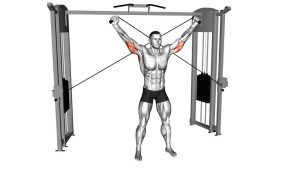
This exercise works best when the elbows stay lifted and the torso stays still. The goal is to curl the handles inward using the biceps without letting the shoulders roll, the elbows drop, or the body lean to create momentum. Because the cables maintain tension throughout the rep, even moderate loads can create a strong contraction and a noticeable burn in the upper arms.
Quick Overview
| Body Part | Biceps |
|---|---|
| Primary Muscle | Biceps brachii (with strong long head emphasis) |
| Secondary Muscle | Brachialis, brachioradialis, forearm flexors, shoulder stabilizers |
| Equipment | Dual adjustable cable machine with single handles |
| Difficulty | Intermediate (requires positioning, cable control, and strict form) |
Sets & Reps (By Goal)
- Muscle growth: 3–4 sets × 10–15 reps with 45–75 seconds rest
- Peak contraction / pump work: 2–4 sets × 12–20 reps with slow tempo and short rest
- Technique practice: 2–3 sets × 8–12 reps with light weight and strict elbow control
- Finisher after compound arm work: 2–3 sets × 12–15 reps focusing on clean reps and full squeeze
Progression rule: Increase reps first, then add small weight increments only when you can keep the elbows high, the body still, and the eccentric phase controlled.
Setup / Starting Position
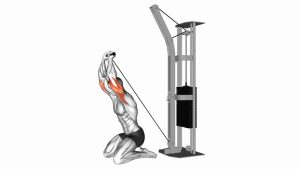
- Set the pulleys high: Position both cable pulleys above head height and attach single handles.
- Stand centered: Step into the middle of the machine so tension is even on both sides.
- Raise the arms: Bring the upper arms out to the sides with the elbows bent slightly and roughly in line with the shoulders.
- Brace the torso: Keep your chest tall, ribs down, glutes lightly engaged, and core firm to avoid leaning back.
- Start under tension: Hold the handles with a supinated or slightly angled grip and let the biceps feel tension before the first rep begins.
Tip: Think of the setup like holding a controlled double-biceps pose while keeping the shoulders down and the elbows fixed.
Execution (Step-by-Step)
- Lock in your position: Keep the upper arms elevated and steady. Do not let the elbows drift downward once the rep starts.
- Curl inward: Drive the movement by bending the elbows and bringing the handles in toward the sides of your head.
- Keep tension on the biceps: Focus on squeezing the upper arms instead of pulling with the shoulders or swinging the torso.
- Pause at peak contraction: When the handles come near temple or ear level, briefly hold and squeeze the biceps hard.
- Lower with control: Slowly extend the arms back out along the same path until the biceps are lengthened again under cable tension.
- Repeat smoothly: Maintain the same elbow height, body posture, and cable path for every rep.
Pro Tips & Common Mistakes
- Keep the elbows high: The more stable your upper arms are, the more the biceps do the work.
- Use moderate weight: This exercise responds better to clean tension than sloppy overload.
- Control the lowering phase: A slower eccentric improves tension and helps prevent the cables from pulling you out of position.
- Do not lean back: Using body English reduces biceps isolation and shifts stress away from the target muscle.
- Do not rush peak contraction: A brief squeeze near the top can make light-to-moderate loads much more effective.
- Watch wrist position: Keep the wrists neutral instead of curling them inward to fake extra range of motion.
- Avoid shrugging: Keep the neck relaxed and shoulders down so the arms stay the focus.
FAQ
What muscles does the Cable Overhead Curl work?
The exercise primarily targets the biceps brachii, especially the long head. It also involves the brachialis, brachioradialis, and smaller stabilizers that help control the arm position.
Is the Cable Overhead Curl better for biceps peak?
It can be very effective for creating a strong peak contraction because the elevated arm position and cable tension keep the biceps working through a unique arc. It works especially well as a hypertrophy-focused isolation exercise.
Should I go heavy on this exercise?
Usually no. Most lifters get better results with moderate weight and strict form. Going too heavy often causes elbow drop, torso swing, and shoulder compensation.
Where should I feel it during the rep?
You should feel a strong contraction in the front of the upper arms, especially near the top of the curl. If you mostly feel your shoulders or lower back, your setup or load likely needs adjustment.
When should I place Cable Overhead Curls in my workout?
They fit best in the middle or later part of an arm or upper-body session after your heavier pulling or curling work. They are excellent for adding focused biceps volume and finishing with high-quality tension.
Recommended Equipment
- Single D-Handle Cable Attachments — ideal for dual-arm cable curls with a comfortable, secure grip
- Adjustable Cable Machine / Functional Trainer — the main setup needed for overhead cable curl variations
- Weightlifting Grips — useful if grip fatigue limits your biceps focus during higher-rep sets
- Elbow Sleeves — helpful for added warmth and support during arm training sessions
- Adjustable Workout Bench — optional for structuring a complete arm workout around cable and free-weight movements
Tip: Prioritize smooth cable action and comfortable handles over excessive loading. Better equipment setup usually leads to better biceps isolation.