Cable Reverse-Grip Pushdown: Proper Form, Benefits, Sets & FAQ
Learn how to perform the Cable Reverse-Grip Pushdown with proper form to build stronger triceps with strict elbow control. Includes setup, execution, sets by goal, mistakes to avoid, FAQs, and recommended equipment.
Cable Reverse-Grip Pushdown
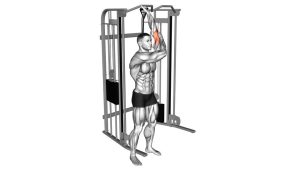
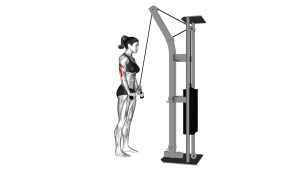
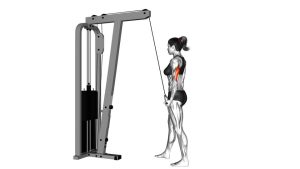
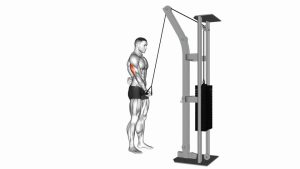
This exercise works best when you keep the upper arms fixed and let only the forearms move. The goal is not to move the whole body or drive the bar down with momentum. Instead, use a smooth underhand push, keep the chest up, and fully extend the elbows without snapping into lockout. A lighter load with precise form usually gives better results than heavy weight with swinging.
Quick Overview
| Body Part | Triceps |
|---|---|
| Primary Muscle | Triceps brachii |
| Secondary Muscle | Forearm flexors, wrist stabilizers, anterior deltoid (minimal stabilization) |
| Equipment | Cable machine with straight bar attachment |
| Difficulty | Beginner to Intermediate |
Sets & Reps (By Goal)
- Muscle growth: 3–4 sets × 10–15 reps, 45–75 seconds rest
- Technique and control: 2–4 sets × 8–12 reps, controlled tempo, 45–60 seconds rest
- Higher-rep finishing work: 2–3 sets × 15–20 reps, lighter load, short rest
- Beginner arm day: 2–3 sets × 10–12 reps with moderate weight and strict form
Progression rule: Add reps first, then increase the load gradually. Keep the elbows stable and the tempo clean before chasing heavier weight.
Setup / Starting Position
- Attach a straight bar to a high pulley on a cable machine.
- Take an underhand grip with palms facing up and hands roughly shoulder-width apart.
- Stand tall with feet about hip-width apart and knees softly unlocked.
- Pin the elbows near your torso and bring the bar to around lower chest or upper abdomen height.
- Set your posture with chest up, shoulders down, and core lightly braced before starting the rep.
Tip: Step slightly back from the machine if needed so the cable stays in line and tension remains consistent.
Execution (Step-by-Step)
- Start from the top position: Keep your elbows tucked and your wrists neutral.
- Push the bar down by extending the elbows while keeping the upper arms still.
- Move in a straight path until the bar reaches near your upper thighs.
- Squeeze the triceps briefly at the bottom without slamming into lockout.
- Return under control to the starting position and repeat without letting the elbows flare.
Pro Tips & Common Mistakes
- Keep the elbows tucked: This is one of the biggest keys to isolating the triceps well.
- Do not swing the torso: Use the triceps to move the bar, not body momentum.
- Use a lighter load if needed: Reverse-grip variations usually require less weight than standard pushdowns.
- Keep wrists neutral: Avoid over-bending the wrists to protect the joints and maintain force transfer.
- Control the eccentric: Let the bar rise slowly to keep tension on the triceps.
- Do not flare the elbows out: Flaring turns the movement sloppy and reduces isolation.
- Avoid shrugging: Keep the shoulders relaxed so the triceps stay the focus.
FAQ
What muscles does the cable reverse-grip pushdown work?
It primarily targets the triceps brachii. The underhand grip also increases the demand on the forearms and wrist stabilizers while helping many lifters keep the elbows tucked.
Is reverse-grip pushdown better than a regular pushdown?
Not necessarily better—just different. The reverse grip often feels more control-focused and may work well as a lighter accessory movement or a variation to change stimulus and improve elbow position.
Should I go heavy on this exercise?
Usually, moderate to light loading works best. This movement rewards strict form, smooth tempo, and full elbow extension more than heavy weight.
Why do my wrists feel uncomfortable during the exercise?
The grip may be too narrow, the bar path may be awkward, or the load may be too heavy. Keep the wrists neutral, adjust your hand position slightly, and reduce the weight if needed.
Can beginners use the cable reverse-grip pushdown?
Yes. It can be a great beginner-friendly triceps isolation exercise as long as the load is manageable and the movement stays controlled.
Recommended Equipment
- Straight Bar Cable Attachment — the most direct attachment choice for reverse-grip pushdowns
- Cable Machine / Home Gym Station — essential if you want to perform pushdowns consistently at home
- Wrist Wraps — useful for extra wrist support if underhand cable work feels uncomfortable
- Exercise Mat — helpful for creating a stable training area around your cable station
- Cable Attachment Set — a versatile option if you want multiple handles and bar attachments for arm training
Tip: For this exercise, prioritize a comfortable straight bar, smooth cable action, and a load you can control from top to bottom.