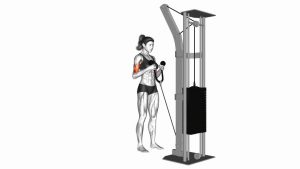
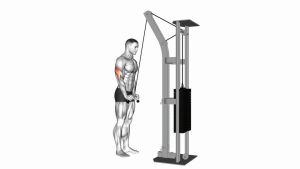
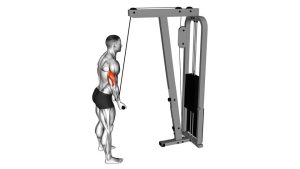
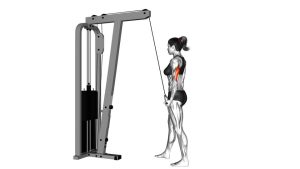
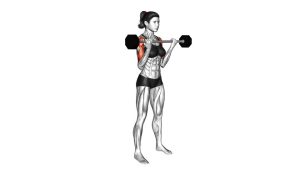
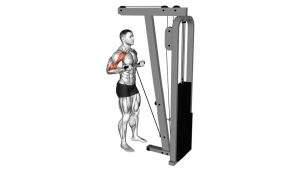
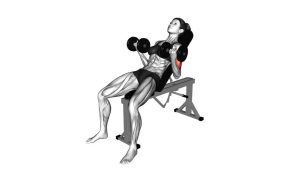
Cable Seated Overhead Curl: Form, Muscles Worked, Sets, Tips & FAQ
Learn how to do the Cable Seated Overhead Curl with proper form to build bigger biceps and improve arm isolation. Includes muscles worked, setup, step-by-step execution, sets and reps by goal, common mistakes, FAQs, and recommended equipment.
Cable Seated Overhead Curl
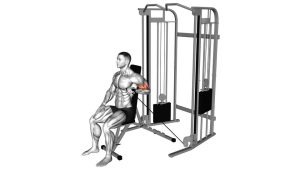
This exercise works best when you stay tall, avoid swinging, and let the elbows do the work. Because the arms are elevated, the biceps start from a lengthened position, which can make even moderate weight feel challenging. You should feel the curl primarily in the front of the upper arms, not in the shoulders, wrists, or lower back. Prioritize smooth reps and a full stretch over loading the stack too aggressively.
Quick Overview
| Body Part | Biceps |
|---|---|
| Primary Muscle | Biceps brachii (especially the long head) |
| Secondary Muscle | Brachialis, brachioradialis, forearm flexors, shoulder stabilizers |
| Equipment | Cable machine, seat or bench, cable handles or attachment |
| Difficulty | Intermediate |
Sets & Reps (By Goal)
- Muscle growth: 3-4 sets × 8-12 reps with controlled tempo and 60-90 sec rest
- Strict isolation focus: 2-4 sets × 10-15 reps with moderate load and full stretch
- Finisher / pump work: 2-3 sets × 12-20 reps with lighter weight and short rest
- Technique practice: 2-3 sets × 8-10 reps using lighter resistance and slow eccentrics
Progression rule: Add reps first, then increase weight slightly only when you can keep your torso stable, maintain elbow position, and control the lowering phase without losing tension.
Setup / Starting Position
- Set the cable: Position the cable so you can sit and hold the handles with your arms elevated overhead under tension.
- Sit tall: Keep your chest up, core lightly braced, and feet planted firmly on the floor.
- Raise the arms: Bring the upper arms into an overhead position so the elbows are pointing generally upward and slightly forward.
- Grip securely: Hold the handle or attachment with a firm but not overly tense grip. Keep wrists neutral.
- Start stretched: Begin with the elbows extended enough to feel tension in the biceps without locking out aggressively.
Tip: Before starting the first rep, make sure the weight is already pulling against you so the biceps stay loaded from the beginning.
Execution (Step-by-Step)
- Brace and stay tall: Keep your torso upright and avoid leaning back to cheat the curl.
- Curl by bending the elbows: Pull the handles inward by flexing the elbows while keeping the upper arms mostly fixed.
- Bring the hands toward the head: Continue curling until you reach a strong biceps contraction without collapsing posture.
- Squeeze briefly: Pause for a moment at peak contraction to reinforce control and tension.
- Lower slowly: Extend the elbows under control until the biceps return to a full stretch.
- Repeat smoothly: Maintain tension and rhythm without bouncing or letting the stack yank your arms back.
Pro Tips & Common Mistakes
- Keep the elbows controlled: A little natural movement is normal, but too much drift reduces isolation.
- Don’t rush the eccentric: The lowering phase is one of the best parts of this exercise for muscle growth.
- Avoid leaning back: Excess torso movement turns a curl into a momentum exercise.
- Use moderate weight: This exercise becomes sloppy fast if the load is too heavy.
- Stay in the stretched path: The overhead position is what makes this variation valuable, so don’t let the arms drop out of position.
- Keep wrists neutral: Excessive wrist bending can shift stress away from the biceps and irritate the forearms.
- Focus on tension, not speed: Slow, clean reps usually outperform explosive reps here.
FAQ
What muscles does the Cable Seated Overhead Curl work?
The main target is the biceps brachii, with extra emphasis on the long head because the arms are held overhead. The brachialis, brachioradialis, and forearm muscles also help during the curl.
Why do this curl seated instead of standing?
The seated position helps reduce body English and makes it easier to keep the movement strict. That usually means better isolation and more consistent tension on the biceps.
Is this exercise good for building bigger biceps?
Yes. It is a strong hypertrophy option because the cable provides constant resistance and the overhead arm position challenges the biceps in a stretched state.
How heavy should I go on overhead curls?
Use a weight that allows you to keep your elbows controlled and the negative phase smooth. Most lifters get better results from moderate loads with clean form than from going too heavy and losing the path of motion.
Should I lock out fully at the bottom?
You can return to a full stretch, but avoid snapping into a hard lockout. Keep tension on the biceps and maintain control at the bottom of every rep.
Recommended Equipment
- Cable Machine Handles — useful for comfortable grip positioning and smoother arm alignment during curls
- Triceps Rope Cable Attachment — can be used for curl variations when you want a different hand position and range
- Adjustable Workout Bench — provides a stable seat and helps keep the torso fixed for stricter reps
- Lifting Straps — helpful if grip fatigue limits biceps work during higher-rep cable sets
- Resistance Bands Set — a useful backup option for arm training and warm-up work when a cable station is unavailable
Tip: Choose attachments that let your wrists stay comfortable and your elbows move naturally. Better joint positioning usually leads to better biceps tension.