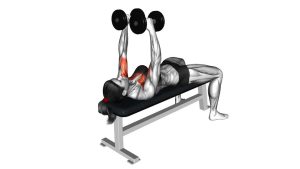
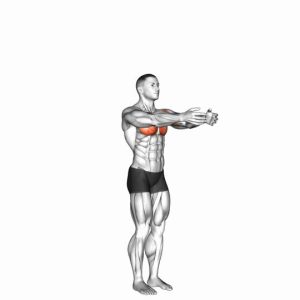
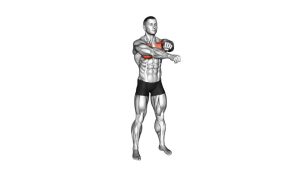
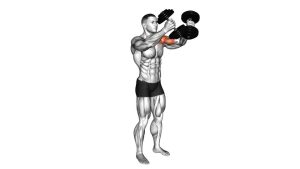
Cable Standing Alternate Chest Fly: Form, Muscles Worked, Sets, Tips & FAQ
Learn the Cable Standing Alternate Chest Fly for chest hypertrophy, unilateral control, and constant tension. Includes setup, step-by-step form, sets by goal, common mistakes, FAQ, and recommended equipment.
Cable Standing Alternate Chest Fly
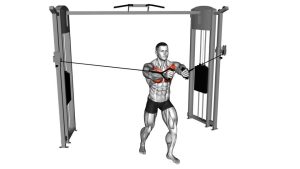
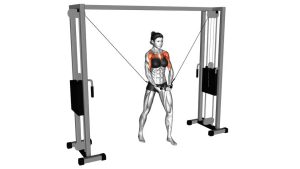
This variation works best with controlled reps, a slight bend in the elbows, and a strong focus on bringing the upper arm toward the midline rather than pressing the handle forward. Because one side works while the other side stays under tension or returns to the stretch, the exercise can create a very strong chest contraction while also challenging your core to resist twisting.
Quick Overview
| Body Part | Chest |
|---|---|
| Primary Muscle | Pectoralis major |
| Secondary Muscle | Anterior deltoids, biceps stabilizers, serratus anterior, obliques, and core stabilizers |
| Equipment | Dual adjustable cable machine with single handles |
| Difficulty | Intermediate |
Sets & Reps (By Goal)
- Muscle growth: 3–4 sets × 10–15 reps per arm, 45–75 sec rest
- Mind-muscle connection: 2–4 sets × 12–15 reps per arm with a 1–2 sec squeeze
- Accessory chest work: 3 sets × 8–12 reps per arm after presses
- Light control / symmetry work: 2–3 sets × 12–16 reps per arm using slow tempo and moderate load
Progression rule: Add reps first, then increase weight gradually. Only move up when you can keep the same arm path, chest tension, and torso stability on both sides.
Setup / Starting Position
- Set the pulleys: Position both cable pulleys around chest to shoulder height.
- Grab the handles: Take one handle in each hand and step forward into the middle of the station.
- Choose your stance: Use a staggered stance or stable split stance for balance.
- Set your torso: Stand tall with a slight forward lean, ribs stacked, and core braced.
- Open the arms: Bring both arms out to the sides with a soft bend in the elbows to create a chest stretch.
- Pack the shoulders: Keep the shoulders down and stable without shrugging.
Tip: Step far enough forward to keep the cables loaded at the start, but not so far that you lose balance or have to lean excessively.
Execution (Step-by-Step)
- Brace and align: Keep your chest up, core tight, and shoulders steady before initiating the rep.
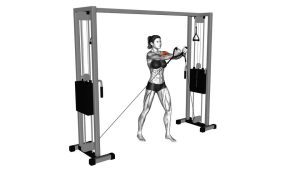
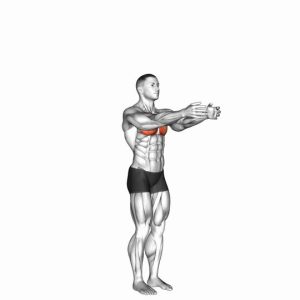
- Move one arm inward: Sweep one handle across the body in a hugging arc until your hand reaches roughly in front of your chest.
- Keep the elbow angle consistent: Maintain a slight bend without turning the rep into a press.
- Squeeze the chest: Pause briefly at peak contraction without crossing too far past the midline.
- Return with control: Let the working arm travel back slowly until you feel a chest stretch again.
- Alternate sides: Repeat with the opposite arm while keeping the torso square and resisting rotation.
- Continue smoothly: Alternate left and right until all reps are completed on both sides.
Pro Tips & Common Mistakes
- Use a true fly path: Keep a curved arc instead of pressing straight forward.
- Keep a soft elbow bend: Locked elbows increase joint stress and reduce control.
- Do not rush the eccentric: The return phase is where you keep tension and stretch the chest under control.
- Stay square: Avoid rotating or swaying the torso as each arm works.
- Do not overload: Too much weight often turns this into a cable press with momentum.
- Keep the shoulders down: Shrugging shifts stress away from the chest and into the upper traps.
- Aim for symmetry: Match tempo, range, and control on both sides.
FAQ
What muscles does the Cable Standing Alternate Chest Fly work?
The main target is the pectoralis major. The exercise also recruits the anterior deltoids, serratus anterior, and core stabilizers to control the unilateral movement and resist rotation.
Is this better than a regular two-arm cable fly?
Not necessarily better for everyone, but different. The alternating version can improve unilateral control, make it easier to focus on each side, and add a mild anti-rotation challenge through the torso.
How high should I set the cables?
For this version, chest to shoulder height is a good starting point. Small adjustments can shift the line of pull slightly, but the key is finding a setup that lets you feel the chest working without shoulder discomfort.
Should my hands cross in front of my body?
A slight move toward the midline is enough for most people. You do not need to over-cross aggressively. Focus on chest squeeze and control rather than chasing extra range.
Where should I place this in my workout?
It fits well after compound presses as a chest isolation exercise, or later in the session as a hypertrophy-focused accessory when you want more chest volume without very heavy loading.
Recommended Equipment
- Cable Machine Handles — useful if you want a more comfortable, grippy replacement handle for cable fly and press variations
- D-Handle Cable Attachments — great for unilateral cable work, especially when you prefer a compact single-hand grip
- Wrist Wraps — optional support if your wrists feel stressed during cable pressing and fly variations
- Adjustable Weight Bench — helpful if you want to pair cable fly work with presses, incline work, and chest-focused accessory training
- Resistance Bands Set — useful for warm-ups, chest activation, and home alternatives when a cable station is not available
Tip: Choose equipment that improves control and comfort, not just heavier loading. Better handles and stable setup often improve chest feel more than adding more weight.