Cable Standing Inner Curl: Form, Muscles Worked, Sets, Tips & FAQ
Learn how to perform the Cable Standing Inner Curl with proper form to target the inner biceps. Includes muscles worked, setup, step-by-step execution, sets by goal, common mistakes, FAQs, and recommended equipment.
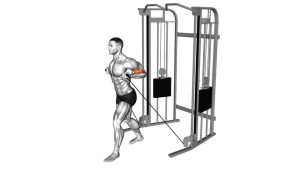
Cable Standing Inner Curl
This movement works best when the torso stays tall and still, the elbows remain fixed, and the reps are driven by the biceps instead of momentum. Because the cable line keeps pulling outward, you get a strong contraction at the top and steady resistance on the way down. It is a great option for lifters who want more mind-muscle connection, more constant tension than free weights, and a focused inner-biceps pump.
Quick Overview
| Body Part | Biceps |
|---|---|
| Primary Muscle | Biceps brachii (short head emphasis) |
| Secondary Muscle | Brachialis, brachioradialis, forearms, front delts as stabilizers |
| Equipment | Dual cable machine with single handles |
| Difficulty | Beginner to Intermediate |
Sets & Reps (By Goal)
- Muscle growth: 3–4 sets × 8–15 reps with controlled tempo and a hard squeeze at the top
- Mind-muscle connection / pump work: 2–4 sets × 12–20 reps using light-to-moderate load
- Technique practice: 2–3 sets × 10–12 reps with very strict form and slower negatives
- Finisher after compound pulling work: 2–3 sets × 12–15 reps with short 30–45 sec rest
Progression rule: Add reps first, then increase weight slightly once you can keep the elbows stable, the shoulders relaxed, and the full set smooth from start to finish.
Setup / Starting Position
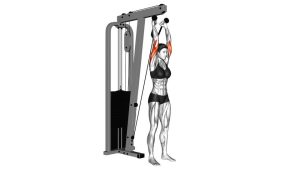
- Set both pulleys high: Position the handles above shoulder level on a dual cable station.
- Stand in the center: Take one handle in each hand and step into the middle so the cables are evenly tensioned.
- Raise the arms out to the sides: Your upper arms should be roughly in line with the shoulders or slightly below, depending on comfort.
- Use a supinated or semi-supinated grip: Palms should generally face upward or slightly inward as you prepare to curl.
- Brace your body: Keep the chest tall, ribs stacked, knees soft, and core tight so the torso does not sway.
Tip: Start lighter than you think. This exercise feels harder than standard curls because the cables pull the arms outward the entire time.
Execution (Step-by-Step)
- Begin from the stretched position: Arms extended wide, elbows slightly bent, and cables fully tensioned.
- Curl inward: Bend the elbows to bring your hands toward the sides of your head in a smooth arc.
- Keep the upper arms steady: Do not let the elbows drop or swing backward as you curl.
- Squeeze at peak contraction: Pause briefly when the biceps are fully shortened and the forearms come close to the temples or ears.
- Lower under control: Slowly return to the start position without letting the weight stack slam down.
- Repeat with rhythm: Maintain the same path on every rep and keep tension in the arms from start to finish.
Pro Tips & Common Mistakes
- Keep the elbows high and quiet: The more they drift, the less isolated the curl becomes.
- Do not rush the eccentric: A slow return improves tension and makes each rep cleaner.
- Avoid shrugging: Rising shoulders shift stress away from the biceps and can irritate the neck.
- Use a modest range if needed: If your shoulders feel pinched in the fully stretched position, slightly shorten the bottom range.
- Lead with elbow flexion, not hands: Think about bending the elbows, not just dragging the handles inward.
- Chase tension, not load: This exercise usually works best with lighter weights and strict execution.
FAQ
What part of the biceps does the Cable Standing Inner Curl target most?
It mainly targets the biceps brachii with a strong emphasis on the short head, which contributes to the inner-arm look and a fuller biceps peak when the arm is flexed.
Is this better than dumbbell curls?
It is not automatically better, but it offers a different resistance profile. Cables provide more constant tension, especially near the top, while dumbbells are often more load-friendly and simpler to progress.
Should my elbows stay level with my shoulders?
Usually yes, or just slightly below if that feels more natural on your shoulders. The main goal is to keep the elbows lifted and stable without discomfort.
Can beginners use this exercise?
Yes. Beginners can use it effectively as long as the load is light enough to keep the torso still and the elbows from dropping during the curl.
When should I put this in my workout?
It works well in the middle or near the end of an upper-body or arm workout, after heavier pulling exercises and before burnout-style finisher sets.
Recommended Equipment
- Cable Machine Handles — ideal for comfortable grip and smoother bilateral cable curl setups
- Tricep Rope Cable Attachment — useful for cable arm training variety, including curls, hammer-style work, and pushdowns
- Adjustable Weight Bench — helpful if you want to pair this exercise with seated, incline, or preacher-style arm work
- Resistance Bands Set — great for warm-ups, extra pump work, and home biceps training when a cable station is not available
- Exercise Mat — useful for a cleaner training space and for pairing your session with floor-based mobility or core work
Tip: Prioritize a comfortable handle attachment first. Better grip usually leads to better control and a stronger biceps contraction on cable work.