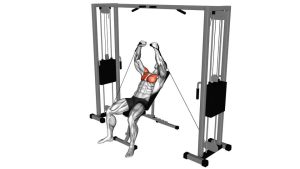
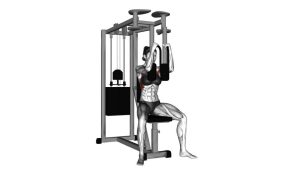
Cable Standing Neutral-Grip Fly: Proper Form, Sets, Tips & FAQ
Learn the Cable Standing Neutral-Grip Fly to isolate your chest with constant cable tension. Step-by-step form, sets by goal, common mistakes, FAQs, and recommended attachments.
Cable Standing Neutral-Grip Fly
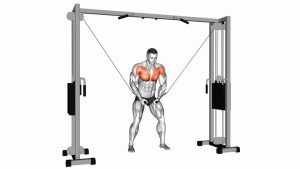
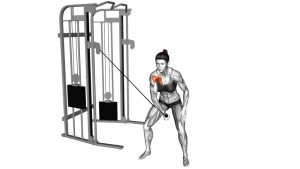
Your goal is a controlled “hug” motion powered by the chest—not the arms. Keep your ribs stacked (no big arch), shoulders relaxed, and elbows slightly bent. The cables should stay under tension from the start to the finish, especially on the return.
Quick Overview
| Body Part | Chest |
|---|---|
| Primary Muscle | Pectoralis major (sternal + clavicular fibers depending on cable height) |
| Secondary Muscle | Anterior deltoid, serratus anterior, biceps (stabilization), rotator cuff |
| Equipment | Dual cable machine / functional trainer + single handles |
| Difficulty | Beginner → Intermediate (excellent when performed with strict control) |
Sets & Reps (By Goal)
- Muscle growth (hypertrophy): 3–5 sets × 10–15 reps (60–90 sec rest)
- Strength emphasis (controlled): 3–5 sets × 6–10 reps (90–120 sec rest)
- Chest pump / finisher: 2–4 sets × 15–25 reps (30–60 sec rest)
- Technique + joint-friendly work: 2–3 sets × 12–20 reps (slow tempo, 45–75 sec rest)
Progression rule: Add reps first while keeping perfect control and a steady cable path. Then increase load slightly. If your elbows start straightening (turning into a press), the weight is too heavy.
Setup / Starting Position
- Set the pulleys: Start with handles around mid-chest height. (Higher hits more upper chest; lower shifts emphasis slightly lower.)
- Choose stance: Stand centered between towers with a soft knee bend. Use a slight staggered stance if needed for balance.
- Grip: Hold handles with a neutral grip (palms facing each other). Keep wrists straight.
- Body position: Chest tall, ribs stacked, core braced. Shoulders down and back—no shrugging.
- Arm angle: Arms out wide with a small elbow bend you keep the whole set.
Tip: Step slightly forward so the cables pull your arms back gently—this helps you feel a strong chest stretch while staying stable.
Execution (Step-by-Step)
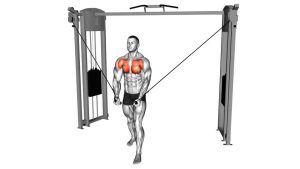
- Start under tension: With arms open, feel a light-to-moderate stretch in the chest—don’t let your shoulders roll forward.
- “Hug” the handles forward: Bring your hands forward in a wide arc until they meet or nearly meet in front of the chest.
- Keep elbows soft: Maintain the same elbow bend—avoid pressing the weight by straightening the arms.
- Squeeze the chest: Pause 1–2 seconds and think “bring biceps together” while keeping shoulders relaxed.
- Return slowly: Open back out on a 2–3 second eccentric, stopping before you lose shoulder position or feel joint pinching.
Pro Tips & Common Mistakes
- Use a “soft lock” elbow: Slight bend stays constant—don’t turn it into a cable press.
- Own the stretch: Slow eccentrics build more chest tension and control.
- Keep ribs stacked: Avoid over-arching and flaring ribs to cheat the range.
- Don’t shrug: Shoulders down; traps stay quiet.
- Adjust pulley height: Chest-height is a great default—then experiment slightly up/down to match your pec line.
- Stop before shoulder discomfort: More range is not better if your shoulder rolls forward.
FAQ
Where should I feel this exercise?
Mostly in the chest, especially near the midline when you squeeze at the front. If you feel it mainly in the front shoulder, lighten the load, reduce range, and keep the shoulder blades stable.
Is neutral grip better for shoulders?
For many lifters, yes. A neutral grip can feel smoother and more natural, especially if a pronated fly irritates the shoulder. Still, good setup and a controlled range matter more than the grip itself.
Should my hands touch at the front?
Not required. Bring the handles close enough to get a strong chest squeeze without letting your shoulders roll forward. A short pause and clean control beats forcing extra range.
How heavy should I go?
Use a load that lets you keep the same elbow bend and a smooth arc. If you start “pressing” the handles forward or swinging your torso, the weight is too heavy for a true fly.
Where does this fit in a chest workout?
Great after pressing for hypertrophy (middle of the session) or as a finisher for a pump. It’s also useful on lighter days when you want chest stimulus with less joint stress.
Recommended Equipment (Optional)
- Cable D-Handle Attachments (Pair) — comfortable grip and more stable handle control for fly variations
- Cable Attachment Set (Handles + Bars + Rope) — expands exercise options on any cable machine or home pulley system
- Tricep Rope Attachment — useful add-on for pushdowns and cable work to pair with chest sessions
- Weight Lifting Gloves — helps reduce handle pressure and improves grip comfort on higher-rep sets
- Lifting Grips / Grip Pads — a minimalist alternative to gloves for better traction and reduced hand fatigue
Tip: Choose attachments that feel secure and comfortable—better grip often improves control, which improves chest tension.