Cable Triceps Pushdown (V-Bar): Proper Form, Sets, Muscles Worked & FAQ
Learn how to perform the Cable Triceps Pushdown with a V-bar attachment for stronger, fuller triceps. Includes setup, step-by-step form, sets by goal, mistakes to avoid, FAQs, and recommended equipment.
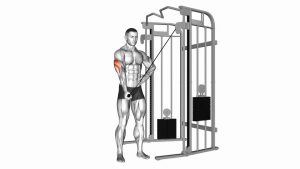
Cable Triceps Pushdown (V-Bar)
This movement is best used as a focused upper-arm isolation exercise after compound pressing work or as part of an arm-focused session. Because the cable keeps tension on the triceps throughout the range of motion, the exercise works well for both muscle-building and technique-driven pump work. Keep the chest tall, wrists neutral, and elbows steady instead of letting the shoulders or torso take over.
Quick Overview
| Body Part | Triceps |
|---|---|
| Primary Muscle | Triceps brachii |
| Secondary Muscle | Forearms, anconeus, and shoulder stabilizers |
| Equipment | Cable machine with V-bar attachment |
| Difficulty | Beginner to Intermediate |
Sets & Reps (By Goal)
- Muscle growth: 3–4 sets × 8–15 reps with 45–75 seconds rest
- Strength-focused accessory work: 3–5 sets × 6–10 reps with 60–90 seconds rest
- Light pump / finisher work: 2–3 sets × 15–20 reps with 30–45 seconds rest
- Technique practice: 2–3 sets × 10–12 smooth reps using a controlled tempo
Progression rule: Add reps first while keeping strict form. Increase the load only when you can complete all target reps without elbow flare, torso swing, or rushed negatives.
Setup / Starting Position
- Attach the V-bar: Secure the V-bar to a high cable pulley and make sure the clip is fully locked in.
- Take your grip: Grab the V-bar with a neutral grip and stand close enough that the cable stays aligned with your hands.
- Set your stance: Place the feet about hip-width apart with a slight bend in the knees for balance.
- Pin the elbows: Bring your elbows close to your sides and keep the upper arms mostly fixed.
- Brace the torso: Lift the chest, keep the spine neutral, and avoid leaning heavily over the bar.
- Start at the top: Begin with elbows bent and the bar around upper-chest to mid-chest height.
Tip: A small forward lean is fine, but the movement should still come from elbow extension, not from body weight shifting.
Execution (Step-by-Step)
- Lock in your posture: Keep your chest up, shoulders down, and elbows tucked near your ribcage.
- Drive the bar down: Extend your elbows and push the V-bar toward your thighs in a smooth, controlled line.
- Keep the upper arms quiet: Do not let the elbows drift forward or flare wide as you press down.
- Squeeze at the bottom: Reach full extension or near full extension and contract the triceps hard for a brief pause.
- Return under control: Let the bar rise slowly as the elbows bend, keeping tension on the triceps.
- Stop before losing position: End the rep when your elbows are fully reset at the top without shoulders rolling forward.
Pro Tips & Common Mistakes
- Keep elbows close: The closer your elbows stay to your sides, the more direct the triceps tension usually feels.
- Use a full controlled range: Avoid half reps that skip the stretch at the top or the squeeze at the bottom.
- Don’t swing the torso: Momentum turns the exercise into a whole-body movement and reduces triceps isolation.
- Keep wrists neutral: Don’t curl the wrists downward to fake extra range.
- Control the negative: The upward return matters just as much as the pushdown for growth and control.
- Don’t jam lockout: Finish the rep strongly, but avoid violently snapping the elbows straight.
- Match the load to the goal: Heavier sets can work, but this exercise usually shines with strict moderate-rep execution.
FAQ
What muscles does the V-bar triceps pushdown work?
It primarily targets the triceps brachii. The forearms and smaller stabilizers also help you hold the attachment and control the cable path.
Is a V-bar better than a rope for triceps pushdowns?
Neither is universally better. A V-bar often feels more stable and allows heavier strict reps, while a rope can allow a freer wrist position and a wider finish at the bottom.
Should I fully lock out on every rep?
You should reach a strong, nearly full elbow extension and squeeze the triceps, but avoid slamming into a harsh lockout. Controlled extension is better than forcing the joint.
Can beginners use this exercise?
Yes. It is one of the most beginner-friendly triceps isolation exercises because the cable guides the resistance path and makes it easy to adjust the load.
Where should I place this in a workout?
It works well after pressing exercises for added triceps volume, or later in an arm workout when you want focused isolation work without large systemic fatigue.
Recommended Equipment
- Tricep V-Bar Attachment — the main handle for stable neutral-grip pushdowns
- Tricep Rope Attachment — a useful alternative for higher-rep triceps work and variation
- Weightlifting Wrist Wraps — extra wrist support if cable pressing movements irritate your wrists
- Cable Pulley Attachment Set — helpful for home gyms that need multiple handle options for arm training
- Exercise Mat — useful for comfort, grip, and a cleaner training space around the cable station
Tip: If you already have a cable station, the best first upgrade is usually a solid V-bar or a quality rope attachment rather than buying more accessories you won’t use.