Dumbbell Lying Floor Skullcrusher: Proper Form, Sets, Tips & FAQ
Learn the Dumbbell Lying Floor Skullcrusher to build stronger triceps with safer elbow control and a floor-limited range of motion. Includes setup, execution, sets by goal, common mistakes, FAQs, and recommended equipment.
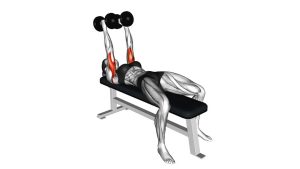
Dumbbell Lying Floor Skullcrusher
This variation works best when you move with a slow eccentric, a controlled transition near the floor, and a smooth lockout at the top. The goal is to challenge the triceps without turning the rep into a press. Your shoulders should stay quiet, your wrists neutral, and your elbows should point in a stable path instead of flaring wildly.
Quick Overview
| Body Part | Triceps |
|---|---|
| Primary Muscle | Triceps brachii |
| Secondary Muscle | Forearms, shoulder stabilizers, chest stabilizers |
| Equipment | Pair of dumbbells, exercise mat or floor space |
| Difficulty | Beginner to Intermediate |
Sets & Reps (By Goal)
- Muscle growth: 3–4 sets × 8–15 reps, 60–90 sec rest
- Strength-focused triceps work: 4–5 sets × 6–8 reps, 90–120 sec rest
- Technique / control practice: 2–3 sets × 10–12 reps with light weight, 45–75 sec rest
- Home upper-arm finisher: 2–3 sets × 12–20 reps, smooth tempo, short rest
Progression rule: First improve rep quality, then add reps, then increase dumbbell load. Keep the elbows steady and the lowering phase clean before going heavier.
Setup / Starting Position
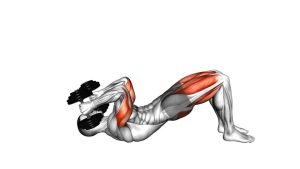
- Lie on the floor: Bend your knees if that helps keep your lower back comfortable and stable.
- Hold a dumbbell in each hand: Use a neutral grip with palms facing each other.
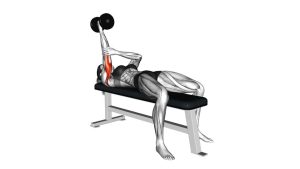
- Press the weights above your chest: Start with arms straight and dumbbells stacked over the shoulder line.
- Set the shoulders: Keep them packed down and avoid shrugging.
- Brace lightly: Tighten your core just enough to keep the torso still while the arms move.
Tip: Choose a weight that lets you control the bottom position without bouncing or losing elbow alignment.
Execution (Step-by-Step)
- Start tall through the arms: Hold the dumbbells above the chest with wrists straight and elbows extended.
- Bend at the elbows: Lower the dumbbells in a controlled arc toward the sides of your head.
- Keep upper arms mostly fixed: Avoid turning the rep into a pullover or chest press.
- Approach the floor gently: Let the floor limit the bottom range rather than crashing into it.
- Pause briefly: Maintain tension and keep the elbows from flaring hard outward.
- Extend the elbows: Drive the dumbbells back to the top by squeezing the triceps.
- Finish under control: Return to full extension above the chest without slamming into lockout.
Pro Tips & Common Mistakes
- Lower slowly: A 2–3 second eccentric usually makes the movement more effective and more joint-friendly.
- Don’t let the elbows flare excessively: A small natural flare is fine, but wild elbow drift reduces triceps focus.
- Keep wrists stacked: Neutral wrists help transfer force cleanly and reduce unnecessary strain.
- Use the floor as a guide, not a rebound: Avoid bouncing at the bottom.
- Don’t turn it into a dumbbell press: The elbows should do most of the moving.
- Match both sides: Keep the dumbbells descending and rising evenly for better symmetry.
- Choose load carefully: Heavy dumbbells are useless if they force sloppy shoulder movement.
FAQ
What muscles does the dumbbell lying floor skullcrusher work?
The main target is the triceps brachii. The forearms and shoulder stabilizers also help keep the dumbbells controlled.
Why do this on the floor instead of on a bench?
The floor limits the bottom position, which can make the movement feel more controlled and reduce excessive stretch at the elbows and shoulders.
Is this exercise good for building bigger arms?
Yes. It is a strong triceps isolation movement, especially when paired with presses, pushdowns, or overhead extensions in the same program.
Should I use a neutral grip or palms-forward grip?
A neutral grip is the most common and usually the most comfortable option for this dumbbell floor variation.
How heavy should I go?
Use a weight that allows you to lower the dumbbells smoothly, pause near the floor, and extend back up without wobbling or shoulder compensation.
Recommended Equipment
- Adjustable Dumbbells — ideal for progressive overload and convenient home triceps training
- Exercise Mat — adds comfort and grip when performing floor-based movements
- Weightlifting Wrist Wraps — useful if you want extra wrist support during dumbbell extension work
- Elbow Sleeves — can help keep the elbows warm and supported during higher-volume arm sessions
- Foam Roller — helpful for general upper-body recovery and soft-tissue prep around training days
Tip: For most people, the most valuable upgrade is a good pair of adjustable dumbbells plus a stable exercise mat.