Dumbbell Preacher Curl (Turned Torso): Form, Muscles Worked, Sets, Tips & FAQ
Learn how to do the Dumbbell Preacher Curl (Turned Torso) with proper form. Discover muscles worked, setup, execution steps, sets and reps by goal, common mistakes, FAQs, and recommended equipment.
Dumbbell Preacher Curl (Turned Torso)
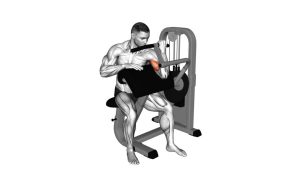
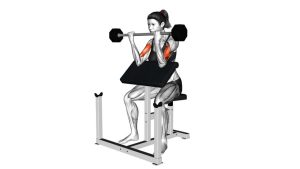
This variation works best with strict form, a controlled tempo, and full attention on elbow flexion. Because the arm is supported on the preacher pad, it reduces body English and makes it easier to isolate the biceps. The slight torso turn may improve comfort and line of pull for some lifters, especially when chasing a better squeeze at the top.
Quick Overview
| Body Part | Biceps |
|---|---|
| Primary Muscle | Biceps brachii |
| Secondary Muscle | Brachialis and brachioradialis |
| Equipment | Dumbbell, preacher bench |
| Difficulty | Beginner to Intermediate |
Sets & Reps (By Goal)
- Muscle growth: 3–4 sets × 8–12 reps per arm, 60–90 sec rest
- Strength-focused arm work: 4–5 sets × 6–8 reps per arm, 90–120 sec rest
- Technique and control: 2–3 sets × 10–15 reps per arm, slow tempo, 45–75 sec rest
- Finisher / pump work: 2–3 sets × 12–15 reps per arm, short rest, lighter load
Progression rule: Increase reps first while keeping the upper arm glued to the pad and the lowering phase controlled. Only add weight when you can maintain clean form without shoulder cheating.
Setup / Starting Position
- Adjust the preacher bench: Set the pad height so your armpit and upper arm rest comfortably without shrugging the shoulder.
- Grab one dumbbell: Use a supinated grip with the palm facing up.
- Place the working arm on the pad: Let the triceps and upper arm stay fully supported throughout the set.
- Turn the torso slightly: Rotate a little toward the working arm to create a more natural curling line.
- Start near full extension: Lower the dumbbell to the bottom under control, keeping a soft bend in the elbow rather than locking it hard.
Tip: Keep your chest stable and your non-working hand lightly braced on the bench if needed for balance.
Execution (Step-by-Step)
- Brace and stay still: Keep your torso quiet, upper arm pinned to the pad, and wrist neutral.
- Start the curl: Flex the elbow to raise the dumbbell upward without lifting the shoulder or bouncing the weight.
- Follow a smooth path: Let the dumbbell travel in a natural arc toward the shoulder while maintaining a palm-up position.
- Squeeze at the top: Pause briefly when the biceps are fully shortened and the forearm is near vertical.
- Lower slowly: Reverse the motion under control until the elbow is nearly straight, keeping tension on the biceps the whole time.
Pro Tips & Common Mistakes
- Keep the upper arm fixed: The preacher pad should eliminate swinging and reduce shoulder involvement.
- Use full control on the way down: The eccentric phase is where many lifters lose tension or overload the elbow.
- Don’t over-rotate the torso: A slight turn is enough. Too much twisting turns the curl into a cheat rep.
- Stay palm-up: A strong supinated grip helps keep the biceps doing the work.
- Don’t hyperextend the elbow: Stop just short of a hard lockout to reduce unnecessary joint stress.
- Avoid wrist collapse: Keep the wrist stacked over the forearm for better force transfer and comfort.
FAQ
What does the turned torso change in this preacher curl variation?
The slight torso turn can make the curling path feel more natural and may improve your ability to squeeze the biceps hard at the top. It is still a preacher curl first, so the upper arm support remains the main feature.
Is this better than a standard preacher curl?
Not always better, but it can feel better for some lifters. If the turned position improves comfort, control, or contraction quality, it can be a very effective variation.
Should I use heavy weight on preacher curls?
Moderate loads usually work best. This movement is designed for strict isolation, so overly heavy dumbbells often reduce range of motion, increase cheating, and place extra stress on the elbow.
Where should I feel this exercise?
You should feel it mostly in the biceps, especially through the lower-to-mid range and during the squeeze at the top. Some assistance from the brachialis and brachioradialis is normal.
Can beginners use this exercise?
Yes. It is beginner-friendly as long as the weight is light enough to control and the bench is adjusted properly. Start strict and focus on technique before chasing heavier loads.
Recommended Equipment
- Adjustable Preacher Curl Bench — ideal for proper arm support, strict form, and comfortable height adjustment
- Adjustable Dumbbell Set — makes it easier to progress gradually without needing many separate dumbbells
- Wrist Wraps — useful if you need extra wrist support during stricter curling work
- Arm Blaster — optional accessory for reinforcing elbow position and improving curl discipline
- Liquid Chalk — helps improve grip security without needing to squeeze the dumbbell excessively hard
Tip: For most lifters, the best investment is a stable preacher setup and a dumbbell system that allows small weight jumps.