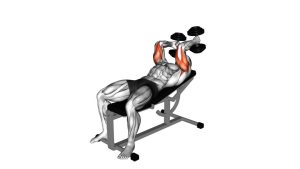
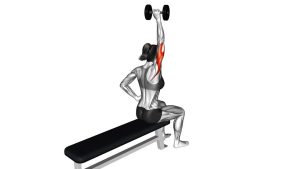
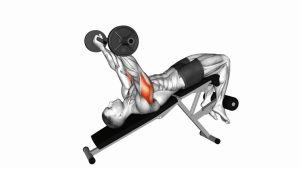
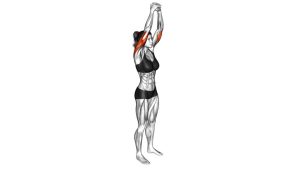
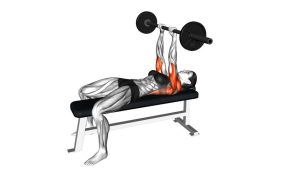
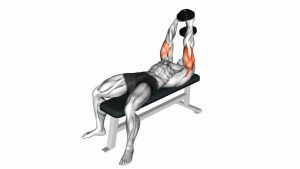
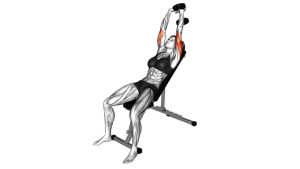
Dumbbell Pronated-Grip Triceps Extension: Form, Sets, Tips & FAQ
Learn the Dumbbell Pronated-Grip Triceps Extension with proper overhead form, setup, execution steps, sets by goal, common mistakes, FAQs, and recommended equipment for stronger triceps.
Dumbbell Pronated-Grip Triceps Extension
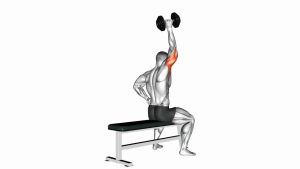
This variation works best when you keep the movement strict and let the elbows do the work. The dumbbell should travel in a controlled path behind the head while the upper arms stay mostly fixed. You should feel the triceps working hard—especially near the bottom stretch and during the final extension overhead. If your ribs flare, your lower back arches, or your elbows drift too wide, reduce the load and tighten your setup.
Quick Overview
| Body Part | Triceps |
|---|---|
| Primary Muscle | Triceps brachii (especially the long head) |
| Secondary Muscle | Medial head and lateral head of the triceps; core and shoulders stabilize the movement |
| Equipment | One dumbbell |
| Difficulty | Beginner to Intermediate |
Sets & Reps (By Goal)
- Muscle growth: 3–4 sets × 8–12 reps with 60–90 sec rest
- Technique and control: 2–3 sets × 10–15 reps with light to moderate load and smooth tempo
- Strength-focused assistance work: 3–4 sets × 6–8 reps with longer rest and strict form
- Finisher / pump work: 2–3 sets × 12–20 reps with controlled lockout and short rest
Progression rule: Add reps first, then increase load in small jumps. Only go heavier when you can keep the elbows stable and the lowering phase controlled.
Setup / Starting Position
- Stand tall: Place your feet about hip- to shoulder-width apart and brace your core.
- Grip the dumbbell securely: Hold one dumbbell with both hands around the inner plate or handle using a pronated hand position.
- Raise it overhead: Press the dumbbell above your head until your arms are extended.
- Set the elbows: Keep them pointed forward and close to your head rather than flared wide.
- Lock in posture: Keep your ribs down, glutes lightly engaged, and neck neutral.
Tip: A slight soft bend at the top is fine—avoid jamming the elbows into a hard lockout before the set even starts.
Execution (Step-by-Step)
- Start overhead: Hold the dumbbell above your head with the upper arms mostly vertical.
- Lower the weight slowly: Bend only at the elbows and guide the dumbbell behind your head.
- Keep the elbows in: Let the dumbbell descend under control without letting the elbows flare out.
- Reach the stretch: Lower until you feel a strong but comfortable stretch in the triceps.
- Extend overhead: Drive through the triceps to straighten the arms and return to the start position.
- Repeat smoothly: Pause briefly at the top, reset your brace, and begin the next rep without bouncing.
Pro Tips & Common Mistakes
- Keep the elbows narrow: A moderate tucked position increases triceps tension and improves control.
- Don’t rush the lowering phase: The eccentric is where you build control and maintain joint-friendly mechanics.
- Brace the core: Overhead extensions often tempt lifters to arch the lower back—stay stacked.
- Use full but safe range: Lower enough to feel the stretch, but not so far that your shoulders lose position.
- Avoid swinging: Momentum reduces triceps tension and can stress the elbows and shoulders.
- Watch the wrists: Keep them neutral instead of letting the dumbbell pull them backward.
- Don’t slam lockout: Finish the rep with control to keep tension on the triceps.
FAQ
What muscle does the dumbbell pronated-grip triceps extension work most?
It mainly targets the triceps brachii, with extra emphasis on the long head because the arms are positioned overhead.
Is this exercise better standing or seated?
Both can work well. Standing requires more core stability, while seated can make it easier to reduce body movement and focus purely on the triceps.
Should my elbows stay completely still?
They should stay mostly fixed. A tiny amount of natural movement is normal, but large elbow flare usually means you need to reduce the load.
What if I feel this more in my shoulders than my triceps?
Check your posture, keep the elbows slightly closer to your head, and use less weight. Too much shoulder involvement usually comes from poor alignment or excessive load.
Is this a good exercise for bigger arms?
Yes. Overhead triceps extensions are excellent for building the long head of the triceps, which can contribute to fuller upper-arm development when paired with pressing and pushdown variations.
Recommended Equipment
- Adjustable Dumbbells — versatile for progressive overload and easy weight changes at home
- Rubber Hex Dumbbell — a simple, stable option for strict overhead triceps work
- Weightlifting Gloves — can improve grip comfort and reduce hand fatigue during higher-rep sets
- Elbow Sleeves — useful for warmth, compression, and extra confidence during arm training
- Adjustable Weight Bench — helpful if you want to alternate between standing, seated, or incline arm work
Tip: For this exercise, prioritize a dumbbell you can control smoothly over one that simply feels heavy. Clean reps beat sloppy overload.