Dumbbell Prone Triceps Kickback: Form, Sets, Tips & FAQ
Learn the Dumbbell Prone Triceps Kickback to isolate the triceps with strict form and minimal momentum. Includes setup, execution, sets by goal, common mistakes, FAQs, and recommended equipment.
Dumbbell Prone Triceps Kickback
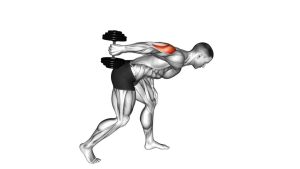
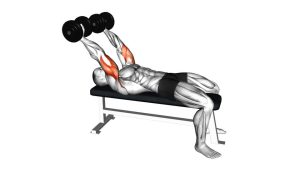
This variation is especially useful for lifters who want stricter triceps work than a standing kickback. The bench support minimizes body English, which makes it easier to feel the triceps doing the work. The goal is not to throw the dumbbell backward, but to extend the elbow under control while keeping the upper arm in position.
Quick Overview
| Body Part | Triceps |
|---|---|
| Primary Muscle | Triceps brachii |
| Secondary Muscle | Rear deltoid, upper back stabilizers, forearm stabilizers |
| Equipment | Dumbbell and flat bench |
| Difficulty | Beginner to Intermediate |
Sets & Reps (By Goal)
- Muscle growth: 3-4 sets × 10-15 reps per arm
- Technique and control: 2-3 sets × 12-15 reps with slower tempo
- Light finishing work: 2-3 sets × 15-20 reps per arm
- General arm training: 3 sets × 8-12 reps per arm
Progression note: Add reps before adding load. Only increase the dumbbell weight when you can keep the elbow high, the torso stable, and the lockout smooth across every rep.
Setup / Starting Position
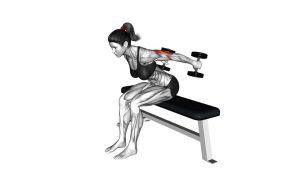
- Set a flat bench: Lie face down with your chest supported and your feet stable on the floor.
- Hold one dumbbell: Grip the dumbbell firmly with a neutral grip.
- Position the upper arm: Bring your working elbow up so the upper arm is roughly in line with your torso or slightly above it.
- Bend the elbow: Start with the forearm hanging down and the elbow flexed to about 90 degrees.
- Brace lightly: Keep your chest down on the bench, neck neutral, and shoulders square.
Tip: Think of the upper arm as “parked” in place before the rep begins. The elbow should act like a hinge while the rest of the body stays quiet.
Execution (Step-by-Step)
- Start from the bent-elbow position: Keep the elbow lifted and close to the body.
- Extend the elbow: Drive the dumbbell backward by straightening the arm until the triceps fully contract.
- Pause briefly at the top: Squeeze the triceps without jamming the joint or overreaching through the shoulder.
- Lower under control: Bend the elbow slowly and return to the start position without letting the dumbbell drop.
- Repeat smoothly: Keep the tempo consistent and avoid torso movement from rep to rep.
Pro Tips & Common Mistakes
- Keep the upper arm fixed: The elbow should stay high instead of drifting down during the rep.
- Do not swing the shoulder: This is an elbow extension exercise, not a rear delt swing.
- Use full but controlled range: Straighten the arm fully, then lower slowly back to the bent position.
- Do not go too heavy: Heavy dumbbells often turn kickbacks into sloppy momentum reps.
- Keep the wrist neutral: Avoid curling or excessively extending the wrist during lockout.
- Squeeze at the top: A short controlled pause improves triceps engagement.
- Stay chest-supported: Let the bench remove momentum so the triceps stay under tension.
FAQ
What makes the prone triceps kickback different from the standing version?
The prone version supports your torso on a bench, which reduces cheating and makes it easier to isolate the triceps. Most people find it easier to keep their upper arm stable in this variation.
Where should I feel this exercise?
You should mainly feel it in the back of the upper arm, especially near full elbow extension. If you mostly feel the shoulder or upper traps, check your elbow position and reduce momentum.
Should I use a heavy or light dumbbell?
This exercise usually works best with a light to moderate dumbbell. The goal is strict tension and clean reps, not moving the heaviest possible weight.
Is this a good exercise for triceps hypertrophy?
Yes. It can be very effective as a higher-rep isolation movement after presses, dips, or heavier triceps work. It is especially useful for improving contraction quality and finishing a session.
What is the biggest mistake in this exercise?
The biggest mistake is letting the whole arm swing backward instead of keeping the upper arm fixed and extending only at the elbow. That reduces triceps tension and turns the movement into a less effective rep.
Recommended Equipment
- Adjustable Dumbbells — versatile for progressive overload and ideal if you train multiple exercises at home
- Rubber Hex Dumbbells — stable, durable, and easy to use for single-arm triceps work
- Flat Weight Bench — essential for chest-supported positioning and stricter form
- Resistance Band Set — useful for warm-ups, triceps pump work, and pairing with home arm sessions
- Wrist Wraps — optional support if your wrists feel unstable during higher-volume arm training
Tip: Choose equipment that helps you keep the movement strict. For this exercise, control and positioning matter more than chasing heavy load.