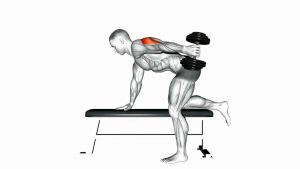
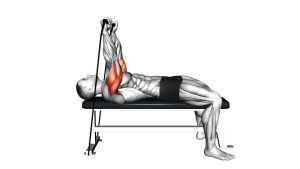
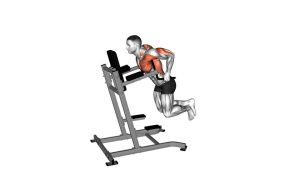
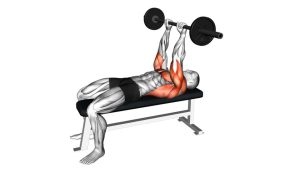
Dumbbell Seated Single-Arm Overhead Triceps Extension: Form, Sets, Tips & FAQ
Learn the Dumbbell Seated Single-Arm Overhead Triceps Extension with proper form, setup, sets by goal, common mistakes, FAQs, and recommended equipment for stronger triceps.
Dumbbell Seated Single-Arm Overhead Triceps Extension
This exercise works best when you treat it like a true isolation movement. The goal is not to swing the dumbbell, flare the elbow, or rush the bottom position. Instead, keep the upper arm steady, move through a comfortable range, and let the triceps do the work. A controlled stretch at the bottom and a smooth lockout at the top usually create the best training effect.
Quick Overview
| Body Part | Triceps |
|---|---|
| Primary Muscle | Triceps brachii (long head emphasis) |
| Secondary Muscle | Lateral head and medial head of the triceps, shoulder stabilizers, forearm/wrist stabilizers, core |
| Equipment | Single dumbbell, flat bench or sturdy seat |
| Difficulty | Intermediate (coordination and control matter more than heavy load) |
Sets & Reps (By Goal)
- Muscle growth: 3–4 sets × 8–15 reps per arm, 60–90 sec rest
- Strength-focused accessory work: 3–5 sets × 6–10 reps per arm, 75–120 sec rest
- Technique and control: 2–3 sets × 10–15 reps per arm with slower tempo, 45–75 sec rest
- High-rep finishing set: 1–2 sets × 15–20 reps per arm with lighter weight, short controlled lockout
Progression rule: First earn cleaner reps and a fuller range of motion. Then add small amounts of weight while keeping the elbow stable and the torso upright.
Setup / Starting Position
- Sit tall: Sit on a bench or sturdy seat with feet planted firmly on the floor.
- Brace lightly: Keep your ribs stacked over the hips and avoid leaning back excessively.
- Raise the dumbbell overhead: Hold one dumbbell with a neutral grip and press or guide it overhead with one arm.
- Set the upper arm: Keep the working upper arm close to the head and mostly vertical.
- Neutral wrist: Keep the wrist straight and the grip firm but not over-squeezed.
Tip: If your elbow drifts a lot, reduce the load slightly and focus on keeping the upper arm “parked” in place.
Execution (Step-by-Step)
- Start tall at the top: Begin with the arm extended overhead, elbow nearly straight, shoulder stable, and core lightly braced.
- Lower with control: Bend the elbow and allow the dumbbell to travel behind your head in a smooth arc.
- Keep the upper arm steady: The forearm moves; the upper arm stays mostly vertical instead of drifting forward or flaring wide.
- Reach a comfortable stretch: Lower until you feel a strong triceps stretch without pain or loss of posture.
- Extend back up: Press through the triceps to straighten the elbow and return the dumbbell to the overhead position.
- Repeat evenly: Complete all reps on one side, then switch arms and match the quality of the set.
Pro Tips & Common Mistakes
- Keep the elbow in: Some natural movement is fine, but excessive flaring usually reduces tension on the triceps.
- Don’t rush the bottom: The stretched position is one of the biggest benefits of this variation.
- Avoid over-arching the back: Stay tall and brace lightly so the ribcage does not flare upward.
- Use full but pain-free range: Go deep enough to stretch, not so deep that the shoulder or elbow feels unstable.
- Control the lockout: Finish the rep with tension, not a violent elbow snap.
- Train both sides honestly: Start with your weaker arm and match the reps on the stronger side.
- Don’t go too heavy too soon: This movement rewards precision more than ego loading.
FAQ
What part of the triceps does this exercise emphasize most?
The overhead position places extra stretch on the long head of the triceps, which is the main reason this variation is so popular for triceps development.
Should my elbow stay completely locked in one spot?
Not perfectly, but it should stay mostly stable. A little natural movement is normal, but big forward drift or flaring usually means you are losing control.
Is this better with one arm or two arms?
The single-arm version is excellent for fixing imbalances, improving control, and finding a more comfortable arm path. The two-arm version may let you use slightly more total load.
What if I feel elbow discomfort?
Reduce the load, shorten the range slightly, and avoid dropping too fast into the bottom. If discomfort continues, switch to a different triceps variation that feels better.
Can beginners use this exercise?
Yes, but beginners should start light and focus on technique first. It is often smarter to master control before trying to push heavy weights overhead with one arm.
Recommended Equipment
- Adjustable Dumbbells — ideal for progressive overload without needing a full rack of weights
- Adjustable Weight Bench — gives you a stable seated setup for stricter overhead triceps work
- Weight Lifting Wrist Wraps — useful if you want extra wrist support during overhead dumbbell training
- Exercise Mat — helpful for home training, floor protection, and a cleaner lifting space
- Gym Wrist Wraps / Support Wraps — a second wrist-support option if you prefer firmer wraps for pressing and extension work
Tip: For most people, the best investment for this exercise is a stable bench and a dumbbell setup that allows small weight jumps.