Dumbbell Seated Triceps Extension: Proper Form, Sets, Tips & FAQ
Learn the Dumbbell Seated Triceps Extension with proper form, setup, execution steps, sets by goal, common mistakes, FAQs, and recommended equipment for stronger, bigger triceps.
Dumbbell Seated Triceps Extension
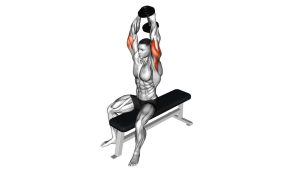
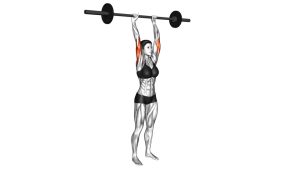
This exercise is most effective when the upper arms stay relatively fixed and the movement happens mainly at the elbows. In the video, the lifter maintains an upright seated posture, keeps the dumbbell overhead at the start, lowers it behind the head under control, and presses it back up smoothly. That combination makes this a strong option for building triceps size, improving overhead arm control, and adding focused upper-arm work to push days.
Quick Overview
| Body Part | Triceps |
|---|---|
| Primary Muscle | Triceps brachii (long head emphasis) |
| Secondary Muscle | Medial head and lateral head of the triceps, shoulder stabilizers, core stabilizers |
| Equipment | One dumbbell and a flat bench or sturdy seat |
| Difficulty | Beginner to Intermediate |
Sets & Reps (By Goal)
- Muscle growth: 3–4 sets × 8–12 reps with controlled tempo and 60–90 seconds rest
- Strength focus: 4–5 sets × 6–8 reps with heavier weight and 90–120 seconds rest
- Technique practice: 2–3 sets × 10–15 reps with light-to-moderate load and perfect form
- Finisher / pump work: 2–3 sets × 12–20 reps with shorter rest and strict control
Progression rule: First improve form, then add reps, then increase load gradually. Keep the elbows stable and the lowering phase controlled before moving heavier.
Setup / Starting Position
- Sit tall: Sit on a bench or stable seat with your feet flat on the floor.
- Grip the dumbbell: Hold one dumbbell with both hands around the inside plate or handle.
- Raise it overhead: Press the dumbbell above your head until your arms are extended.
- Align the elbows: Keep the elbows close to your head rather than flared wide.
- Brace the torso: Tighten your core and keep your ribcage stacked to avoid leaning back.
Tip: A seated position helps reduce body sway and makes it easier to focus tension directly on the triceps.
Execution (Step-by-Step)
- Start at lockout: Hold the dumbbell overhead with straight arms and a stable torso.
- Lower under control: Bend the elbows and slowly lower the dumbbell behind your head.
- Keep upper arms mostly fixed: Let the elbows flex while keeping them pointed generally forward and close to the head.
- Reach the bottom stretch: Lower until you feel a strong stretch in the triceps without losing posture.
- Extend back up: Drive through the triceps to straighten the elbows and return the dumbbell overhead.
- Finish smoothly: Pause briefly at the top, regain control, and repeat without rushing.
Pro Tips & Common Mistakes
- Keep elbows tucked: Slight movement is normal, but avoid letting them flare too wide.
- Control the eccentric: The lowering phase should be slow and deliberate, not dropped behind the head.
- Stay upright: Don’t lean back excessively to cheat the weight upward.
- Use full triceps range: Lower deep enough to feel the stretch, then extend fully at the top.
- Don’t go too heavy too soon: Excessive load usually turns this into a sloppy shoulder-and-back movement.
- Keep wrists solid: Don’t let them collapse backward under the dumbbell.
- Breathe with the rep: Inhale on the way down, exhale as you extend the dumbbell overhead.
FAQ
What part of the triceps does the seated overhead extension emphasize?
The overhead position places a bigger stretch on the long head of the triceps, which is why this variation is popular for arm development and fuller upper-arm size.
Is it better to do this seated or standing?
Seated is often easier for controlling posture and reducing body swing. Standing can work too, but it demands more balance and core stability.
How heavy should I go?
Choose a weight you can lower with control and lift without arching your back. Clean reps matter more than chasing heavy dumbbells on this movement.
Should my elbows touch my head?
Not necessarily. They should stay relatively close to your head and pointed forward, but forcing them into an unnatural position can be uncomfortable. Aim for stability, not stiffness.
Can beginners use this exercise?
Yes. Beginners should start with a lighter dumbbell, slower reps, and a moderate range until they build confidence with the overhead position.
Recommended Equipment
- Adjustable Dumbbells — practical for progressive overload and small weight jumps at home
- Weight Bench — gives you a stable seated base for stricter overhead triceps work
- Wrist Wraps — useful if heavier dumbbells make the wrists feel unstable
- Resistance Bands Set — great for warm-ups, elbow-friendly triceps volume, and accessory work
- Exercise Mat — adds comfort and grip around your bench setup or home training area
These product categories are easy to pair with this exercise: adjustable dumbbells for progression, a bench for a stable seated setup, wrist wraps for support, resistance bands for extra triceps work, and a mat for a cleaner home-gym station.