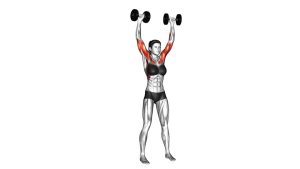
Dumbbell Standing Hammer Curl to Press: Form, Muscles Worked, Sets, Tips & FAQ
Learn how to do the Dumbbell Standing Hammer Curl to Press with proper form. Discover muscles worked, setup, step-by-step execution, sets and reps by goal, common mistakes, FAQs, and recommended equipment.
Dumbbell Standing Hammer Curl to Press
This exercise is a great option for lifters who want to train the arms and shoulders in one efficient movement. The hammer-grip curl emphasizes the upper arm and forearm muscles, while the press adds front-delt and triceps work. Because it combines two patterns in one rep, the key is to keep each phase controlled and clean rather than rushing through the transition.
Quick Overview
| Body Part | Shoulders |
|---|---|
| Primary Muscle | Anterior deltoids, biceps brachii, brachialis, brachioradialis |
| Secondary Muscle | Triceps, lateral deltoids, upper traps, core stabilizers |
| Equipment | Dumbbells |
| Difficulty | Beginner to Intermediate |
Sets & Reps (By Goal)
- Muscle building: 3–4 sets × 8–12 reps
- General strength: 3–5 sets × 5–8 reps
- Conditioning / combo training: 2–4 sets × 10–15 reps
- Technique practice: 2–3 sets × 6–10 reps with light dumbbells
Progression rule: Master strict curls and stable overhead lockouts before increasing load. When form stays clean, add a small amount of weight or 1–2 reps per set.
Setup / Starting Position
- Stand tall: Place your feet about hip-width to shoulder-width apart for a stable base.
- Hold the dumbbells at your sides: Use a neutral grip with palms facing inward.
- Brace the core: Keep your ribs stacked over your hips and avoid flaring the chest.
- Set the shoulders: Let the shoulders stay down and back without excessive tension.
- Start with straight arms: Elbows should be close to your torso and wrists neutral.
Tip: Choose a weight you can curl cleanly and still press overhead without arching your lower back.
Execution (Step-by-Step)
- Curl the dumbbells up: Bend your elbows and raise the dumbbells with a hammer grip, keeping the elbows close to your sides.
- Reach shoulder level: Bring the dumbbells to the top of the curl near your shoulders without swinging your torso.
- Transition smoothly: Keep the wrists strong and position the dumbbells so you are ready to press from shoulder height.
- Press overhead: Drive the dumbbells up until your arms are fully extended overhead.
- Lower under control: Bring the dumbbells back down to shoulder height, then reverse the curl slowly to return to the starting position.
- Reset and repeat: Stay tall, keep the core engaged, and begin the next rep without using momentum.
Pro Tips & Common Mistakes
- Keep the elbows close during the curl: Don’t let them flare too far forward or outward too early.
- Use a neutral grip: Maintain the hammer grip through the curl phase for better brachialis and brachioradialis emphasis.
- Brace before pressing: Tighten your abs and glutes so you don’t lean back under the load.
- Control the lowering phase: The eccentric portion builds stability and helps protect the shoulders.
- Avoid swinging: Using hip drive or torso movement turns it into a cheat curl and reduces arm tension.
- Don’t rush the transition: Pause briefly at shoulder level if needed to stay organized before pressing.
- Choose realistic dumbbells: Your press strength and curl strength are different, so this combo often requires moderate weights.
FAQ
What muscles does the Dumbbell Standing Hammer Curl to Press work?
It mainly trains the biceps, brachialis, brachioradialis, anterior deltoids, and triceps. Your core and upper traps also assist by helping stabilize the body and the overhead position.
Is this exercise more for arms or shoulders?
It targets both, but the hammer curl portion emphasizes the arms while the overhead press shifts the focus to the shoulders and triceps. It works best as a combo movement rather than a pure isolation exercise.
Should I use heavy or moderate weight?
Most people do best with moderate dumbbells. Since this movement combines a curl and a press, the load should allow clean reps in both phases without swinging or leaning back.
Can beginners do the hammer curl to press?
Yes, beginners can use it as long as they start light and focus on posture, elbow control, and a stable overhead lockout. Learning the curl and press separately first can also help.
What is the biggest mistake with this exercise?
The most common mistake is using momentum—especially swinging the dumbbells during the curl and overextending the lower back during the press. A controlled tempo makes the exercise much safer and more effective.
Recommended Equipment
- Adjustable Dumbbells — versatile for progressing both the curl and the press without needing a full rack of weights
- Rubber Hex Dumbbells — durable, easy to handle, and stable when placed on the floor between sets
- Weightlifting Gloves — can improve grip comfort during longer sets and combo dumbbell training
- Exercise Mat — useful for creating a stable training area and protecting flooring during dumbbell workouts
- Adjustable Weight Bench — useful for pairing this movement with seated presses, curls, and other dumbbell accessory work
Tip: For this exercise, a good pair of adjustable dumbbells is often the most practical choice because curl strength and press strength can improve at different rates.