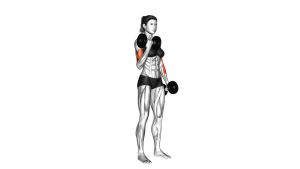
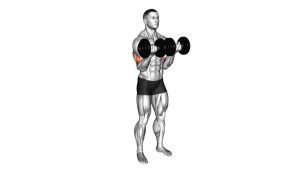
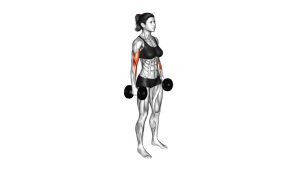
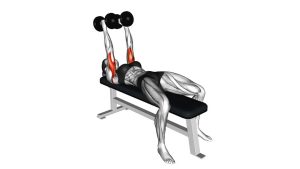
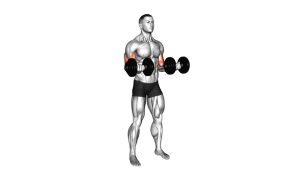
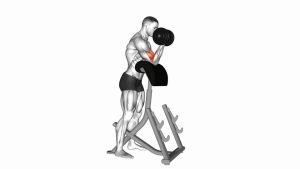
Dumbbell Standing Triceps Kickback: Proper Form, Sets, Tips & FAQ
Learn the Dumbbell Standing Triceps Kickback with proper form, setup, step-by-step execution, sets by goal, common mistakes, FAQs, and recommended equipment for stronger, more defined triceps.
Dumbbell Standing Triceps Kickback
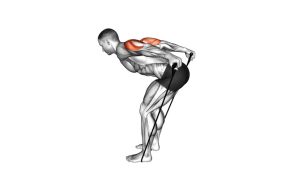
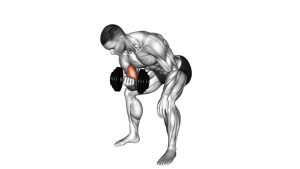
This exercise works best when you focus on control over momentum. You should feel the back of the upper arm doing most of the work while your torso stays steady and your shoulder does not swing. Because the load is relatively light, the dumbbell standing triceps kickback is excellent for muscle isolation, arm shaping, high-rep hypertrophy work, and finishing sets.
Quick Overview
| Body Part | Triceps |
|---|---|
| Primary Muscle | Triceps brachii |
| Secondary Muscle | Rear deltoid, forearm stabilizers, core, and upper back stabilizers |
| Equipment | 1 dumbbell |
| Difficulty | Beginner to Intermediate |
Sets & Reps (By Goal)
- Muscle growth / arm definition: 3–4 sets × 10–15 reps per arm
- Light toning / general fitness: 2–3 sets × 12–20 reps per arm
- Strength-focused accessory work: 3–4 sets × 8–12 reps per arm with strict form
- Finisher after pressing workout: 2–3 sets × 15–20 reps per arm with lighter weight
Progression rule: Increase reps first, then load. If your elbow starts drifting or your torso begins swinging, the weight is too heavy.
Setup / Starting Position
- Stand with a stable base: Place your feet about hip-width apart with a soft bend in the knees.
- Hinge at the hips: Lean your torso forward while keeping your spine neutral and chest open.
- Brace the core: Tighten your midsection so your body stays still throughout the set.
- Hold the dumbbell with a neutral grip: Keep your palm facing inward.
- Lift the working elbow: Bring the upper arm close to your torso so it stays roughly parallel to your body.
- Start with a bent elbow: The forearm should hang below the elbow at about a 90-degree bend.
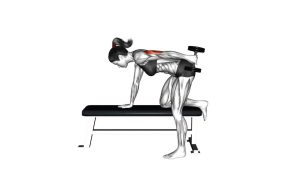
Tip: You can place your free hand on your thigh or a bench for added support and better balance.
Execution (Step-by-Step)
- Lock in your posture: Keep your torso still, neck neutral, and shoulder blades set.
- Keep the elbow pinned: Do not let the upper arm drop or swing during the rep.
- Extend the arm backward: Straighten the elbow by driving the dumbbell behind you until the arm is nearly fully extended.
- Squeeze the triceps: Pause briefly at the top and focus on contracting the back of the upper arm.
- Lower under control: Slowly bend the elbow and return the dumbbell to the starting position.
- Repeat evenly: Complete all reps on one side, then switch arms.
Pro Tips & Common Mistakes
- Keep the upper arm fixed: The elbow should stay close to the torso for better triceps isolation.
- Use lighter weight than you think: Kickbacks are most effective with strict, clean reps.
- Do not rush the lowering phase: The controlled return increases tension and improves technique.
- Avoid torso swinging: Momentum reduces triceps activation and shifts stress away from the target muscle.
- Keep the wrist neutral: Do not curl or excessively bend the wrist while extending the arm.
- Pause at full extension: A short squeeze at the top can improve the mind-muscle connection.
- Do not shrug the shoulder: Keep the shoulder relaxed and the neck long.
FAQ
What muscles does the dumbbell standing triceps kickback work?
The main muscle worked is the triceps brachii, which is responsible for extending the elbow. The rear deltoid, forearm stabilizers, core, and upper back also assist with stability.
Is this exercise good for building bigger arms?
Yes. It is a useful triceps isolation exercise for adding training volume, improving arm definition, and complementing heavier pressing movements.
Should I go heavy on triceps kickbacks?
Usually no. This exercise works best with moderate to light dumbbells and strict form. Heavy weight often leads to swinging and poor elbow control.
Can beginners do standing triceps kickbacks?
Absolutely. Beginners can benefit from learning elbow control, light resistance, and proper arm positioning before progressing to heavier triceps work.
What is the most common mistake in this movement?
The most common mistake is moving the shoulder and torso instead of isolating the elbow. If the upper arm is not stable, the exercise becomes less effective.
Recommended Equipment (Optional)
- Adjustable Dumbbells — the most practical upgrade for progressive overload and home triceps training
- Neoprene Dumbbell Set — ideal for lighter, strict reps and higher-volume kickback work
- Weightlifting Gloves — helpful for grip comfort and hand protection during repeated arm sessions
- Adjustable Workout Bench — useful for extra support if you prefer bracing your non-working hand
- Resistance Bands Set — a great accessory for pairing triceps isolation work with warm-ups and finishers
Tip: For this exercise, a lighter dumbbell with perfect control usually delivers better results than a heavier one with sloppy form.