Dumbbell Waiter Biceps Curl: Form, Muscles Worked, Sets, Tips & FAQ
Learn how to do the Dumbbell Waiter Biceps Curl with proper form. Discover muscles worked, setup, execution steps, sets and reps by goal, common mistakes, FAQs, and recommended equipment.
Dumbbell Waiter Biceps Curl
This exercise is especially useful for lifters who want a more controlled curl variation without relying on swinging or excessive shoulder involvement. Because the dumbbell is held in a compact, supported position, the movement encourages stricter technique and makes it easier to focus on the upper arms. Use a moderate weight, keep your torso still, and aim for a smooth squeeze at the top rather than chasing momentum.
Quick Overview
| Body Part | Biceps |
|---|---|
| Primary Muscle | Biceps brachii |
| Secondary Muscle | Brachialis, brachioradialis, forearms |
| Equipment | Single dumbbell |
| Difficulty | Beginner to Intermediate |
Sets & Reps (By Goal)
- Muscle growth: 3–4 sets × 8–12 reps with controlled tempo and 60–90 sec rest
- Technique practice: 2–3 sets × 10–15 reps with light-to-moderate weight and smooth form
- Arm finisher: 2–3 sets × 12–15 reps with a strong squeeze and slow lowering phase
- Strength-endurance: 2–4 sets × 12–20 reps using strict form and no torso swing
Progression rule: Add reps before load whenever possible. Once you can complete all sets with clean form, a full range of motion, and a controlled eccentric, increase the dumbbell slightly.
Setup / Starting Position
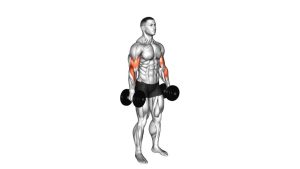
- Stand tall: Place your feet about hip- to shoulder-width apart and brace your core.
- Hold one dumbbell underneath: Support the dumbbell from below with both hands in a waiter-style position.
- Keep elbows close: Let your elbows rest near your sides or slightly in front of your torso.
- Set the start position: Begin with the dumbbell near the lower chest or upper abdomen.
- Stay stacked: Keep your chest up, shoulders relaxed, and wrists neutral before starting the curl.
Tip: Choose a load you can lift without leaning back. This variation works best when the movement stays compact and deliberate.
Execution (Step-by-Step)
- Brace and lock in: Keep your torso upright, shoulders down, and elbows close to your body.
- Curl the dumbbell upward: Flex at the elbows and raise the dumbbell in a controlled vertical path.
- Minimize shoulder movement: Do not shrug or swing the weight; let the biceps drive the rep.
- Squeeze at the top: Bring the dumbbell toward upper chest height and pause briefly at peak contraction.
- Lower slowly: Reverse the motion under control until you return to the starting position.
- Repeat smoothly: Keep tension on the biceps and avoid relaxing completely between reps.
Pro Tips & Common Mistakes
- Keep the elbows tucked: Excessive elbow drift turns the movement into more of a front-delt-assisted curl.
- Use strict tempo: A smooth lift and slower lowering phase increase tension and improve control.
- Do not lean back: Torso swing reduces biceps work and shifts stress into the lower back.
- Keep wrists neutral: Avoid bending them backward to support the dumbbell.
- Don’t rush the top: A short pause at peak contraction improves mind-muscle connection.
- Use moderate weight: This exercise is more effective as a strict hypertrophy movement than a heavy cheat curl.
FAQ
What muscles does the Dumbbell Waiter Biceps Curl work?
The main target is the biceps brachii. The brachialis, brachioradialis, and forearm muscles also help stabilize the movement.
Is this better than a regular dumbbell curl?
It is not automatically better, but it can be useful if you want a stricter curl variation that reduces momentum and improves control. It works well as a hypertrophy-focused accessory movement.
How heavy should I go?
Use a load you can control without leaning back or letting the elbows flare. Most lifters benefit more from moderate weight and clean reps than from going too heavy on this variation.
Where should I feel it?
You should feel the exercise mainly in the front of the upper arms. If you feel more stress in the shoulders, wrists, or lower back, adjust your form and lighten the dumbbell.
Can beginners use this exercise?
Yes. Beginners can use it effectively because the waiter hold encourages a more controlled path. Start light and focus on a smooth tempo.
Recommended Equipment
- Adjustable Dumbbells — versatile option for progressive overload at home
- Arm Blaster — helps keep elbows fixed for stricter curling mechanics
- Preacher Curl Pad — useful for additional biceps isolation work in the same training block
- Resistance Bands Set — good for warm-ups, pump work, and extra arm volume
- Adjustable Weight Bench — expands your arm-training options with seated and incline curl variations
Pick equipment that supports stricter form and progressive overload. A dumbbell and good technique are enough to make this exercise effective.