Elbow Up-and-Down Dynamic Plank: Form, Core Benefits, Sets, Tips & FAQ
Learn the Elbow Up-and-Down Dynamic Plank for core strength, shoulder stability, triceps endurance, and anti-rotation control. Includes setup, steps, mistakes, FAQs, and equipment.
Elbow Up-and-Down Dynamic Plank
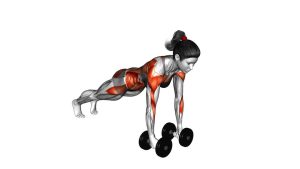
This exercise is best performed with a slow, controlled rhythm. Every time you lower to the elbows or press back up to the hands, your core must fight rotation, your shoulders must stay stable, and your body must remain in one strong line.
Quick Overview
| Body Part | Core |
|---|---|
| Primary Muscle | Rectus abdominis, transverse abdominis, obliques |
| Secondary Muscle | Shoulders, triceps, serratus anterior, glutes, hip stabilizers |
| Equipment | Bodyweight only; optional exercise mat for elbow and wrist comfort |
| Difficulty | Intermediate |
Sets & Reps (By Goal)
- Core control: 2–3 sets × 6–10 total reps, slow tempo
- Strength endurance: 3–4 sets × 10–16 total reps
- Conditioning circuit: 3–5 rounds × 20–40 seconds
- Beginner regression: 2–3 sets × 6–8 reps from the knees
- Advanced challenge: 3–4 sets × 30–45 seconds with minimal hip movement
Progression rule: First improve control, then increase reps or time. Do not increase speed if your hips sway, your lower back drops, or your shoulders collapse.
Setup / Starting Position
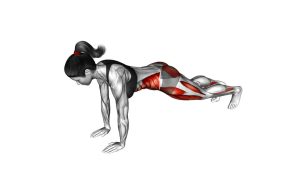
- Start in a high plank: Place your hands under your shoulders with arms straight.
- Set your feet: Keep feet hip-width to shoulder-width apart. A wider stance makes the exercise easier to control.
- Brace your core: Tighten your abs as if preparing for a light punch to the stomach.
- Squeeze the glutes: This helps prevent the hips from sagging.
- Keep the body long: Head, shoulders, hips, knees, and heels should form one straight line.
- Look slightly ahead of your hands: Keep your neck neutral, not hanging down or looking forward too much.
Tip: If your wrists feel uncomfortable, warm them up first or place your hands on push-up handles.
Execution (Step-by-Step)
- Begin in high plank: Lock in your core, glutes, and shoulder position before moving.
- Lower one arm: Bend one elbow and place that forearm on the floor directly under the shoulder.
- Lower the second arm: Bring the opposite forearm down so you are now in a forearm plank.
- Pause briefly: Keep your hips level and avoid rocking side to side.
- Press one hand down: Place one palm back on the floor and push through the hand to lift your torso.
- Return to high plank: Press through the second hand until both arms are straight again.
- Alternate the lead arm: On the next rep, lower and press up with the opposite arm first.
- Repeat under control: Maintain a steady pace without rushing or bouncing.
Pro Tips & Common Mistakes
Pro Tips
- Think “zipper ribs to hips”: Keep your ribs pulled down and your pelvis stable.
- Alternate the lead arm: This keeps both shoulders and triceps working evenly.
- Press the floor away: Stay active through the shoulders instead of sinking into the joints.
- Use a wider base: Wider feet reduce rotation and help you learn clean technique.
- Move quietly: Smooth transitions are better than fast, sloppy reps.
Common Mistakes
- Hips swinging side to side: Usually caused by moving too fast or placing the feet too close together.
- Lower back sagging: Brace harder, squeeze the glutes, or stop the set before form breaks.
- Elbows drifting too far forward: Keep elbows under shoulders in the forearm plank.
- Hands too far ahead: Hands should return under the shoulders, not in front of the face.
- Always leading with one arm: This creates uneven workload and shoulder dominance.
FAQ
What muscles does the Elbow Up-and-Down Dynamic Plank work?
It primarily trains the abs, transverse abdominis, and obliques. It also works the shoulders, triceps, serratus anterior, glutes, and hip stabilizers.
Is this exercise good for abs?
Yes. It is excellent for abs because your core must resist both lower-back sagging and side-to-side rotation while your arms move.
Why do my hips twist during this exercise?
Hip twisting usually means the core is losing anti-rotation control. Widen your feet, slow down, brace harder, and alternate your lead arm.
Can beginners do this exercise?
Beginners can do a modified version from the knees. Once you can keep your hips stable and your shoulders controlled, progress to the full plank version.
Should I do this exercise fast or slow?
Slow and controlled is better. Speed is only useful after you can keep your spine stable, hips level, and shoulders strong.
Recommended Equipment
- Thick Exercise Mat — protects elbows, wrists, and knees during plank transitions
- Push-Up Handles — can reduce wrist strain during the high plank position
- Non-Slip Workout Mat — improves grip and stability when moving between hand and elbow positions
- Core Sliders — useful for progressing plank-based core training and anti-rotation drills
- Mini Resistance Bands — helpful for glute activation and hip stability work before planks
Tip: Choose equipment that improves comfort and control. For this exercise, the best tool is usually a stable, non-slip mat.