Landmine Squat and Press: Full-Body Form, Muscles, Sets & Tips
Learn the Landmine Squat and Press for full-body strength, power, legs, shoulders, and core. Includes form, sets, tips, FAQs, and equipment.
Landmine Squat and Press
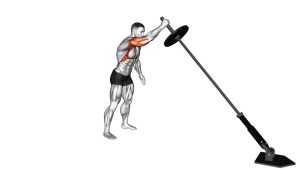
This exercise works best when the squat and press connect smoothly. The legs should create the first strong drive, the core should stay braced, and the arms should finish the press without turning the movement into a loose or uncontrolled push. Because the bar travels on an angled path, the Landmine Squat and Press can feel more shoulder-friendly than a straight overhead press while still challenging full-body power.
Quick Overview
| Body Part | Legs |
|---|---|
| Primary Muscle | Quadriceps, shoulders |
| Secondary Muscle | Glutes, triceps, upper chest, core, upper back, adductors |
| Equipment | Barbell, landmine attachment or secure corner setup, optional weight plates |
| Difficulty | Intermediate |
Sets & Reps (By Goal)
- Strength: 3–5 sets × 4–6 reps with controlled rest and strong bracing.
- Muscle building: 3–4 sets × 8–12 reps using a smooth squat-to-press rhythm.
- Power development: 4–6 sets × 3–5 explosive reps with lighter weight and full control.
- Conditioning: 2–4 sets × 10–15 reps using moderate weight and clean breathing.
- Beginner practice: 2–3 sets × 6–8 reps with the empty bar or very light load.
Progression rule: Add reps before adding weight. Once you can keep the squat deep, the torso upright, and the press smooth, increase load gradually.
Setup / Starting Position
- Secure the bar: Place one end of the barbell in a landmine attachment or safely into a stable corner.
- Load carefully: Add a light plate if needed, but begin conservatively to learn the movement path.
- Face the bar: Stand facing the free end of the bar with feet about shoulder-width apart.
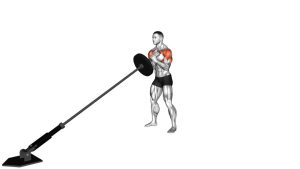
- Hold the sleeve: Grip the end of the bar with both hands and bring it close to the upper chest.
- Set your posture: Keep your chest tall, ribs controlled, shoulders relaxed, and elbows slightly forward.
- Brace your core: Create tension through your trunk before descending into the squat.
Your start position should feel like a front-loaded squat. The bar should not pull you forward, and your shoulders should not shrug toward your ears.
Execution (Step-by-Step)
- Begin tall: Stand with the bar close to your chest and your feet planted firmly.
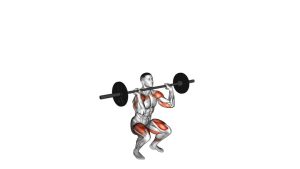
- Descend into the squat: Bend your knees and hips together while keeping the torso upright.
- Reach full control: Lower until you reach a comfortable squat depth without losing heel contact or spinal position.
- Drive through the floor: Push through the mid-foot and heel to stand up powerfully.
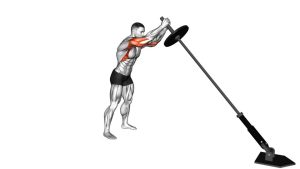
- Transfer force upward: As your legs extend, let the momentum help guide the bar into the press.
- Press along the landmine arc: Extend your arms forward and upward without leaning back.
- Finish strong: Lock out with control, keeping your ribs down and core tight.
- Return the bar: Lower the bar back to your chest under control before starting the next rep.
Pro Tips & Common Mistakes
- Keep the bar close: If the bar drifts away from your chest during the squat, your balance and torso position may break down.
- Use your legs first: The press should be powered by the squat drive, not only by the shoulders and triceps.
- Avoid leaning backward: Brace your abs and keep your ribs from flaring at lockout.
- Control the bottom: Do not bounce aggressively out of the squat if you cannot keep your knees and torso stable.
- Track the knees: Let your knees follow your toes instead of collapsing inward.
- Do not rush the return: Lower the bar back to the chest smoothly before beginning the next squat.
- Choose the right load: Too much weight often turns this into a sloppy partial squat and awkward press.
- Use a natural press angle: Follow the landmine path instead of forcing the bar straight overhead.
FAQ
What muscles does the Landmine Squat and Press work?
It mainly works the quadriceps and shoulders. It also trains the glutes, triceps, upper chest, core, upper back, and adductors because the body must squat, stabilize, and press in one connected movement.
Is the Landmine Squat and Press good for beginners?
It can be beginner-friendly if performed with a light bar and controlled tempo, but it is usually best classified as intermediate because it combines lower-body strength, upper-body pressing, core stability, and timing.
Is this the same as a landmine thruster?
Yes, it is very similar. Many coaches call this movement a landmine thruster because it combines a squat with a press. “Landmine Squat and Press” is the more descriptive exercise name.
Should I press at the same time as I stand up?
The press should begin as you drive out of the squat, but the legs should create the first push. Think of the movement as a smooth transfer of force from your feet, through your core, and into your arms.
Why does the landmine press feel easier on the shoulders?
The landmine path moves forward and upward on an angle, which usually feels more natural than a fully vertical overhead press. This can reduce shoulder irritation for some lifters while still training pressing strength.
Can I use this exercise for fat loss or conditioning?
Yes. Because it uses many muscle groups at once, the Landmine Squat and Press can be effective for conditioning circuits. Use moderate weight, clean reps, and short rest periods without sacrificing form.
Recommended Equipment
- Landmine Attachment — secures the barbell and creates a smooth angled pressing path.
- Olympic Barbell — the main tool needed for landmine squat and press variations.
- Olympic Weight Plates — allows progressive loading for strength, muscle, and conditioning goals.
- Barbell Collars — keeps plates secure during repeated squat-to-press reps.
- Weightlifting Shoes — helps improve squat stability, heel contact, and upright torso position.
Tip: If you do not have a landmine attachment, place the barbell end securely into a strong corner with padding. Make sure the setup does not slide before you begin training.