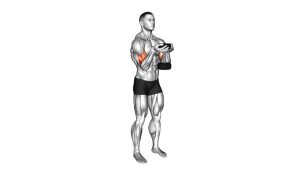
Leg Concentration Curl: Proper Form, Sets, Tips & FAQ
Learn the Leg Concentration Curl for strict biceps isolation and peak contraction. Step-by-step form, sets by goal, common mistakes, FAQs, and recommended equipment.
Leg Concentration Curl
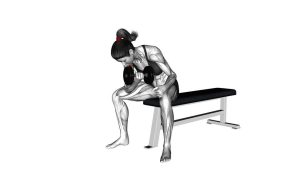
This variation is ideal for lifters who want better mind-muscle connection, cleaner curling mechanics, and more direct biceps work with minimal momentum. Because your arm is supported against the leg, the movement naturally becomes stricter than many standing curl variations. That makes it useful for hypertrophy-focused arm training, end-of-workout pump sets, and anyone trying to improve peak contraction without cheating the rep.
Quick Overview
| Body Part | Biceps |
|---|---|
| Primary Muscle | Biceps brachii |
| Secondary Muscle | Brachialis, brachioradialis, forearm flexors |
| Equipment | Dumbbell, flat bench or sturdy seat |
| Difficulty | Beginner to Intermediate |
Sets & Reps (By Goal)
- Muscle growth: 3–4 sets × 8–12 reps per arm, 45–75 sec rest
- Strength with strict form: 3–5 sets × 6–8 reps per arm, 75–120 sec rest
- Mind-muscle connection / pump work: 2–3 sets × 12–15 reps per arm, 30–60 sec rest
- Finisher set: 1–2 sets × 15–20 controlled reps per arm with lighter weight
Progression rule: Add reps first, then increase weight in small jumps. Only progress when you can keep the elbow fixed against the leg and lower every rep under control.
Setup / Starting Position
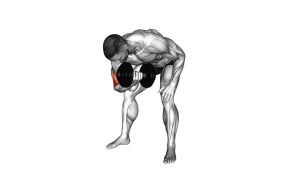
- Sit on a bench or sturdy seat: Plant your feet firmly and spread your knees enough to let the working arm move freely.
- Hold one dumbbell: Use a supinated grip (palm facing up) with the dumbbell hanging between your legs.
- Brace the upper arm: Press the back of your upper arm or elbow area against the inside of your same-side thigh.
- Lean slightly forward: Keep your chest up and spine neutral rather than rounding aggressively.
- Start from near full extension: Let the arm straighten under control while keeping tension on the biceps.
Tip: Your thigh acts like a built-in support pad. Once the arm is anchored, the curl should come almost entirely from elbow flexion.
Execution (Step-by-Step)
- Brace and lock in: Keep the upper arm pressed into the inner thigh and the shoulder quiet.
- Curl the dumbbell upward: Bend at the elbow and bring the weight toward your shoulder in a smooth arc.
- Squeeze at the top: Pause briefly when the biceps are fully shortened without letting the elbow drift.
- Lower slowly: Control the eccentric all the way back down to near full extension.
- Repeat cleanly: Maintain the same body position and tempo for every rep before switching arms.
Pro Tips & Common Mistakes
- Keep the elbow planted: This is the main feature that makes the exercise strict and effective.
- Use a full but controlled range: Don’t cut reps short unless elbow comfort requires it.
- Pause at peak contraction: A 1-second squeeze can improve biceps recruitment.
- Control the lowering phase: Don’t let gravity drop the dumbbell back down.
- Avoid torso twisting: The body should not rotate to finish the rep.
- Don’t go too heavy: Concentration curls usually work best with moderate loads and strict execution.
- Keep the wrist neutral: Excessive bending at the wrist can reduce comfort and shift tension away from the biceps.
FAQ
What does the Leg Concentration Curl target most?
It primarily targets the biceps brachii, while also involving the brachialis and brachioradialis as assisting muscles. The thigh-supported position helps isolate the biceps more strictly.
Is this better than a regular standing dumbbell curl?
It is not necessarily better for every goal, but it is usually stricter and better for isolation, peak contraction, and mind-muscle connection. Standing curls allow more total load, while concentration curls reduce momentum.
How heavy should I go on concentration curls?
Use a weight you can control without lifting the elbow off the thigh or swinging your torso. For most lifters, moderate loads and clean reps work better than very heavy dumbbells on this movement.
Should I rotate my wrist during the rep?
If you start with the palm facing up, a slight natural supination is fine, but avoid turning it into a big, exaggerated wrist movement. The main action should still be elbow flexion.
Where should I place this exercise in my workout?
It works very well in the middle or near the end of an arm workout or pull day, especially after heavier curls or rows when you want to finish with strict biceps-focused work.
Recommended Equipment
- Adjustable Dumbbell — practical for progressive overload and one-arm biceps work at home
- Flat Weight Bench — gives you a stable seated position for strict concentration curls
- Wrist Wraps for Lifting — helpful if you want extra wrist support during high-volume arm sessions
- Resistance Bands Set — useful for warm-ups, arm finishers, and adding variety to biceps training
- Dumbbell Rack — keeps your training space organized if you use multiple dumbbell pairs
Tip: For this exercise, the most important equipment choice is a comfortable seat height and a dumbbell you can fully control from bottom to top.