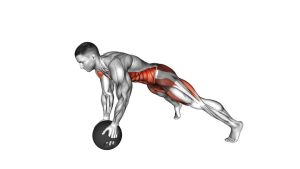
Medicine Ball Sit-Up Throw Against Wall: Form, Benefits, Sets & Tips
Learn how to perform the Medicine Ball Sit-Up Throw Against Wall with proper form. Build explosive abs, core power, coordination, and upper-body control with this detailed guide.
Medicine Ball Sit-Up Throw Against Wall
This movement is more advanced than a standard sit-up because the body must control both the medicine ball and the rebound from the wall. Each repetition includes four important actions: the upward sit-up, the forward throw, the catch, and the controlled descent. Because of that, the exercise is excellent for athletes, functional fitness training, boxing conditioning, and explosive core workouts.
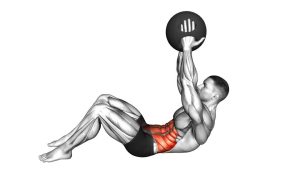
The exercise starts from a lying position with the medicine ball extended overhead. From there, the athlete performs a sit-up while swinging the ball forward. At the top, the ball is thrown into the wall. After the rebound, the ball is caught safely, then the body lowers back to the floor with control. This creates a powerful combination of concentric, explosive, reactive, and eccentric core work.
Quick Overview
| Body Part | Core |
|---|---|
| Primary Muscle | Rectus abdominis |
| Secondary Muscle | Obliques, hip flexors, transverse abdominis, shoulders, chest, serratus anterior |
| Equipment | Medicine ball and solid wall |
| Difficulty | Intermediate |
Sets & Reps (By Goal)
- Core power: 3–5 sets of 5–8 reps with explosive throws and full control.
- Muscular endurance: 2–4 sets of 10–15 reps using a lighter medicine ball.
- Athletic conditioning: 3–4 rounds of 20–30 seconds with 45–60 seconds of rest.
- Core strength: 3–4 sets of 6–10 reps with a moderate ball and slow eccentric control.
- Warm-up activation: 1–2 sets of 6–8 reps using a light ball before sport or core training.
Progression rule: First improve control and timing. Then increase speed. Add weight only when every catch, throw, and descent stays smooth.
Setup / Starting Position
- Choose a safe wall: Use a strong wall that can handle repeated medicine ball throws.
- Sit facing the wall: Position your body close enough that the ball rebounds back to you after each throw.
- Lie on your back: Bend your knees and place your feet flat on the floor.
- Hold the ball overhead: Extend your arms behind you while keeping control of the ball.
- Brace your core: Keep your ribs down and avoid overextending your lower back.
- Set your neck position: Keep the chin slightly tucked and avoid pulling the head forward.
- Prepare your throw path: Aim the ball toward the wall at chest to face height when you reach the top.
Your start position should feel strong and organized. Do not begin with a loose grip, relaxed core, or excessive low-back arch.
Execution (Step-by-Step)
- Begin from the floor: Lie back with the medicine ball extended overhead. Keep your knees bent, feet planted, and core lightly braced.
- Start the sit-up: Exhale and lift your shoulders from the floor. Bring the ball forward as your torso begins to rise.
- Drive upward: Continue curling your torso until you reach a strong seated position. Keep your spine controlled instead of jerking upward.
- Throw the ball: As you reach the top, extend your arms and throw the medicine ball into the wall with power.
- Stay tall after release: Do not collapse backward immediately. Keep your torso active while the ball rebounds.
- Catch the rebound: Receive the ball with soft elbows. Absorb the force through your arms and core.
- Lower under control: Roll your torso back to the floor while guiding the ball overhead again.
- Reset before the next rep: Let the ball reach the overhead position, brace again, then repeat with the same clean rhythm.
Pro Tips & Common Mistakes
Pro Tips
- Use a light-to-moderate ball: Speed and control matter more than heavy loading.
- Throw from the top position: Reach a strong seated posture before releasing the ball.
- Control the catch: Let your elbows bend slightly so the rebound does not pull your shoulders forward.
- Lower slowly: The eccentric phase builds strength and protects your lower back.
- Keep the feet stable: Press your feet into the floor to maintain balance during the throw and catch.
- Use breathing: Exhale during the sit-up and throw. Inhale as you lower back down.
Common Mistakes
- Using a ball that is too heavy: This often turns the exercise into a sloppy swing instead of a clean core movement.
- Throwing only with the arms: The core should create the power, while the arms guide the ball.
- Dropping backward after the throw: Stay active and wait for the rebound before lowering with control.
- Pulling the neck forward: Keep your chin slightly tucked and let the abs lift the torso.
- Arching the lower back at the bottom: Brace your ribs down before each repetition.
- Catching with locked elbows: Soft elbows protect the shoulders and improve control.
FAQ
What muscles does the Medicine Ball Sit-Up Throw Against Wall work?
It mainly targets the rectus abdominis. It also works the obliques, hip flexors, transverse abdominis, shoulders, chest, and serratus anterior. The throw and catch make the exercise more athletic than a regular sit-up.
Is this exercise good for building abs?
Yes. It can help build stronger and more powerful abs, especially when performed with strict form. For visible abs, combine it with progressive core training, full-body strength work, and proper nutrition.
How heavy should the medicine ball be?
Most people should start with a light-to-moderate medicine ball. A ball around 4–10 lb is often enough for beginners and intermediates. Choose a weight that allows a fast throw, safe catch, and controlled descent.
Can beginners do this exercise?
Complete beginners should first master regular sit-ups, crunches, dead bugs, and medicine ball chest passes. Once they can control the sit-up and catch safely, they can progress to this exercise with a light ball.
Should I anchor my feet?
You can anchor your feet if needed, especially while learning. However, do not rely only on the hip flexors. Keep the abs braced and control the torso throughout the movement.
Why does my lower back hurt during this exercise?
Low-back discomfort usually happens when the ball is too heavy, the descent is too fast, or the lower back arches at the bottom. Use a lighter ball, reduce the range slightly, and focus on controlled spinal movement.
Recommended Equipment
- Soft Medicine Ball — ideal for wall throws, catches, and dynamic core training.
- Wall Ball Medicine Ball — useful for repeated wall-contact exercises and conditioning drills.
- Thick Exercise Mat — adds comfort for the spine and hips during floor-based sit-up work.
- Non-Slip Workout Mat — helps keep your body stable while throwing and catching the ball.
- Medicine Ball Rack — keeps multiple medicine ball weights organized for progressive training.
Tip: For this exercise, a softer medicine ball is usually better than a hard slam ball because it rebounds more safely and is easier to catch.