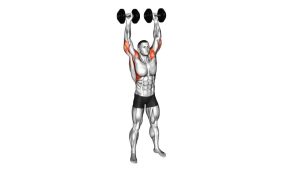
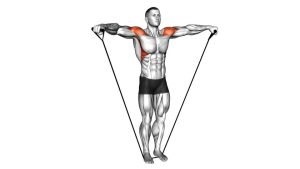
Mid-Air Lateral Raise With Switching Palms: Form, Muscles Worked, Tips & FAQ
Learn how to perform the Mid-Air Lateral Raise With Switching Palms for stronger, rounder shoulders. Includes form tips, muscles worked, sets and reps by goal, mistakes to avoid, FAQs, and recommended equipment.
Mid-Air Lateral Raise With Switching Palms
This movement is best used as a hypertrophy-focused accessory exercise for shoulders. Compared with a standard lateral raise, the switching-palms action adds extra control demands and makes it easier to keep tension on the delts throughout the rep. Use a weight you can control cleanly—this is not a momentum-based lift.
Quick Overview
| Body Part | Shoulders |
|---|---|
| Primary Muscle | Lateral deltoids (side shoulders) |
| Secondary Muscle | Anterior deltoids, posterior deltoids, upper traps, rotator cuff stabilizers |
| Equipment | Pair of light-to-moderate dumbbells |
| Difficulty | Intermediate (requires good shoulder control and clean tempo) |
Sets & Reps (By Goal)
- Muscle growth: 3–4 sets × 10–15 reps, 45–75 seconds rest
- Shoulder definition / pump work: 2–4 sets × 12–20 reps, 30–60 seconds rest
- Technique and control: 2–3 sets × 8–12 reps with lighter weight and slower tempo
- Finisher after pressing: 2–3 sets × 12–18 reps with strict form
Progression rule: First improve rep quality, control, and top-position rotation. Only then add small amounts of weight. If the torso starts swinging or the traps take over, the load is too heavy.
Setup / Starting Position
- Stand tall: Place your feet about hip-width apart with a slight bend in the knees and your core braced.
- Hold the dumbbells at your sides: Start with a neutral grip, palms facing inward toward your body.
- Set your posture: Keep the chest up, shoulders down, and neck relaxed. Do not lean back or puff the ribs excessively.
- Soften the elbows: Maintain a small bend in the elbows and keep that bend consistent throughout the set.
- Prepare for strict reps: Think about moving from the shoulders, not from momentum or body English.
Tip: This exercise usually works best with lighter dumbbells than your normal lateral raise because the palm-switching element makes each rep more demanding.
Execution (Step-by-Step)
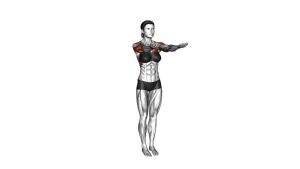
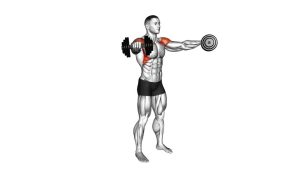
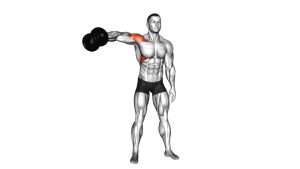
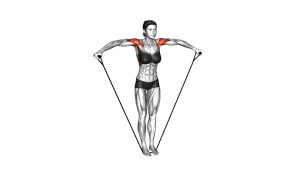
- Raise the dumbbells out to the sides: Lift both arms laterally until they reach about shoulder height.
- Keep the elbows slightly bent: Avoid turning the movement into a front raise or straight-arm swing.
- Pause briefly in mid-air: At the top, maintain control and keep the shoulders from shrugging upward.
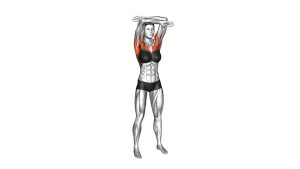
- Switch the palms: Rotate the wrists and forearms smoothly so the palms change orientation while the arms stay elevated.
- Reverse the rotation if needed: Depending on your exact style, return the palms toward the starting orientation before lowering.
- Lower under control: Bring the dumbbells back down slowly to your sides without dropping them.
- Repeat continuously: Use a smooth rhythm and keep constant tension on the side delts throughout the set.
Pro Tips & Common Mistakes
- Lead with the elbows: Think about lifting the elbows outward rather than throwing the hands up.
- Use controlled rotation: The palm switch should be deliberate, not a fast wrist flip.
- Stay in the scapular plane: Raising slightly forward from your sides can feel smoother on many shoulders.
- Do not swing the torso: Momentum reduces delt tension and shifts stress away from the target area.
- Avoid going too heavy: This variation loses its value when form breaks down.
- Keep traps quiet: Shoulders should stay depressed and relaxed rather than climbing toward the ears.
- Do not raise too high: Shoulder height is enough for most lifters; forcing extra range often invites compensation.
- Control the lowering phase: Eccentric control helps maximize tension and muscle stimulus.
FAQ
What muscles does the Mid-Air Lateral Raise With Switching Palms work?
It mainly targets the lateral deltoids, which are responsible for shoulder width and the rounded “cap” look. The front delts, rear delts, upper traps, and rotator cuff muscles also assist with lifting and stabilization.
Is this better than a standard lateral raise?
It is not always better, but it is a useful variation. The palm-switching action adds control, coordination, and a slightly different tension profile. Standard lateral raises are usually simpler for heavy volume, while this variation is excellent for detail work and mind-muscle connection.
How heavy should the dumbbells be?
Use a lighter load than you would for normal lateral raises. Because the exercise includes a mid-air rotation, even modest dumbbells can feel challenging when done strictly.
Should I rotate the palms fast or slow?
Rotate them smoothly and under control. A fast or jerky switch reduces tension on the delts and can make the movement feel sloppy.
Where should I place this in my workout?
It works well after pressing movements or in the middle/end of a shoulder session. Most people use it as an accessory for hypertrophy rather than as a primary strength exercise.
What if I feel this mostly in my traps?
Lower the weight, slow the reps, and focus on keeping the shoulders down while lifting through the elbows. Excess trap involvement usually means the weight is too heavy or the range is being forced.
Recommended Equipment
- Adjustable Dumbbells — ideal for fine-tuning shoulder-training loads without needing multiple dumbbell pairs
- Light Neoprene Dumbbell Set — useful for strict lateral raise variations and higher-rep delt work
- Wrist Wraps — helpful if your wrists fatigue during long shoulder-isolation sessions
- Loop Resistance Bands — great for warm-ups, shoulder activation, and extra delt volume with joint-friendly resistance
- Adjustable Weight Bench — useful for supporting a full shoulder-training setup and pairing this exercise with other delt movements
Tip: For this movement, lighter and better-controlled equipment usually produces better shoulder stimulus than chasing heavier loads.