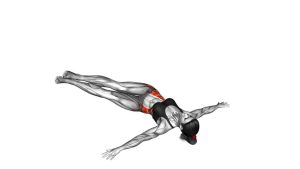
Vertical Pole Waist Flag: Form, Muscles Worked, Sets, Tips & FAQ
Learn the Vertical Pole Waist Flag with proper setup, step-by-step execution, core and shoulder cues, common mistakes, sets by goal, FAQs, and recommended equipment.
Vertical Pole Waist Flag
This exercise is not just a static hold. It combines strength, leverage control, compression, and body awareness. The straddle position reduces the lever length and makes the hold more manageable, while bringing the legs together increases difficulty and demands more strength from the obliques, lats, shoulders, glutes, and adductors.
Quick Overview
| Body Part | Core |
|---|---|
| Primary Muscle | Obliques, lats, and deep core stabilizers |
| Secondary Muscle | Shoulders, triceps, forearms, glutes, adductors, rectus abdominis |
| Equipment | Vertical pole, grip aid, crash mat optional |
| Difficulty | Advanced |
Sets & Reps (By Goal)
- Skill practice: 3–5 sets × 3–6 controlled attempts per side
- Strength hold: 4–6 sets × 5–12 second holds per side
- Core stability: 3–4 sets × 8–15 second straddle holds per side
- Progression work: 3–5 sets × straddle hold → partial leg closure → return to straddle
- Advanced control: 3–4 sets × 1–3 full straddle-to-straight-leg transitions per side
Progression rule: Master the straddle hold first. Do not rush into full straight-leg flags until you can hold the straddle position without shoulder collapse, hip drop, or twisting.
Setup / Starting Position
- Stand beside a stable vertical pole: Make sure the pole is secure, dry, and safe for bodyweight support.
- Set your hand position: Place the top hand higher on the pole and the bottom hand lower. The top arm pulls while the bottom arm pushes.
- Lock the shoulders: Depress the shoulders slightly, engage the lats, and avoid shrugging toward the ears.
- Brace the core: Tighten the abs, obliques, glutes, and legs before lifting.
- Start with a straddle: Open the legs wide to reduce leverage and make the initial lift easier to control.
- Keep the body long: Think about creating one strong line from shoulders through hips and feet.
Execution (Step-by-Step)
- Grip the pole firmly: Lock your hands in place and create tension before lifting your feet.
- Pull with the top arm: Engage the lat on the upper side to anchor your body against the pole.
- Push with the bottom arm: Drive the lower hand into the pole to prevent shoulder collapse.
- Lift into a straddle flag: Raise your hips and legs sideways while keeping the core tight.
- Stabilize the torso: Prevent the hips from dropping by squeezing the obliques and glutes.
- Bring the legs together: Slowly close the straddle into a straight-leg flag position if you can maintain control.
- Hold the full flag: Keep the legs straight, toes pointed, hips level, and body as rigid as possible.
- Return to straddle: Open the legs again to reduce leverage before lowering.
- Exit with control: Lower slowly instead of dropping suddenly from the pole.
Pro Tips & Common Mistakes
Pro Tips
- Use the straddle wisely: A wider straddle shortens the lever and helps you build control before full-leg extension.
- Push and pull at the same time: The top arm pulls, the bottom arm pushes, and the core connects both forces.
- Squeeze the glutes: Strong glute tension prevents the hips from folding or rotating.
- Keep the legs active: Point the toes, straighten the knees, and squeeze the thighs to create full-body rigidity.
- Train both sides: Practice evenly on both left and right sides to avoid strength imbalances.
Common Mistakes
- Letting the hips drop: This usually means the core is not braced enough or the variation is too hard.
- Bending the elbows too much: Excessive elbow bend reduces structural support and overloads the arms.
- Shrugging the shoulders: Keep the shoulders packed and controlled instead of jammed near the ears.
- Kicking into the movement: Momentum may get you up, but it will not build clean flag strength.
- Closing the legs too soon: Master the straddle before progressing to a full straight-leg flag.
FAQ
What muscles does the Vertical Pole Waist Flag work?
It mainly targets the obliques, lats, and deep core stabilizers. It also works the shoulders, triceps, forearms, glutes, adductors, and abs because the entire body must stay rigid while suspended sideways.
Is the waist flag the same as a human flag?
It is closely related. The waist flag is often used as a pole-based flag progression, while the human flag is commonly performed on stall bars, poles, or vertical bars. Both require strong push-pull arm mechanics and intense lateral core strength.
Is the straddle version easier than the full flag?
Yes. A straddle reduces the lever length and spreads the bodyweight more efficiently, making it easier than a full straight-leg flag. Bringing the legs together increases the difficulty significantly.
How long should I hold the position?
Beginners to this skill should start with controlled 3–5 second holds. Advanced athletes can work toward 10–15 second holds with strict form.
Why do my hips drop during the flag?
Hip drop usually comes from insufficient oblique strength, weak lat engagement, poor glute tension, or attempting a variation that is too advanced. Return to a wider straddle or bent-knee flag until you can keep the hips level.
Can beginners do this exercise?
Complete beginners should not start with the full waist flag. Begin with side planks, hanging knee raises, pole grip drills, tuck flag holds, and straddle flag progressions first.
Recommended Equipment
- Portable Dance / Fitness Pole — useful for practicing pole strength skills at home if installed correctly
- Pole Fitness Crash Mat — adds safety when learning advanced holds and transitions
- Pole Grip Aid — improves hand security and reduces slipping during high-tension holds
- Wrist Wraps — provides light wrist support during repeated gripping and pushing drills
- Resistance Bands Set — helpful for assisted flag drills, lat activation, shoulder warm-ups, and core progressions
Choose equipment that matches your training environment and skill level. For advanced pole skills, prioritize safety, stable installation, and controlled progression.