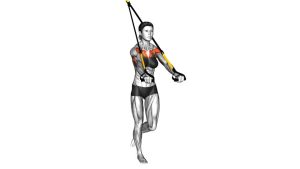
Suspended Close-Grip Chest Press: Form, Muscles, Sets & Tips (TRX / Straps)
Learn how to do the Suspended Close-Grip Chest Press using TRX/suspension straps. Step-by-step form cues, muscles worked, sets & reps by goal, common mistakes, FAQs, and recommended equipment.
Suspended Close-Grip Chest Press
This movement rewards full-body tension and a controlled range of motion. Press as one “unit” (head–hips–heels aligned), keep your shoulders stable, and let your chest and triceps do the work—without letting your hips sag or your shoulders shrug.
Quick Overview
| Body Part | Chest |
|---|---|
| Primary Muscle | Pectoralis major (sternal fibers emphasis) |
| Secondary Muscle | Triceps brachii, anterior deltoids, serratus anterior, core stabilizers |
| Equipment | Suspension trainer (TRX / straps / rings) |
| Difficulty | Intermediate (scales from beginner to advanced based on body angle) |
Sets & Reps (By Goal)
- Strength focus: 4–6 sets × 4–8 reps (90–150 sec rest, steeper lean)
- Hypertrophy: 3–5 sets × 8–12 reps (60–90 sec rest, controlled tempo)
- Endurance / conditioning: 2–4 sets × 12–20 reps (30–60 sec rest, cleaner range)
- Warm-up / activation: 2–3 sets × 8–12 reps (easy angle, slow reps)
Progression rule: First add reps with perfect alignment. Next increase the forward lean (harder angle). Only then add pauses/tempo or extra volume.
Setup / Starting Position
- Set straps: Adjust to mid-length so handles sit around mid-chest height when you face away from the anchor.
- Grip close: Hold both handles with a neutral grip (palms facing each other) and keep hands close together.
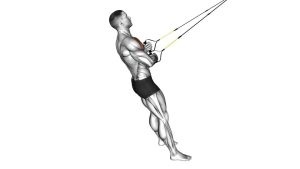
- Choose your angle: Step your feet back to lean forward. More upright = easier; more forward = harder.
- Brace: Tighten your core and glutes so your body stays in a straight line from head to heels.
- Set shoulders: Pack the shoulders down and back lightly—avoid shrugging.
Tip: Start slightly more upright and earn a deeper lean only when you can keep the torso rigid and elbows tucked.
Execution (Step-by-Step)
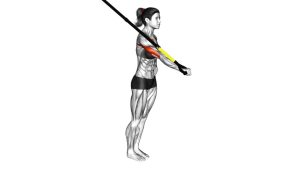
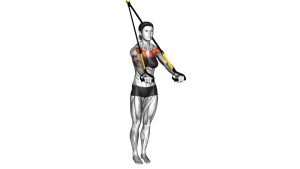
- Start tall and tight: Arms extended in front of the chest, hands close together, body aligned.
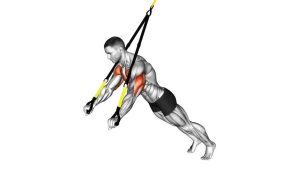
- Lower under control: Bend the elbows and let the chest travel forward while keeping elbows tucked (not flared).
- Keep straps stable: Handles stay close; don’t let them drift wide or twist.
- Reach the bottom: Stop when your chest is near hand level and your shoulders still feel stable—no anterior shoulder pinch.
- Press back: Drive through palms and extend elbows until arms are straight, returning to the start without losing body tension.
Pro Tips & Common Mistakes
- Hands close, elbows tucked: This is what makes it “close-grip” and increases triceps emphasis.
- Don’t flare the ribs: Keep ribs down and core braced to avoid low-back arching.
- Control the eccentric: Lower in 2–3 seconds; don’t “fall” into the bottom.
- Keep wrists neutral: Don’t let hands bend back—stack wrists over forearms.
- Avoid strap drift: Handles wandering wide turns it into a different press and can stress shoulders.
- Use angle as your “weight”: Adjust foot position instead of forcing sloppy reps.
FAQ
What’s the difference between this and a standard suspended chest press?
The close-grip version keeps the hands closer and elbows more tucked, which typically increases triceps contribution and changes the chest emphasis slightly (often more “inner chest” feel), while still training the chest strongly.
How do I make it easier or harder?
Change your body angle. Stand more upright to make it easier. Step your feet back and lean farther forward to increase difficulty. You can also add pauses at the bottom or slow tempo for more challenge.
Where should I feel it?
You should feel the chest and triceps working, with your core bracing to keep the body straight. If you feel shoulder pinching, reduce range, slow down, and keep shoulders packed.
Is this good for home workouts?
Yes—this is one of the best chest press options without a bench or barbell. It scales well, trains stability, and pairs nicely with rows and face pulls for balanced shoulders.
Recommended Equipment (Optional)
- Suspension Trainer (TRX-Style Straps) — the main tool for presses, rows, fly variations, and core drills
- Door Anchor (Suspension Strap Anchor) — secure setup for home workouts without mounting hardware
- Non-Slip Exercise Mat — improves traction and comfort for foot positioning and body control
- Push-Up Handles / Parallettes — optional alternative pressing tool to reduce wrist extension
- Weighted Vest — optional progression when angle alone isn’t challenging enough
Tip: Prioritize a stable anchor and clean movement first. Progress difficulty by angle before adding external load.