Dumbbell Decline One-Arm Fly: Form, Sets, Tips & FAQ (Lower Chest Focus)
Learn the Dumbbell Decline One-Arm Fly to target the lower chest with strict fly mechanics. Step-by-step form cues, sets & reps by goal, common mistakes, FAQs, and recommended equipment.
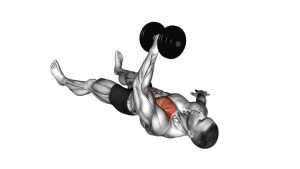
Dumbbell Decline One-Arm Fly
This fly variation rewards slow tempo and clean positioning. You should feel tension mostly in the lower chest with the shoulder staying packed and stable. If you feel sharp front-shoulder pain, reduce the range of motion and re-check scapular position.
Quick Overview
| Body Part | Chest |
|---|---|
| Primary Muscle | Pectoralis major (sternal / lower chest emphasis) |
| Secondary Muscle | Anterior deltoid (assist), biceps (isometric), serratus & rotator cuff (stability) |
| Equipment | Decline bench, dumbbell (optional: lifting straps / small towel for grip comfort) |
| Difficulty | Intermediate (requires shoulder control and strict fly mechanics) |
Sets & Reps (By Goal)
- Hypertrophy (main focus): 3–4 sets × 8–12 reps/side (60–90 sec rest)
- Strength control (heavier, stricter): 3–5 sets × 6–10 reps/side (90–120 sec rest)
- Form + stability (shoulder-friendly): 2–3 sets × 12–15 reps/side (45–75 sec rest)
- Finisher / pump: 2–3 sets × 12–20 reps/side (30–60 sec rest)
Progression rule: First add reps with the same clean range and tempo. Then increase load in small jumps (1–2 kg / 2.5–5 lb) while keeping the elbow bend and arc identical.
Setup / Starting Position
- Set the bench: Use a moderate decline angle. Secure your feet under the pads.
- Position the dumbbell: Bring it above your lower chest line with a stable wrist and neutral grip.
- Pack the shoulder: Retract and depress the shoulder blade of the working side (chest up, shoulder down).
- Soft elbow bend: Keep a slight bend and lock that angle in—don’t let it turn into a press.
- Brace your torso: Keep ribs controlled (no excessive arch) and stay glued to the bench.
Tip: The non-working hand can lightly brace the bench or hold the bench edge for extra stability and to reduce torso rotation.
Execution (Step-by-Step)
- Start stacked: Dumbbell above the lower chest, shoulder packed, elbow softly bent.
- Lower in a wide arc: Open the arm out and down slowly until you feel a controlled chest stretch.
- Keep the elbow bend constant: The arm angle stays the same—only the shoulder moves.
- Pause briefly: Hold 0.5–1 sec at the bottom without relaxing or bouncing.
- Squeeze the pec to return: Pull the arm back up along the same arc and stop over the chest—don’t over-cross.
- Repeat smoothly: Maintain a calm tempo and stable torso for every rep before switching sides.
Pro Tips & Common Mistakes
- Use a 2–4 sec eccentric: The lowering phase builds the most quality tension for chest growth.
- Don’t turn it into a press: If the elbow bends more on the way up, you’re pressing—reduce load and re-focus on the arc.
- Stop before shoulder discomfort: A deep stretch is optional. Pain is not.
- Keep your wrist stacked: Avoid wrist collapse; it leaks strength and irritates joints.
- Prevent torso twisting: Brace your abs and lightly anchor with the free hand.
- Stay in the lower-chest line: Think “up and in” toward the lower sternum, not straight up like a press.
FAQ
Where should I feel the dumbbell decline one-arm fly?
Mostly in the lower chest with a strong stretch at the bottom and a squeeze at the top. Mild shoulder involvement is normal, but sharp front-shoulder pain means your range is too deep or your shoulder is not packed.
Is one-arm better than two-arm flys?
One-arm flys are excellent for fixing imbalances, improving stability, and sharpening mind-muscle connection. Two-arm flys can be great too—use one-arm as an accessory or when you want more control and symmetry.
How heavy should I go?
Use a weight that lets you keep a constant elbow bend and a controlled arc. If you have to press the dumbbell up or you lose shoulder position, it’s too heavy.
Can I do this if my shoulders are sensitive?
Often yes, if you keep the range shorter and focus on scapular stability. Use a lighter load, slow tempo, and stop before any pinching. If symptoms persist, swap to a cable fly with a more adjustable path.
Recommended Equipment
- Decline / Adjustable Weight Bench — stable setup and adjustable angles for chest training
- Hex Dumbbells (Pairs or Singles) — secure grip and easy weight progression
- Adjustable Dumbbells — space-saving option for progressive overload at home
- Lifting Straps (Optional) — helpful if grip fatigue limits your chest work
- Resistance Bands Set (Warm-up / Activation) — great for pec activation and shoulder prep (pull-aparts, external rotations)
Tip: Choose equipment that helps you stay stable and consistent. For flys, control beats heavy weight every time.