Dumbbell Straight-Leg Deadlift: Form, Benefits, Sets, Tips & FAQ
Learn how to perform the Dumbbell Straight-Leg Deadlift with proper hip-hinge form. Build hamstrings, glutes, and posterior-chain strength with step-by-step cues, sets, mistakes, FAQs, and equipment.
Dumbbell Straight-Leg Deadlift
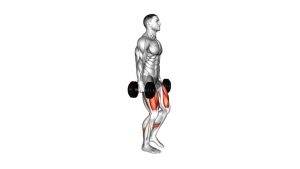
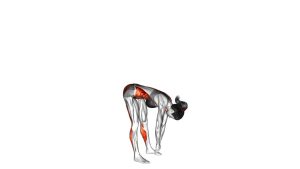
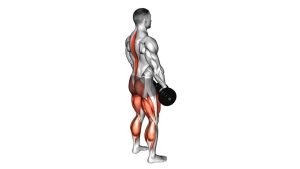
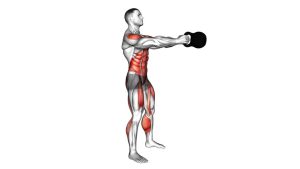
This exercise works best when the movement starts from the hips. Your knees stay slightly unlocked, your spine stays neutral, and the dumbbells travel close to your thighs and shins. A clean rep should feel smooth, strong, and controlled. You should feel the hamstrings lengthen during the lowering phase, then feel the glutes and hamstrings drive the body back to standing.
The Dumbbell Straight-Leg Deadlift is especially useful for people who want stronger hamstrings, better glute development, improved hip-hinge mechanics, and a more balanced lower-body workout. Because dumbbells allow each side to move naturally, this variation can also feel more joint-friendly than a barbell for many lifters.
Quick Overview
| Body Part | Hamstrings , Glutes |
|---|---|
| Primary Muscle | Hamstrings |
| Secondary Muscle | Glutes, lower back, erector spinae, core, adductors, forearms |
| Equipment | Dumbbells |
| Difficulty | Intermediate |
Sets & Reps (By Goal)
- Muscle growth: 3–4 sets of 8–12 reps with a slow lowering phase and full hip extension at the top.
- Strength focus: 4–5 sets of 5–8 reps using heavier dumbbells while keeping perfect spine control.
- Hamstring mobility and control: 2–3 sets of 10–15 reps with light-to-moderate weight and a 3-second descent.
- Beginner technique practice: 2–3 sets of 8–10 reps using light dumbbells and a shorter range of motion.
- Posterior-chain finisher: 2–3 sets of 12–15 reps after squats, lunges, hip thrusts, or leg presses.
Progression rule: Add reps first, then add weight. Never increase load if you lose the hip hinge, round your lower back, or let the dumbbells drift away from your legs.
Setup / Starting Position
- Stand tall: Place your feet about hip-width apart. Keep your toes facing forward or slightly outward.
- Hold the dumbbells: Let both dumbbells hang in front of your thighs with your palms facing your body.
- Set your shoulders: Pull your shoulders gently back and down without over-squeezing your upper back.
- Brace your core: Tighten your midsection as if preparing for a light punch. Keep your ribs stacked over your hips.
- Unlock your knees: Keep a small bend in the knees. Do not lock them completely, but do not turn the movement into a squat.
- Set your neck: Keep your head in line with your spine. Look slightly ahead on the floor instead of looking straight up.
The starting position should feel tall, balanced, and controlled. Before you begin, imagine pushing your hips back toward a wall behind you.
Execution (Step-by-Step)
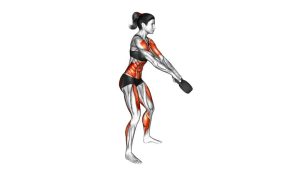
- Start the hinge: Push your hips backward while keeping your chest open and your spine neutral. The dumbbells should begin sliding down the front of your thighs.
- Keep the knees softly bent: Allow a small knee bend, but avoid dropping into a squat. The hips should move back more than the knees move forward.
- Lower with control: Move the dumbbells down toward your shins. Keep them close to your body instead of letting them swing forward.
- Feel the stretch: Stop when you feel a strong hamstring stretch and can still keep your back flat. For many lifters, this is around mid-shin height.
- Drive the hips forward: Push through your feet and squeeze your glutes to return to standing. Think about bringing your hips to the dumbbells, not pulling the dumbbells with your lower back.
- Finish tall: Stand upright with your hips fully extended. Do not lean backward or over-arch your lower back at the top.
Pro Tips & Common Mistakes
Pro Tips
- Think “hips back” first: This cue helps you load the hamstrings instead of bending from the spine.
- Keep the dumbbells close: A close load path protects the lower back and improves hamstring tension.
- Use a slow eccentric: Lower for 2–4 seconds to increase control and muscle tension.
- Stop at your real range: Your best depth is the lowest point where your spine stays neutral.
- Push the floor away: On the way up, drive through your feet while extending the hips.
- Finish with glutes, not your back: Squeeze the glutes at the top without leaning behind your heels.
Common Mistakes
- Rounding the lower back: This usually means the weight is too heavy or the range is too deep.
- Bending the knees too much: Too much knee bend turns the exercise into a dumbbell deadlift or squat pattern.
- Letting the dumbbells drift forward: This increases stress on the lower back and reduces hamstring loading.
- Looking up at the mirror: This can overextend the neck. Keep your head aligned with your spine.
- Rushing the descent: Fast lowering removes the main benefit of the exercise: controlled hamstring loading.
- Overextending at lockout: Stand tall, but do not push your hips too far forward or lean back.
FAQ
What muscles does the Dumbbell Straight-Leg Deadlift work?
The main target is the hamstrings. The glutes assist strongly during hip extension. The lower back, core, forearms, and upper back also help stabilize the body and control the dumbbells.
Is the Dumbbell Straight-Leg Deadlift the same as the Romanian Deadlift?
They are similar, but not exactly the same. A Romanian deadlift usually uses a slightly more noticeable knee bend. A straight-leg deadlift keeps the knees more fixed and emphasizes hamstring length. In both exercises, the spine must stay neutral and the hips should drive the movement.
How low should I lower the dumbbells?
Lower the dumbbells until you feel a strong hamstring stretch while keeping your back flat. You do not need to touch the floor. For many people, the correct stopping point is around the lower knees, upper shins, or mid-shins.
Should I keep my legs completely straight?
No. Keep a small bend in the knees to protect the joints and maintain better control. The legs should look mostly straight, but the knees should not be locked hard.
Why do I feel this exercise in my lower back?
A small amount of lower-back effort is normal because the spinal erectors stabilize the torso. However, the main tension should be in the hamstrings and glutes. If your lower back dominates, use lighter dumbbells, keep the weights closer to your legs, and reduce your range of motion.
Can beginners do the Dumbbell Straight-Leg Deadlift?
Beginners can do it if they learn the hip hinge first and use light dumbbells. Start with a short range of motion. Focus on control before adding heavier weight.
Is this exercise good for glutes?
Yes. The glutes work strongly when you extend your hips and return to the standing position. To feel the glutes more, drive the hips forward smoothly and squeeze at the top without leaning backward.
How often should I do this exercise?
Most lifters can perform it 1–3 times per week depending on training volume, soreness, and recovery. It fits well into lower-body days, posterior-chain workouts, glute days, or hamstring-focused sessions.
Recommended Equipment
- Adjustable Dumbbells — useful for progressive overload without needing many separate dumbbell pairs.
- Rubber Hex Dumbbells — stable, durable dumbbells for home or gym lower-body training.
- Weightlifting Straps — helpful when grip fatigue limits hamstring and glute training.
- Large Exercise Mat — provides better foot comfort and floor protection during dumbbell workouts.
- Flat-Sole Training Shoes — supports better balance and force transfer during hip-hinge movements.
Tip: Choose equipment that helps you control the movement. For this exercise, stability, grip, and proper load progression matter more than using the heaviest dumbbells possible.