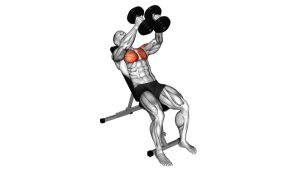
Dumbbell Fly on Exercise Ball: Form, Muscles Worked, Sets & Tips
Learn how to do the Dumbbell Fly on an Exercise Ball with perfect form. Step-by-step cues, muscles worked, sets & reps by goal, common mistakes, FAQs, and recommended equipment.
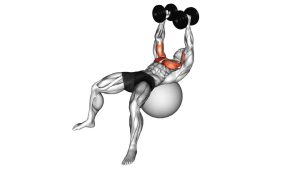
Dumbbell Fly on Exercise Ball
This movement rewards control over load. The ball increases instability, so use a moderate weight you can lower smoothly and pause without wobbling. Aim for a big chest stretch without letting the shoulders roll forward or the hips drop.
Quick Overview
| Body Part | Chest |
|---|---|
| Primary Muscle | Pectoralis major (sternal + clavicular fibers) |
| Secondary Muscle | Anterior deltoids; biceps (stabilization); core + glutes (ball stability) |
| Equipment | Stability ball (Swiss ball) + dumbbells |
| Difficulty | Intermediate (requires shoulder control + core stability) |
Sets & Reps (By Goal)
- Hypertrophy (muscle growth): 3–4 sets × 8–12 reps (60–90 sec rest)
- Strength accessory (after presses): 3–4 sets × 6–10 reps (90–120 sec rest)
- Control + stretch focus: 2–3 sets × 10–15 reps (45–75 sec rest, slow tempo)
- Beginner-to-intermediate progression: 2–3 sets × 8–10 reps (light-moderate load)
Progression rule: Add reps first, then add a small amount of load. If the ball wobbles or your elbows bend into a press, reduce the weight and rebuild clean reps.
Setup / Starting Position
- Sit on the ball: Hold a dumbbell in each hand, resting them on your thighs.
- Walk out: Step your feet forward and roll down until your upper back rests on the ball.
- Set the bridge: Lift hips so your body forms a line from knees → hips → shoulders.
- Lock in your base: Feet flat, about hip-width, knees bent ~90° for stability.
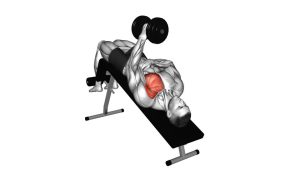
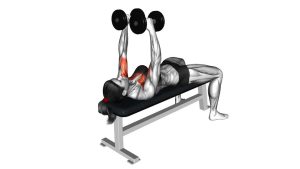
- Start position: Dumbbells over the chest, palms facing each other, elbows softly bent.
- Shoulders packed: Pull shoulders “down and back” slightly—no shrugging.
Tip: If balance is challenging, widen your stance slightly and reduce load until the bridge stays steady.
Execution (Step-by-Step)
- Brace and breathe: Tighten core and glutes to keep hips level on the ball.
- Lower in a wide arc: Open arms slowly until you feel a controlled chest stretch.
- Keep elbows fixed: Maintain the same slight elbow bend (don’t turn it into a press).
- Pause briefly: Stop before shoulder discomfort—upper arms near chest level is plenty for most.
- Squeeze to return: Bring dumbbells back up by contracting the chest, following the same arc.
- Finish stacked: Dumbbells over mid-chest, wrists neutral, shoulders stable, hips still up.
Pro Tips & Common Mistakes
- Use a soft elbow bend: Locked elbows increase joint stress; too much bend becomes a press.
- Don’t drop too low: Going excessively deep can irritate the shoulder capsule.
- Control the stretch: 2–4 seconds down = better chest stimulus and safer reps.
- Keep hips level: Sagging hips reduces stability and changes your pressing angle.
- Shoulders stay “packed”: Avoid rolling shoulders forward at the bottom.
- Stop short of clanking: Bring dumbbells close at the top without smashing them together.
FAQ
What’s the advantage of doing flys on an exercise ball?
The ball increases stability demands on the core and hips while still loading the chest. It can be a great bench alternative and adds a balance challenge—especially useful for home training.
How low should I lower the dumbbells?
Lower only to a pain-free stretch. For most lifters, upper arms reaching chest level (or slightly below) is enough. If you feel shoulder pinching, shorten the range immediately.
Should I bend my elbows more as the weight gets heavier?
Keep the elbow angle consistent. If you must bend a lot to control the load, the weight is too heavy. Use a lighter dumbbell to keep it a true fly.
Is this better than a flat bench dumbbell fly?
It’s not “better,” just different. A flat bench is usually more stable for heavier loading, while the ball version adds core involvement and can feel more challenging at lighter weights.
Recommended Equipment
- Anti-Burst Stability Ball (Swiss Ball) — safer, grippy ball option for bridging and flys
- Adjustable Dumbbells / Dumbbell Set — easy load progression for fly variations
- Stability Ball Base Ring — reduces rolling for safer setup and storage
- Non-Slip Exercise Mat — improves foot traction and comfort during the bridge
- Resistance Bands Set — great for warm-ups (band flys, pull-aparts) before dumbbell flys
Tip: Choose dumbbells you can control for 8–15 smooth reps. If balance becomes the limiter, lower the load and rebuild stability first.