Commando Pull-Up: Proper Form, Muscles Worked, Sets, Tips & FAQ
Learn the Commando Pull-Up with strict form, alternating side technique, muscles worked, sets by goal, mistakes, FAQs, and equipment tips.
Commando Pull-Up
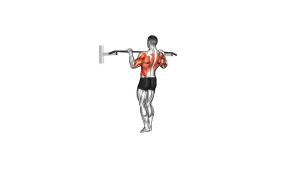
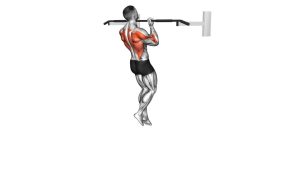
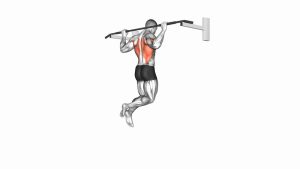
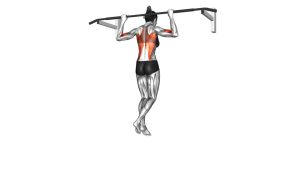
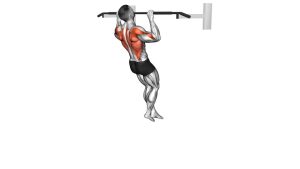
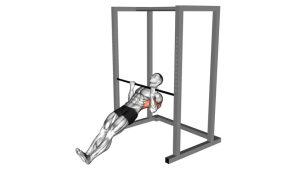
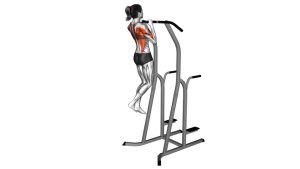
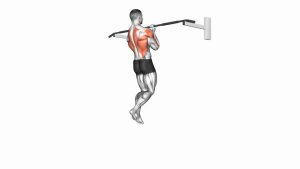
This movement works best when every repetition stays strict, smooth, and controlled. In the demonstrated version, the athlete hangs from a horizontal bar with one hand placed in front of the other, pulls upward, and alternates the head from one side of the bar to the other. Therefore, the goal is not to swing, kip, or twist aggressively. Instead, keep the body stable, pull with strength, and control the lowering phase before switching sides.
Quick Overview
| Body Part | Back |
|---|---|
| Primary Muscle | Latissimus dorsi |
| Secondary Muscle | Biceps, brachialis, forearms, upper back, rear delts, core stabilizers |
| Equipment | Pull-up bar |
| Difficulty | Intermediate to advanced |
Sets & Reps (By Goal)
- Strength: 3–5 sets × 3–6 reps per side, resting 90–150 seconds between sets.
- Muscle building: 3–4 sets × 6–10 total reps, using a slow and controlled lowering phase.
- Pull-up skill practice: 2–4 sets × 3–5 clean reps, stopping before form breaks down.
- Grip and control: 3 sets × 4–8 total reps with a 2–3 second descent on every repetition.
Progression rule: Add reps only when both sides stay even, the descent remains controlled, and the body does not swing. Once you can perform smooth reps on both sides, you may progress with slower eccentrics, longer pauses, or added load.
Setup / Starting Position
- Stand under a pull-up bar: Position yourself so the bar runs lengthwise above your head.
- Take a staggered grip: Place one hand in front of the other on the same bar, creating a neutral-style grip.
- Hang with control: Let the arms extend fully while keeping the shoulders active instead of completely collapsed.
- Brace the core: Keep the ribs controlled and the torso steady before the first pull.
- Set the legs: Bend the knees slightly if needed, but avoid using the legs to create momentum.
In the video, the body remains mostly vertical with slight natural rotation from the staggered grip. That controlled rotation is normal; however, excessive twisting or swinging should be avoided.
Execution (Step-by-Step)
- Start from a dead-hang position: Keep the arms extended, grip secure, and body quiet.
- Begin the pull: Drive the elbows down and pull your chest upward toward the bar.
- Move to one side: As you rise, bring your head to one side of the bar instead of staying centered.
- Reach the top position: Pull until your chin clears the bar area while keeping the torso controlled.
- Lower with control: Return to the bottom position slowly without dropping or relaxing the shoulders suddenly.
- Alternate sides: On the next rep, pull up and bring your head to the opposite side of the bar.
- Repeat evenly: Continue alternating sides while maintaining the same tempo and range on each rep.
Pro Tips & Common Mistakes
- Keep the pull strict: Use your back and arms instead of kicking the legs or swinging the hips.
- Alternate sides evenly: Pull to the right and left with the same control so one side does not dominate.
- Control the descent: Lower slowly because the eccentric phase builds strength and protects form.
- Avoid excessive twisting: A small torso rotation is natural, but the body should not spin around the bar.
- Do not rush reps: Fast reps often reduce range, increase swinging, and overload the elbows.
- Grip firmly: Because both hands are close together, grip security is essential before every rep.
- Keep shoulders active: Avoid hanging passively at the bottom if it causes shoulder discomfort.
- Stop before failure: Once your chin no longer clears the bar cleanly, end the set.
FAQ
What muscles does the commando pull-up work?
The commando pull-up mainly works the latissimus dorsi, while also training the biceps, brachialis, forearms, upper back, rear delts, and core stabilizers. Because the hands are staggered, each rep also challenges side-to-side control.
Is the commando pull-up harder than a regular pull-up?
For many lifters, yes. The staggered grip, side-to-side path, and rotational control make the exercise more demanding than a standard pull-up. However, difficulty depends on your grip strength, pulling strength, and shoulder control.
Should I switch my hand position?
Yes, switching which hand is in front can help balance the movement over time. Since the grip is asymmetrical, changing hand order across sets can reduce overuse and improve even development.
Can beginners do commando pull-ups?
Most beginners should first build strength with dead hangs, assisted pull-ups, negative pull-ups, and standard pull-up progressions. After that, the commando pull-up becomes a better option.
How do I avoid swinging during commando pull-ups?
Start each rep from a quiet hang, brace your core, bend the knees slightly if needed, and lower slowly. Additionally, avoid rushing from one rep into the next before your body is stable.
Recommended Equipment
- Doorway Pull-Up Bar — useful for practicing commando pull-ups at home with a secure setup.
- Wall-Mounted Pull-Up Bar — provides a stable option for strict pull-up variations and stronger training sessions.
- Pull-Up Assistance Bands — help reduce bodyweight load while learning cleaner reps.
- Pull-Up Grips / Hand Grips — support grip comfort during higher-volume bar work.
- Liquid Chalk — improves hand traction and helps reduce slipping during pull-up sets.
Tip: Choose equipment that feels stable and secure before attempting strict commando pull-ups. If the bar shifts, rotates, or feels unsafe, do not use it for this exercise.