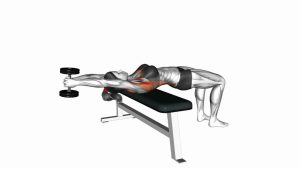
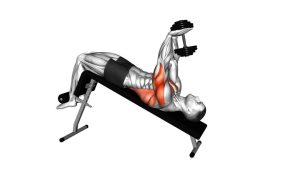
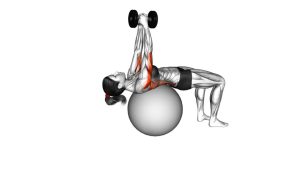
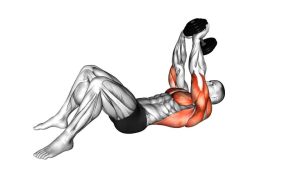
Dumbbell Straight-Arm Pullover (90/90): Form, Sets & Tips
Learn the Dumbbell Straight-Arm Pullover with knees at 90 degrees to target lats and chest while protecting your lower back. Step-by-step form, sets by goal, mistakes, FAQ, and gear.
Dumbbell Straight-Arm Pullover (Knees at 90 Degrees)
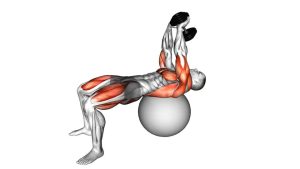
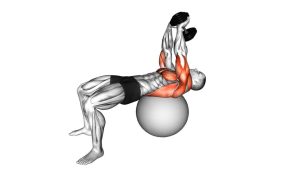
This variation is all about control. Keeping the hips and knees at 90° encourages a neutral spine and reduces the common mistake of over-arching the lower back. You should feel tension through the lats (outer back/underarm area) and/or the chest, with the core helping you stay stacked.
Quick Overview
| Body Part | Back (also chest & serratus) |
|---|---|
| Primary Muscle | Latissimus dorsi (lats) |
| Secondary Muscle | Pectoralis major, serratus anterior, triceps (stabilization), core (anti-extension) |
| Equipment | 1 dumbbell (optional: exercise mat, towel/pad for head support) |
| Difficulty | Beginner–Intermediate (range control matters more than heavy weight) |
Sets & Reps (By Goal)
- Hypertrophy (lats/chest): 3–4 sets × 8–12 reps (2–3 sec lower, 60–90 sec rest)
- Strength-focused control: 4–5 sets × 5–8 reps (slow eccentric, 90–120 sec rest)
- Shoulder + rib control / technique: 2–3 sets × 10–15 reps (light load, perfect form)
- Finisher / pump: 2–3 sets × 12–20 reps (easy weight, short rest)
Progression rule: First increase range control (no rib flare), then add reps, then add load. If your lower back arches or the weight “drops” at the bottom, it’s too heavy or too deep.
Setup / Starting Position
- Lie on the floor: Upper back and head supported. Use a thin towel if your neck needs comfort.
- Set 90/90 legs: Lift feet off the floor and bend hips/knees to ~90°. Keep shins parallel to the floor.
- Brace the core: Exhale slightly and keep ribs “down” so the lower back stays neutral (no big arch).
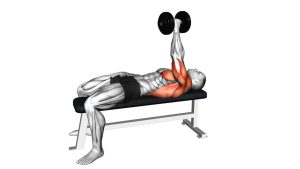
- Hold the dumbbell: Grip one end of the dumbbell with both hands (palms under the inner plate), arms extended with a soft elbow bend.
- Start above the chest: Dumbbell stacked over shoulders/chest line—stable and centered.
Tip: Think “ribs down, reach long”. Your core is the anchor that makes the pullover smooth and shoulder-friendly.
Execution (Step-by-Step)
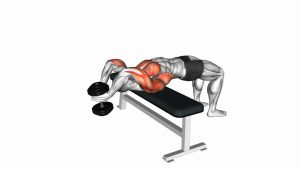
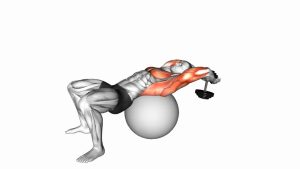
- Lower with control: Inhale and move the dumbbell in an arc behind your head. Keep elbows nearly straight (don’t turn it into a triceps extension).
- Keep ribs down: Stop the descent before your ribs pop up or your lower back arches. Range is individual—quality first.
- Pause briefly: Hold 0.5–1 second in the bottom position to eliminate momentum.
- Pull back over the chest: Exhale and bring the dumbbell back along the same arc, using lats/chest to control the return.
- Finish stacked: Dumbbell ends above the chest/shoulders. Reset your brace and repeat.
Pro Tips & Common Mistakes
Pro Tips
- Own the bottom range: A controlled bottom position builds shoulder stability and better lat engagement.
- Use a slow eccentric: 2–4 seconds down is ideal for tension and technique.
- Keep the arc smooth: Imagine the dumbbell traveling around a fixed shoulder “hinge,” not dropping straight down.
- Match range to mobility: Stop where you can keep ribs down and shoulders comfortable.
- Light-to-moderate load wins: This movement gets sloppy fast when it’s too heavy.
Common Mistakes
- Rib flare / back arch: Usually from going too deep or too heavy. Keep the 90/90 brace.
- Bending elbows into an extension: Keeps tension off lats/chest. Maintain a consistent elbow angle.
- Using momentum: Swinging makes shoulders cranky. Pause lightly at the bottom.
- Shoulder pinching: Often from excessive depth. Reduce ROM and keep shoulder blades stable.
FAQ
Where should I feel this exercise?
Most lifters feel it in the lats (outer back/underarm) and/or the chest, plus a strong core brace. If you feel sharp shoulder pinching, reduce range and slow down.
Is the dumbbell pullover a chest or back exercise?
It can train both. Your lats often dominate when you focus on pulling the arms back over the chest, while the chest/serratus may feel more active depending on grip, ROM, and anatomy. The safest approach: chase smooth tension, not a specific sensation.
Why keep knees at 90 degrees?
The 90/90 position helps prevent excessive lower-back arching by increasing core demand. It’s a great way to keep the movement spine-friendly and technique-focused.
What if my shoulders feel uncomfortable at the bottom?
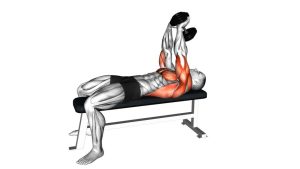
Reduce depth, slow the lowering phase, and keep the ribs down. You can also switch to a bench pullover with a shorter range or use a lighter dumbbell.
How heavy should I go?
Use a weight you can control for the full range without rib flare or swinging. If you lose control at the bottom, it’s too heavy. Most people progress well with moderate loads.
Recommended Equipment (Amazon)
- Adjustable Dumbbells — easy load changes for progressive overload at home
- Rubber Hex Dumbbell — stable on the floor and comfortable to grip
- Thick Exercise Mat (Floor Workouts) — improves comfort for upper back/head support
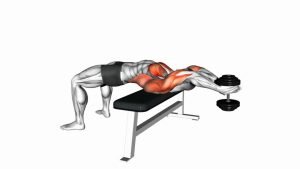
- Flat Weight Bench (Optional) — allows a larger range of motion if your shoulders tolerate it
- Ab Mat / Head & Neck Support Pad — optional comfort support to keep your neck relaxed
Tip: Choose comfort and control first. If adding range or load causes rib flare or shoulder discomfort, reduce ROM and slow the tempo.