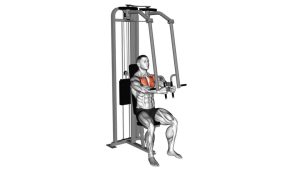
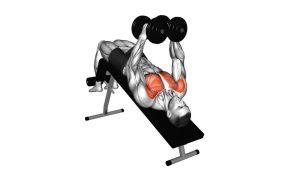
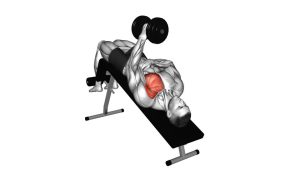
Cable Fly with Chest Support: Form, Sets, Tips & FAQ
Learn how to do the Cable Fly with Chest Support for better chest isolation and safer shoulder mechanics. Step-by-step form, sets by goal, common mistakes, FAQs, and recommended equipment.
Cable Fly with Chest Support
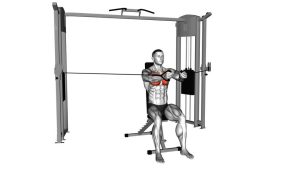
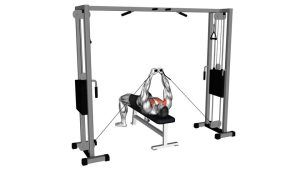
This movement shines when you prioritize smooth arcs and stable shoulders. Your elbows should stay slightly bent (not turning it into a press), and your shoulders should stay down and back without shrugging. The bench support keeps your torso honest—so use a load you can control through the full range.
Quick Overview
| Body Part | Chest |
|---|---|
| Primary Muscle | Pectoralis major (mid-pec emphasis) |
| Secondary Muscle | Anterior deltoid (assist), serratus anterior (stability), biceps (stabilization) |
| Equipment | Dual cable station, incline bench, D-handles (or single grips) |
| Difficulty | Intermediate (easy to learn, challenging to perform strictly) |
Sets & Reps (By Goal)
- Muscle growth (hypertrophy): 3–5 sets × 10–15 reps (60–90 sec rest)
- Strength-focused accessory: 3–4 sets × 6–10 reps (90–120 sec rest, strict form)
- Chest “pump” finisher: 2–4 sets × 15–25 reps (30–60 sec rest, controlled burn)
- Pre-exhaust before pressing: 2–3 sets × 10–15 reps (moderate load, clean squeeze)
Progression rule: Add reps first (keep the arc smooth), then increase load in small jumps. If your shoulders roll forward or elbows start pressing, the weight is too heavy.
Setup / Starting Position
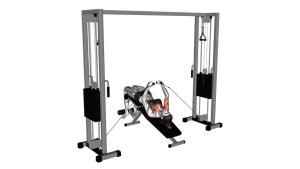
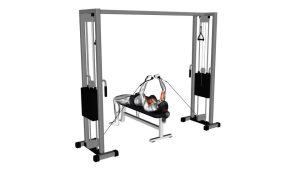
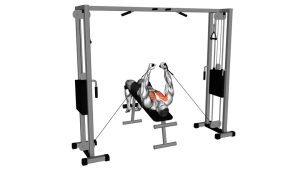
- Set the bench: Place an incline bench between the cable stacks at ~30–45° so your chest can rest on the pad.
- Choose handle height: Start with pulleys around mid-chest level (adjust slightly higher/lower to match your chest line).
- Grab the handles and set your base: Feet planted wide and stable behind you; hips stay quiet.
- Chest supported, ribs down: Keep your torso glued to the pad—don’t arch to “reach” more range.
- Soft elbows: Maintain a slight bend and keep it consistent from start to finish.
- Shoulders packed: Think “shoulders down” and “upper back steady” before the first rep.
Tip: If cables rub your arms or the line feels awkward, adjust the bench forward/back by a few inches and re-check the arc.
Execution (Step-by-Step)
- Start in a controlled stretch: Hands slightly behind your torso line, chest still supported, elbows softly bent.
- Fly in an arc: Sweep the handles forward as if hugging a barrel—don’t turn it into a press.
- Meet at chest line: Bring the handles close in front of your chest (or slightly lower), keeping the shoulders stable.
- Squeeze without shrugging: Pause 1 second and focus on pec tension—not traps or front delts dominating.
- Return slowly: Open back along the same arc for a controlled stretch (2–3 seconds), stopping before shoulder position breaks.
Pro Tips & Common Mistakes
Pro Tips
- Match cable height to your chest: Mid-chest is a great default; small changes can improve the line of pull.
- Keep elbows “soft and fixed”: Same bend all the way—this keeps it a fly, not a press.
- Own the stretch: Slow eccentrics build pec control; stop short of shoulder roll-forward.
- Think “hands in,” chest up: Maintain chest contact with the bench and keep tension on the pecs.
Common Mistakes
- Pressing instead of flying: Too much elbow bend turns it into a cable press.
- Shrugging at the top: Traps take over—keep shoulders down.
- Overstretching behind the body: Can irritate the shoulder—reduce range and stay controlled.
- Ribs flaring / arching: Use the bench support; keep ribs down for a safer shoulder position.
FAQ
Where should I feel the chest-supported cable fly?
Primarily in the pecs, especially the mid-chest fibers. You’ll still feel some front delt and arm stabilization, but the main sensation should be a controlled pec stretch and a strong squeeze at the front.
Is this safer than standing cable flyes?
For many lifters, yes. The bench support reduces body sway and helps control the stretch. It’s still important not to force range— stop before your shoulders roll forward or you feel pinching.
What cable height is best?
Start around mid-chest height. If you want a slightly lower-chest line, set pulleys a bit lower. If you want more upper-chest bias, raise them slightly. The best height is the one that lets you keep shoulders stable and feel the pecs.
Should the handles touch together?
Not necessary. Bring them close enough to get a strong squeeze while keeping the shoulders down and elbows softly bent. “Smooth tension” beats “clanking handles.”
How do I progress without irritating my shoulders?
Increase reps and control first, then load. Keep the stretch controlled, avoid deep positions that cause pinching, and use a slightly smaller range if needed while you build strength and stability.
Recommended Equipment (Optional)
- Cable Machine D-Handles (Single Grips) — comfortable grip and smoother fly path with less wrist strain
- Rope Attachment (Alternative Grip Option) — useful for fly variations and pressdowns; allows a natural hand position
- Adjustable Incline Bench — enables chest-supported setups and repeatable angles
- Lifting Straps (Optional) — helpful if grip fatigue limits your cable work volume
- Resistance Bands Set — great for warm-ups (band flyes, pull-aparts) and shoulder prep
Tip: If a tool changes your wrist/shoulder position for the worse, switch attachments. Comfort and cable line matter a lot on flyes.