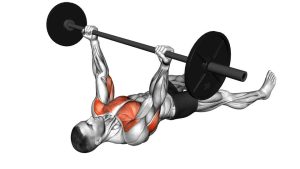
Barbell Reverse-Grip Bench Press: Upper Chest Strength, Form, Sets, Tips & FAQ
Learn the Barbell Reverse-Grip Bench Press to target the upper chest with a shoulder-friendly pressing angle. Step-by-step form, sets & reps by goal, common mistakes, FAQs, and recommended equipment.
Barbell Reverse-Grip Bench Press (Supinated Grip Bench Press)
This lift rewards lifters who treat every rep like a precision press. The reverse grip increases the demand on bar control and wrist stability, so the goal is not just moving weight—it’s keeping the bar locked in the hands with a clean, repeatable path. Think: stable shoulders, steady wrists, elbows tucked, and a smooth press that never loses tension.
Quick Overview
| Body Part | Chest |
|---|---|
| Primary Muscle | Pectoralis major (upper/clavicular emphasis) — pressing + “hugging” action under load |
| Secondary Muscle | Triceps, anterior deltoids, serratus anterior (stability), forearms/wrist stabilizers |
| Equipment | Barbell, flat bench, rack (recommended), safety arms/pins (recommended), collars |
| Difficulty | Intermediate (grip and wrist control increase technical demand) |
Sets & Reps (By Goal)
- Strength focus: 3–5 sets × 3–6 reps (2–4 min rest, crisp reps, no grinding)
- Hypertrophy (muscle): 3–4 sets × 6–12 reps (90–150 sec rest, controlled lower + strong press)
- Upper-chest emphasis: 3–5 sets × 8–10 reps (pause 0.5–1 sec near chest, maintain elbow tuck)
- Technique / control block: 2–4 sets × 6–10 reps (lighter load, perfect wrist stacking, identical reps)
Progression rule: Earn load with consistency. First lock in setup and bar path, then add reps, then add weight. If wrist position breaks down, treat that as your true limit for the day.
Setup / Starting Position
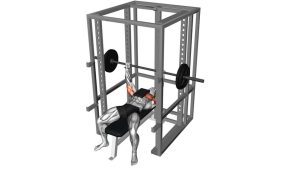
- Rack safely: Set the J-hooks so you can unrack without losing shoulder position. Use safeties at a height that protects you.
- Lie tight: Eyes under the bar, feet planted, and a stable upper back. Maintain light arch without flaring ribs.
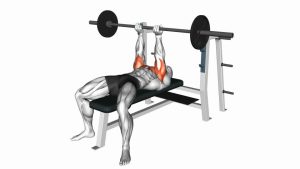
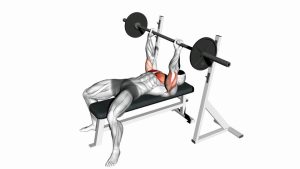
- Grip underhand: Take a supinated grip with thumbs wrapped. Start around shoulder-width (or slightly wider).
- Pack shoulders: Pull shoulder blades down and back. Keep shoulders “in your back pockets,” not shrugged.
- Stack wrists: Keep wrists as neutral as possible—avoid excessive bend-back. Squeeze the bar hard.
Tip: If you’re new to the reverse grip, start with an empty bar and practice unracking + 5–8 perfect reps before loading plates.
Execution (Step-by-Step)
- Unrack clean: Inhale, brace, and unrack without letting shoulders roll forward. Move the bar to a stable start position over the chest.
- Lower with control: Bring the bar down smoothly toward the lower chest / upper abdomen region while keeping elbows tucked.
- Maintain wrist control: Keep the bar secure—no wobble, no “rolling” in the palms. Forearms should stay stacked under the bar.
- Press up and slightly back: Drive the bar upward with a controlled arc back toward the shoulder line—smooth, not explosive and sloppy.
- Lock out with tension: Finish the rep without losing scapular position. Reset your breath and repeat with identical form.
Pro Tips & Common Mistakes
Pro Tips
- Use a “crush grip”: Squeeze the bar like you’re trying to leave fingerprints—this boosts control and stability.
- Keep elbows tucked: A tighter elbow path usually improves bar stability and upper-chest feel.
- Own the bottom: A soft pause near the chest (without relaxing) builds confidence and removes bounce.
- Stay stacked: Keep wrists and forearms aligned so force transfers into the bar—not into painful wrist extension.
- Progress conservatively: This is not the lift to ego-load. Small jumps and perfect reps win long-term.
Common Mistakes
- Thumbless grip: Dangerous. Always wrap the thumb—no exceptions.
- Over-bent wrists: Collapsed wrists reduce power and can irritate joints. Stack and squeeze.
- Touching too high: Bringing the bar toward upper chest/neck often destabilizes the grip and stresses shoulders.
- Letting shoulders roll forward: Lose scapular position and you lose strength + control. Pack the shoulders and keep chest up.
- Rushing reps: Speed without control increases bar wobble. Slow down and own every inch.
FAQ
Does the reverse-grip bench press really target the upper chest?
Many lifters feel stronger upper-chest involvement because the supinated grip often encourages elbow tuck and a slightly different pressing line. The best way to make it “upper-chest dominant” is to keep shoulders packed, control the descent, and press with a smooth arc—without turning it into a shoulder-heavy rep.
Where should the bar touch my chest?
Most lifters do best touching around the lower chest / upper abdomen. If you touch too high, wrists often collapse and the bar can feel unstable. Choose the touch point that keeps wrists stacked and elbows tucked.
Is it safer for shoulders than a regular bench press?
It can feel more shoulder-friendly for some lifters because the elbows tend to stay tucked. But it adds grip and wrist demands, and the reverse grip can be less secure. Use safeties or a spotter, start lighter, and prioritize control.
What grip width should I use?
Start around shoulder-width (or slightly wider). Too wide can reduce wrist comfort and control; too narrow can shift the lift more toward triceps. Your best grip is the one that keeps forearms stacked and the bar stable at the bottom.
Can beginners do this exercise?
Beginners can learn it, but it’s best introduced after you already have basic bench press control. Start with an empty bar inside a rack with safeties, practice consistent reps, and only add weight when the bar feels completely secure in your hands.
Recommended Equipment (Optional)
- Stiff Wrist Wraps (Weightlifting) — helps maintain wrist stacking and improves bar control with a supinated grip
- Lock-Jaw Barbell Collars — keeps plates secured and reduces shifting during setup/unrack
- Power Rack Safety Spotter Arms — crucial safety layer for pressing variations, especially if training solo
- Liquid Chalk / Gym Chalk — improves grip security and confidence, especially when hands get sweaty
- Heavy-Duty Flat Weight Bench — a stable bench makes it easier to keep shoulders packed and reps consistent
Tip: Balance pressing volume with upper-back work (rows, face pulls, rear-delt training) to keep shoulders healthy and your bench mechanics strong.