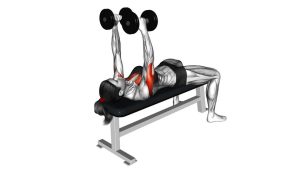
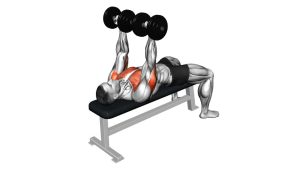
Dumbbell Squeeze Press on Floor: Form, Sets, Tips & FAQ
Learn the Dumbbell Squeeze Press on Floor to build chest size with constant inner-pec tension and a shoulder-friendly range of motion. Step-by-step form, sets by goal, common mistakes, FAQs, and recommended equipment.
Dumbbell Squeeze Press on Floor
This exercise rewards control more than heavy loading. Use a weight that lets you keep the dumbbells touching and squeezed from start to finish, with your wrists stacked and elbows moving smoothly. If your shoulders feel pinchy or your wrists collapse back, reduce the weight and tighten your setup.
Quick Overview
| Body Part | Chest |
|---|---|
| Primary Muscle | Pectoralis major (pecs) — emphasized by constant dumbbell squeeze |
| Secondary Muscle | Triceps, anterior deltoids, serratus anterior (stability) |
| Equipment | Two dumbbells; optional exercise mat for comfort |
| Difficulty | Beginner–Intermediate (easy to learn, challenging to keep constant squeeze) |
Sets & Reps (By Goal)
- Hypertrophy (muscle growth): 3–5 sets × 8–15 reps (60–90 sec rest, steady squeeze)
- Strength focus (controlled): 4–6 sets × 5–8 reps (90–150 sec rest, heavier but clean)
- Chest finisher / pump: 2–4 sets × 12–20 reps (45–75 sec rest, slow tempo)
- Home workout general: 3–4 sets × 8–12 reps (moderate load, perfect form)
Progression tip: First increase reps (or slow the lowering phase to 2–4 seconds). Only increase weight when you can keep the dumbbells squeezed together for every rep without wrist bend or elbow flare.
Setup / Starting Position
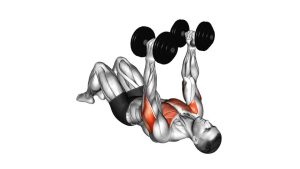
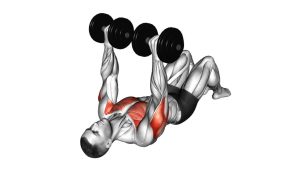
- Lie on the floor: Knees bent, feet flat. Use a mat if your elbows/upper arms need padding.
- Start with dumbbells together: Hold them vertically or slightly angled so they can stay in contact.
- Upper arms on the floor: Elbows bent; upper arms lightly touch the floor (no slamming).
- Stack your wrists: Keep wrists straight and aligned over your elbows.
- Brace your torso: Ribs down, slight natural arch is fine—avoid excessive lower-back arching.
Setup cue: Think “crush the dumbbells” before you even start the first rep—this turns the pecs on early.
Execution (Step-by-Step)
- Create the squeeze: Press the dumbbells firmly together (not shaky—steady pressure).
- Press straight up: Drive the dumbbells upward while maintaining constant contact and inward pressure.
- Finish with control: Reach near full elbow extension at the top without “clunking” into lockout.
- Lower slowly: Bring the dumbbells down under control until your upper arms gently touch the floor.
- Repeat smoothly: Keep the squeeze the entire set—no separating the dumbbells between reps.
Pro Tips & Common Mistakes
- Tip: Use a neutral-to-slightly-in elbow angle (about 30–45° from your torso) for shoulder comfort.
- Tip: Add tempo for more chest tension: 2–4 sec lower, pause lightly, then press.
- Tip: Think “press + squeeze,” not just “press.” The squeeze is the whole point.
- Mistake: Letting dumbbells separate—turns it into a regular floor press with less inner-pec tension.
- Mistake: Bouncing elbows/arms off the floor—reduces control and can irritate joints.
- Mistake: Overarching the lower back—brace and keep ribs down to protect your spine.
- Mistake: Wrists bent back—keep knuckles stacked over elbows and squeeze the handles.
FAQ
What makes the squeeze press different from a normal floor press?
The squeeze press keeps the dumbbells pressed together throughout the rep, creating constant adduction tension for the pecs. A normal floor press focuses more on pure pressing strength (chest/triceps) without that “crush” cue.
Where should I feel it?
Most people feel this strongly in the chest, especially the “inner chest” sensation from the constant squeeze, plus some triceps and front-shoulder assistance. If shoulders dominate, lighten the load and tuck elbows slightly.
Is this exercise shoulder-friendly?
Often yes. The floor limits how deep your upper arms can travel, which reduces shoulder extension stress compared to a deep bench press. Still, use a pain-free range and keep your elbows from flaring too wide.
How heavy should I go?
Choose a weight you can control for your target reps while keeping the dumbbells touching and your wrists neutral. If the squeeze disappears near the end of the set, the weight is likely too heavy for this variation.
What’s a simple progression?
Start by adding reps (or slowing the lowering phase). Then increase load in small jumps while maintaining the same squeeze quality and control.
Recommended Equipment (Optional)
- Adjustable Dumbbells — space-saving option for progressive overload at home
- Rubber Hex Dumbbells — stable on the floor and comfortable to press together
- Thick Exercise Mat — improves comfort for elbows/upper arms during floor pressing
- Wrist Wraps (Lifting) — helpful if wrists fatigue or bend back under load
- Grip Trainers / Hand Grippers — optional accessory to improve squeeze strength and dumbbell control
Tip: For the best squeeze, dumbbells with flat sides (like hex dumbbells) are often easier to keep firmly pressed together.