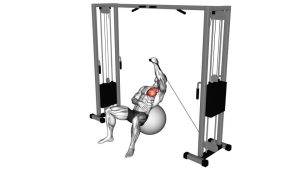
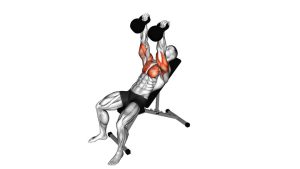
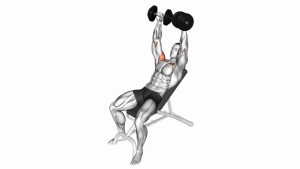
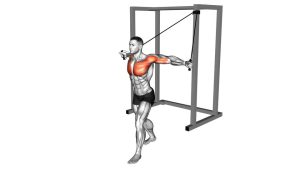
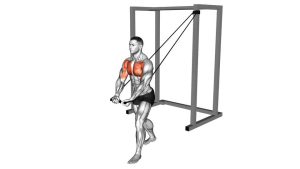
Band Incline Fly: Proper Form, Sets & Reps, Tips & FAQ (Upper Chest Focus)
Learn how to do the Band Incline Fly to target the upper chest with constant tension. Step-by-step form, sets & reps by goal, common mistakes, FAQs, and recommended equipment.
Band Incline Fly
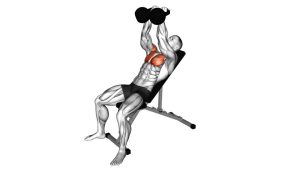
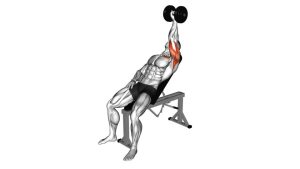
This exercise is all about control. A clean rep looks like a wide arc down into a comfortable stretch and a smooth arc back up into a chest squeeze. Keep your shoulders down and back, maintain the same elbow bend, and avoid turning the fly into a press.
Quick Overview
| Body Part | Chest |
|---|---|
| Primary Muscle | Pectoralis major (upper / clavicular fibers emphasis) |
| Secondary Muscle | Anterior deltoid, serratus anterior (stability), biceps (stabilization) |
| Equipment | Resistance bands + incline bench (optional: door anchor / handles) |
| Difficulty | Beginner → Intermediate (depends on anchor setup and band tension) |
Sets & Reps (By Goal)
- Muscle growth (hypertrophy): 3–5 sets × 10–20 reps (45–75 sec rest, controlled tempo)
- Strength emphasis (as an accessory): 3–4 sets × 8–12 reps (60–90 sec rest, slightly heavier band)
- Endurance / pump finisher: 2–4 sets × 15–30 reps (30–60 sec rest, continuous tension)
- Warm-up / activation: 1–3 sets × 12–20 reps (easy effort, perfect form)
Progression rule: First add reps (or slow the eccentric). Then increase band tension or step the bench slightly farther from the anchor. If your shoulders take over, you progressed too fast.
Setup / Starting Position
- Set the bench: Use a 30–45° incline (slight incline is usually best for upper chest without excessive shoulder stress).
- Anchor the bands: Secure bands behind the bench (around bench base, heavy rack, or a door anchor). Anchor height is typically slightly below shoulder level.
- Grab handles: Lie back and take a handle in each hand. Start with light tension at the top.
- Set shoulders: Pull shoulder blades down and slightly back (stable, not overly squeezed).
- Arm position: Hands above the upper chest, elbows softly bent and fixed—think “wide hug,” not “press.”
Tip: If the band pulls your shoulders forward at the bottom, move the anchor slightly lower or reduce tension until the motion feels smooth and controlled.
Execution (Step-by-Step)
- Start tall on the bench: Feet planted, core braced, chest lifted. Keep wrists neutral and elbows softly bent.
- Lower in a wide arc: Open your arms out and down slowly until you feel a comfortable chest stretch.
- Keep elbows fixed: Maintain the same elbow bend—avoid turning the movement into a press or a triceps extension.
- Pause briefly: Hold 0.5–1 sec in the stretched position (no bouncing).
- Fly back up and squeeze: Bring hands back together in an arc over the upper chest and squeeze for 1 sec.
- Repeat with control: Smooth reps, steady breathing, and constant tension—avoid letting bands snap you back.
Pro Tips & Common Mistakes
- Use a “soft elbow”: Locking the elbows increases joint stress and often shifts tension away from the chest.
- Control the bottom: No bouncing—pause lightly and keep the shoulder packed.
- Think “hands meet, chest squeezes”: Finish the rep by squeezing the pecs, not by shrugging the shoulders forward.
- Avoid turning it into a press: If elbows bend more as you lift, you’re pressing—reduce tension and re-groove the arc.
- Adjust anchor height: Slightly lower anchors often feel better for upper-chest fly mechanics on an incline.
- Tempo wins: A 2–3 sec eccentric + 1 sec squeeze usually beats heavier tension with sloppy reps.
FAQ
Where should I feel the Band Incline Fly?
Mostly in the upper chest with a clear stretch at the bottom and a squeeze at the top. If you feel mostly shoulders, reduce range, lower the incline angle, and keep your shoulder blades stable.
Should my hands touch at the top?
They can come close, but you don’t need to “clap” them together. The goal is a strong chest contraction while keeping shoulders down and elbows softly bent.
What incline angle is best for upper chest?
For most people, 30–45° works best. Very steep inclines often increase shoulder involvement. If your shoulders dominate, slightly reduce the angle.
Is this better than dumbbell incline fly?
Bands provide constant tension and often feel easier on joints, especially with a controlled range. Dumbbells can load the stretched position more. Both work—choose the version you can perform with the best control.
How do I make it harder without heavier bands?
Step the bench slightly farther from the anchor, slow the eccentric, add a 1–2 sec squeeze at the top, or add reps before increasing tension.
Recommended Equipment (Optional)
- Resistance Bands with Handles — versatile for fly variations and adjustable tension
- Door Anchor for Resistance Bands — safe anchoring option for home setups
- Adjustable Incline Bench — lets you dial in the best incline angle for upper chest
- Band Handles / Grip Attachments — improves comfort and wrist alignment during flys
- Loop Band Set (Extra Tension Options) — useful for progressing tension and adding accessory work
Tip: Always test anchors before the set. If anything feels unstable, reduce tension and re-secure your setup.