Barbell Pullover to Press: Form, Muscles Worked, Sets, Tips & FAQ
Learn how to do the Barbell Pullover to Press with proper form. Discover muscles worked, setup, execution steps, sets and reps by goal, common mistakes, FAQs, and recommended equipment.
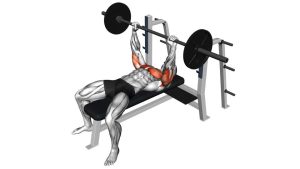
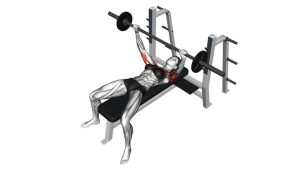
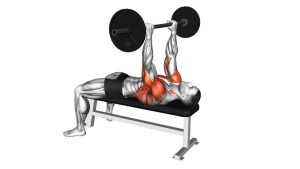
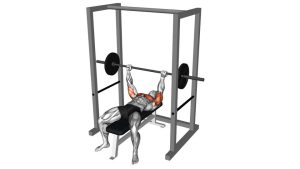
Barbell Pullover to Press
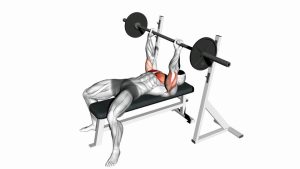
This exercise works best when you combine mobility, control, and smooth pressing mechanics. The pullover phase adds a loaded stretch for the chest and lats, while the press phase reinforces horizontal pushing strength. Keep the movement deliberate, maintain a stable ribcage, and avoid letting the bar drift too deep behind the head.
Quick Overview
| Body Part | Chest |
|---|---|
| Primary Muscle | Pectoralis major |
| Secondary Muscle | Latissimus dorsi, anterior deltoids, triceps brachii, serratus anterior |
| Equipment | Barbell, flat bench, weight plates, collars |
| Difficulty | Intermediate |
Sets & Reps (By Goal)
- Muscle growth: 3–4 sets × 6–10 reps, 75–120 sec rest
- Strength-focused technique work: 4–5 sets × 4–6 reps, 2–3 min rest
- General upper-body development: 3 sets × 8–12 reps, 60–90 sec rest
- Accessory chest/lats finisher: 2–3 sets × 10–12 reps with controlled tempo
Progression rule: Increase the load only after you can keep the pullover smooth, the shoulder position stable, and the press path consistent from rep to rep.
Setup / Starting Position
- Lie flat on a bench: Keep your head, upper back, and glutes in contact with the bench, with feet planted firmly on the floor.
- Set your shoulders: Pull the shoulder blades down and back to create a stable pressing platform.
- Grip the barbell: Use an overhand grip slightly wider than shoulder width.
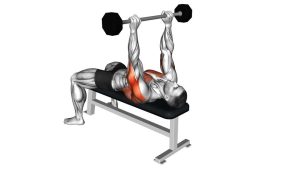
- Start at lockout: Hold the bar directly above the chest with elbows extended but not hyperlocked.
- Brace the torso: Keep the ribcage controlled and core engaged so the lower back does not overarch during the pullover.
Tip: Start lighter than a normal bench press. The pullover portion increases the skill and mobility demand.
Execution (Step-by-Step)
- Lower into the pullover: With a slight bend in the elbows, guide the bar backward in a smooth arc behind the head.
- Control the bottom: Stop when you feel a strong but comfortable stretch across the chest and lats without losing shoulder position.
- Pull the bar back forward: Use the lats and chest to bring the bar back toward chest level while keeping the wrists stacked over the forearms.
- Transition into the press: Once the bar reaches the chest or lower-chest line, press it upward vertically.
- Finish the rep: Lock the bar out above the chest and reset your shoulders before starting the next repetition.
Pro Tips & Common Mistakes
- Keep a slight elbow bend: Too much elbow flexion turns the pullover into more of a triceps extension.
- Do not force depth: Only lower as far behind the head as your shoulders can control comfortably.
- Maintain shoulder tension: Avoid letting the shoulders roll forward at the bottom.
- Keep the ribcage stable: Excessive flaring can shift the movement away from a strong, controlled pullover.
- Use a moderate tempo: A slow eccentric makes the pullover phase safer and more effective.
- Do not bounce into the press: The transition should stay smooth rather than using momentum from the bottom.
- Choose load carefully: This exercise is more technical than a standard bench press, so ego loading is a mistake.
FAQ
What muscles does the Barbell Pullover to Press work most?
It mainly trains the chest, while also involving the lats, triceps, and front delts. The pullover portion adds more lat and serratus involvement than a standard press alone.
Is this a chest exercise or a back exercise?
It is primarily used as a chest-focused compound exercise, but the pullover phase gives it meaningful lat and upper-body support involvement. It sits between a pressing movement and a pullover pattern.
Should I use the same weight as my normal bench press?
No. Most lifters should use less weight than they would for a regular barbell bench press because the pullover phase adds more mobility and control demands.
How far behind my head should the bar go?
Only as far as you can maintain a comfortable stretch and stable shoulders. You do not need extreme range of motion to make the exercise effective.
Who should avoid this exercise?
Anyone with limited shoulder mobility, a history of shoulder impingement, or pain during loaded overhead-style motion should be cautious and may prefer a simpler pullover or pressing variation first.
Recommended Equipment
- Olympic Barbell — the main tool for performing the exercise with stable loading and proper hand spacing
- Flat / Adjustable Weight Bench — gives you a stable base for the pullover and pressing phases
- Barbell Collars / Clamps — helps keep plates secure during the arc of the pullover
- Olympic Weight Plates — lets you scale the movement safely as you improve control and strength
- Heavy-Duty Flat Bench — a strong dedicated flat bench is a solid option if this lift is part of your regular chest training
Tip: For this movement, prioritize bench stability and bar control over heavier loading.