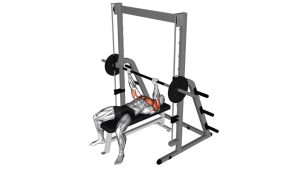
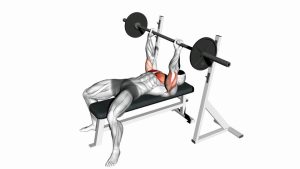
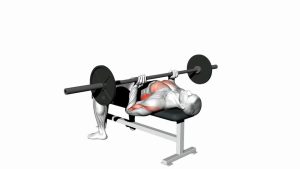
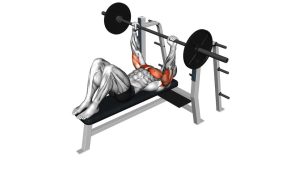
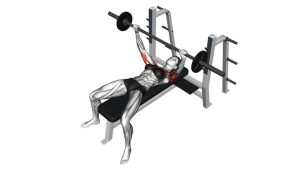
Barbell Pin Bench Press (Conventional Grip): Form, Sets, Muscles Worked & Tips
Learn how to perform the Barbell Pin Bench Press (Conventional Grip) with proper setup, step-by-step execution, sets and reps by goal, common mistakes, FAQs, and recommended equipment for stronger chest pressing power.
Barbell Pin Bench Press (Conventional Grip)
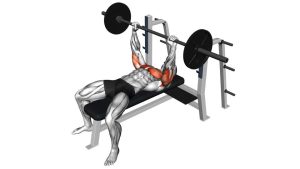
The pin bench press is especially useful for lifters who want to improve weak points in the barbell bench press, develop stronger chest and triceps drive, and reinforce a tighter pressing setup. Since the bar settles fully on the pins between reps, you lose the stretch reflex and must create force from a dead stop. That makes each repetition more demanding, but also very effective for building practical strength carryover.
Quick Overview
| Body Part | Chest |
|---|---|
| Primary Muscle | Pectoralis major |
| Secondary Muscle | Triceps brachii, anterior deltoids |
| Equipment | Barbell, flat bench, power rack with safety pins, weight plates, collars |
| Difficulty | Intermediate |
Sets & Reps (By Goal)
- Max strength: 4-6 sets × 2-5 reps, 2-4 minutes rest
- Bench press accessory work: 3-5 sets × 4-8 reps, 90-150 seconds rest
- Muscle-building focus: 3-4 sets × 6-10 reps, 60-90 seconds rest
- Power / force production: 5-8 sets × 2-3 reps with crisp bar speed, 2-3 minutes rest
Progression rule: Add load only when you can maintain a stable bar path, full-body tension, and a clean dead-stop start on every rep.
Setup / Starting Position
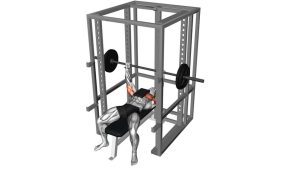
- Place the bench inside the power rack: Center it so the bar lines up with your mid-to-lower chest depending on your chosen pin height.
- Set the safety pins: Adjust them so the bar rests at the exact range you want to train, usually slightly above chest level or around your sticking point.
- Load the barbell evenly: Secure the plates with collars before lying down.
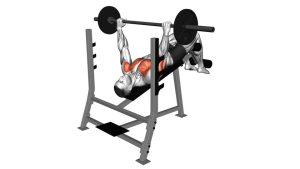
- Take your bench position: Lie on the flat bench with eyes under the bar, feet planted firmly, and upper back tight.
- Retract your shoulder blades: Pull them back and down to create a stable pressing base.
- Use a conventional grip: Hands slightly wider than shoulder width, wrists stacked over forearms, and elbows positioned for a strong press.
- Create full-body tension: Brace your core, drive your feet into the floor, and keep the chest lifted before pressing.
Tip: A slightly lower pin height emphasizes chest drive more, while a slightly higher pin position can shift more demand toward the triceps and lockout.
Execution (Step-by-Step)
- Start from the pins: With the bar fully settled on the safety pins, tighten your upper back, brace your trunk, and grip the bar hard.
- Press explosively but under control: Drive the bar straight up from the dead stop without letting the shoulders roll forward.
- Extend the elbows: Continue pressing until your arms are nearly straight at the top without losing shoulder position.
- Pause briefly at lockout: Stabilize the bar while keeping your chest up and wrists stacked.
- Lower with control: Bring the bar back down in a steady line until it contacts the pins.
- Reset between reps: Let the bar come to a complete stop on the pins, re-brace, then begin the next repetition.
Pro Tips & Common Mistakes
- Keep the upper back tight: A loose setup reduces stability and pressing efficiency.
- Use the pins strategically: Train the exact range where you feel weakest in your normal bench press.
- Press from tension, not momentum: Re-brace before every rep and drive hard from the dead stop.
- Do not slam the pins: Lower the bar under control so the setup stays consistent and your joints are not jarred.
- Watch your wrist position: Letting the wrists bend too far back can reduce force transfer and increase discomfort.
- Avoid flaring too early: Let the elbows track naturally under the bar instead of forcing them wide from the start.
- Keep the feet active: Strong leg drive helps maintain total-body stability even in a dead-stop press.
FAQ
What is the main benefit of the barbell pin bench press?
Its biggest benefit is improving starting strength. Because the bar begins on the pins, you must create force without using the stretch reflex from a normal lowering phase.
Is the pin bench press better than the regular bench press?
It is not better for every goal, but it is excellent as an accessory variation. The standard bench press is still the main lift for most lifters, while the pin bench press helps strengthen weak ranges and improve force production.
Where should I set the pins?
Set the pins at the range you want to train. Slightly above the chest is common for chest-dominant strength work, while higher pin settings can emphasize sticking points and lockout strength.
Should I touch and go or fully reset on the pins?
You should fully reset. The value of this exercise comes from the dead-stop start, so let the bar settle briefly before each rep.
Can beginners do this exercise?
Most beginners should first learn the standard barbell bench press and rack setup basics. Once technique is stable, the pin bench press can be added as a controlled strength variation.
Recommended Equipment
- Flat Weight Bench — a stable flat bench is essential for strong body positioning and consistent bar path
- 7ft Olympic Barbell — standard-size barbell for heavy bench pressing and long-term progression
- Olympic Bumper Plates — durable plates for progressive loading and balanced bar setup
- Olympic Barbell Collars — helps keep the load secure during heavy pressing work
- Power Rack Safety Pins / Spotter Arms — the key feature that makes the dead-stop pin bench press possible and safer to perform
Choose equipment that matches your current rack dimensions, bar sleeve size, and training space before buying.